The exhaustion doesn’t go away. Neither does the fog.
For millions, the acute phase of SARS-CoV-2 infection ended months ago, but the daily grind feels heavier, slower, and mentally sharper in the wrong ways. Motivation vanishes. Thinking lags. It’s not just “feeling off.”
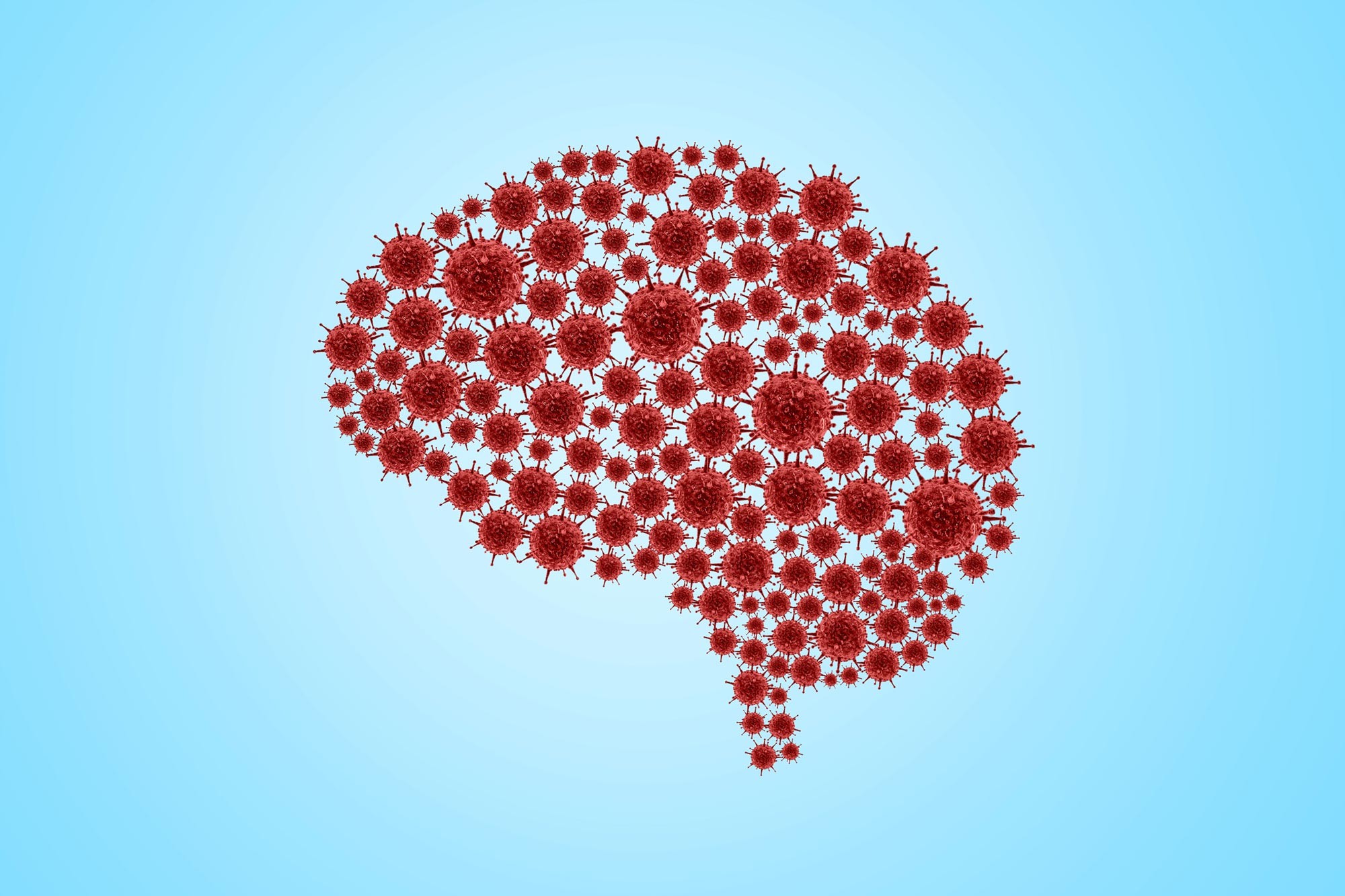
New evidence suggests a physical break in the brain’s wiring.
Specifically, research from the Centre for Addiction and Mental Health (CAMH ) points to long COVID brain damage involving dopamine neurons. This isn’t speculation based on guesswork. It’s visual proof captured by PET imaging.
What do brain scans show in long COVID patients?
Researchers used positron emission tomography (PET ) to look inside the living brains of people living with long-term symptoms. They weren’t looking at structure—like a tumor or a bleed. They were looking at chemistry.
They tracked a specific marker: the density of dopamine nerve endings.
The results were stark. Participants with long COVID showed significantly lower levels of this marker in the striatum. This is a cluster of brain regions handling the heavy lifting for movement, memory, and motivation.
“Our findings provide compelling evidence that long COVID involves loss of dopamine-releasing neurons,” says Dr. Jeffrey Meyer, senior author of the study published in eBioMedicine.
It’s not a uniform drop, either. The damage maps directly to specific struggles.
- Ventral striatum: Lower marker levels linked to a crushing loss of motivation.
- Dorsal putamen: Reduced activity associated with slower physical movement.
- Caudate putamen: Lower density tied to memory difficulties.
If you’ve felt like your engine light was on, the scans suggest the spark plugs—specifically the dopamine system—are firing weakly.
Why does inflammation hurt dopamine neurons?
Here is where the puzzle pieces click together.
Dr. Meyer’s team previously found high levels of brain inflammation in long COVID patients. That inflammation wasn’t random. It concentrated in areas packed with dopamine-releasing neurons.
Inflammation is messy. It injures tissue.
The new scans confirm that the regions with the most inflammation also had the most reduced dopamine markers. It’s a direct correlation. The immune response, intended to fight a virus, appears to be collateral-damaging the very cells that drive momentum and cognition.
This answers the “why” for many patients. The brain fog isn’t a psychological refusal to move forward. It’s biological friction.
Which treatments could help dopamine dysfunction in long COVID?
We are past the stage of just describing the problem. The next step is fixing it.
Historically, long COVID research has fixated on the immune system and viral persistence. Few trials have looked at how to treat long COVID fatigue with dopamine therapies.
The new data changes the target.
If the issue is a depleted dopamine system, then medications that boost dopamine activity might work. This doesn’t necessarily mean heavy-duty antipsychotics. It opens the door for repurposing existing drugs that:
- Provide dopamine precursors (the building blocks).
- Inhibit dopamine metabolism (keeping what you have in the system longer).
“This suggests that repurposing medications that augment function of dopamine-releasing neurons… could be a promising approach,” Meyer notes.
A clinical trial is already in the works, led by CAMH in partnership with the University Health Network (UHN ). They want to see if targeting this specific neurological pathway actually improves memory, motivation, and that debilitating fatigue.
Why does this validation matter to patients?
For Susan Deuville, a lived-experience research advisor, the science validates years of isolation.
She contracted COVID in 2021. What followed was a “crushing loss of the life I had.”
“For five years I have been seeking answers,” Deuville says. “It also validates what long COVID sufferers have always knew—long COVID is real and effects are devastating.”
Too many patients are told it’s all in their head. Not literally, of course, but emotionally dismissed. These scans put a biological footprint on their suffering. It is measurable. It is visible. It is real.
The path forward involves testing whether we can turn the volume back up on those dopamine neurons. Until then, the data offers something rare: a concrete reason why recovery feels so hard.
And a hint of how to finally fix it.