Half a century has passed since Viking 1 touched down on the Red Planet, but the ghost of that 1976 landing is still shaping how NASA looks at Mars. Today, the agency isn’t just staring at the dust. It is looking up.
The story begins in the western reaches of ChrysePlanitia. On July 20, 1776, the lander settled into this region, sitting roughly 22.5 degrees north of what we’d call the Martian equator. It was NASA’s first hard landing on the Martian surface. The mission succeeded where others failed; the Soviet Union’s Mars 3 probe had crashed and died less than two minutes after touching down in December 1971. Viking 1 and its twin, Viking 2, stayed. They ran the first fully successful surface missions.
These landers weren’t just taking pictures. They were hunting. The primary goal? Signs of life.
The Viking Life-Detection Debate
To find life, the Vikings used three distinct experiments. Two came back negative. Dead air. But the third — the Labeled Release (LR) experiment — told a different story.
The LR instrument pumped nutrients into Martian soil. The result? A steady stream of carbon dioxide bubbling up from the dirt. Microbes metabolize food and release gas. This looked like a heartbeat. Some scientists called it the first detection of extraterrestrial life.
Most disagreed. They argued the gas came from abiotic chemical reactions, not biology. The prevailing view hardened: Mars is dead. The data didn’t support life. This ambiguity left a complicated legacy. It showed the scientific community that hunting for alien life is messy. We need better tools. We need more context.
That lesson cost us time. The high price tag of Viking, combined with the confusing results and funding shifts to the new space shuttle program, left NASA with no surface missions for twenty years.
Following the Water
The dry spell ended in July 1997. The Pathfinder lander arrived in Chryse Planitia. It didn’t go to the exact same spot Viking 1 chose — it landed about 530 miles away. Pathfinder’s job was simpler, sharper: prove a new, cheaper way to explore Mars using an airbag landing system. And deploy a rover.
It deployed Sojourner.
The small, wheeled robot rolled over rounded pebbles. Those rocks held a secret. They showed evidence of flowing water. This discovery changed the strategy. NASA stopped guessing about biology and started following the water. Life as we know it needs water, so the agency focused on finding places where water once stood.
The rovers arrived in a chain. Spirit and Opportunity landed in 20 operating for a few months; Spirit died in 2010, and a dust storm buried Opportunity in 2018. Curiosity landed in 2012, proving past aqueous environments existed. It found complex organic molecules, the building blocks of life. Then came Perseverance in 2021, landing in Jezero Crater.
Perseverance and Curiosity are still working. Both remain active. They keep digging into the planet’s history, collecting samples that NASA wants to bring home. The Viking data suggests we’ll need that level of lab scrutiny on Earth to prove life ever existed there. The sample return plan has hit budget hurdles, forcing NASA to rethink how to get those rocks back, but the goal hasn’t changed.
Taking Flight on the Red Planet
The most significant shift from Viking’s legacy, however, isn’t in the ground. It’s in the sky.
Perseverance brought a small companion: Ingenuity. It was a technology demonstration. A 4-pound helicopter meant to prove rotorcraft could fly in an atmosphere so thin it’s only 1% as dense as Earth’s sea-level air. NASA expected five hops.
Ingenuity flew 72 times.
It started its first flight on April 19, 21, and ended on January 18, 2014. It lasted nearly three years, defying the odds. That success opened a new chapter in Mars exploration. If a tiny helicopter can survive the dust and the cold, what else can we send up there?
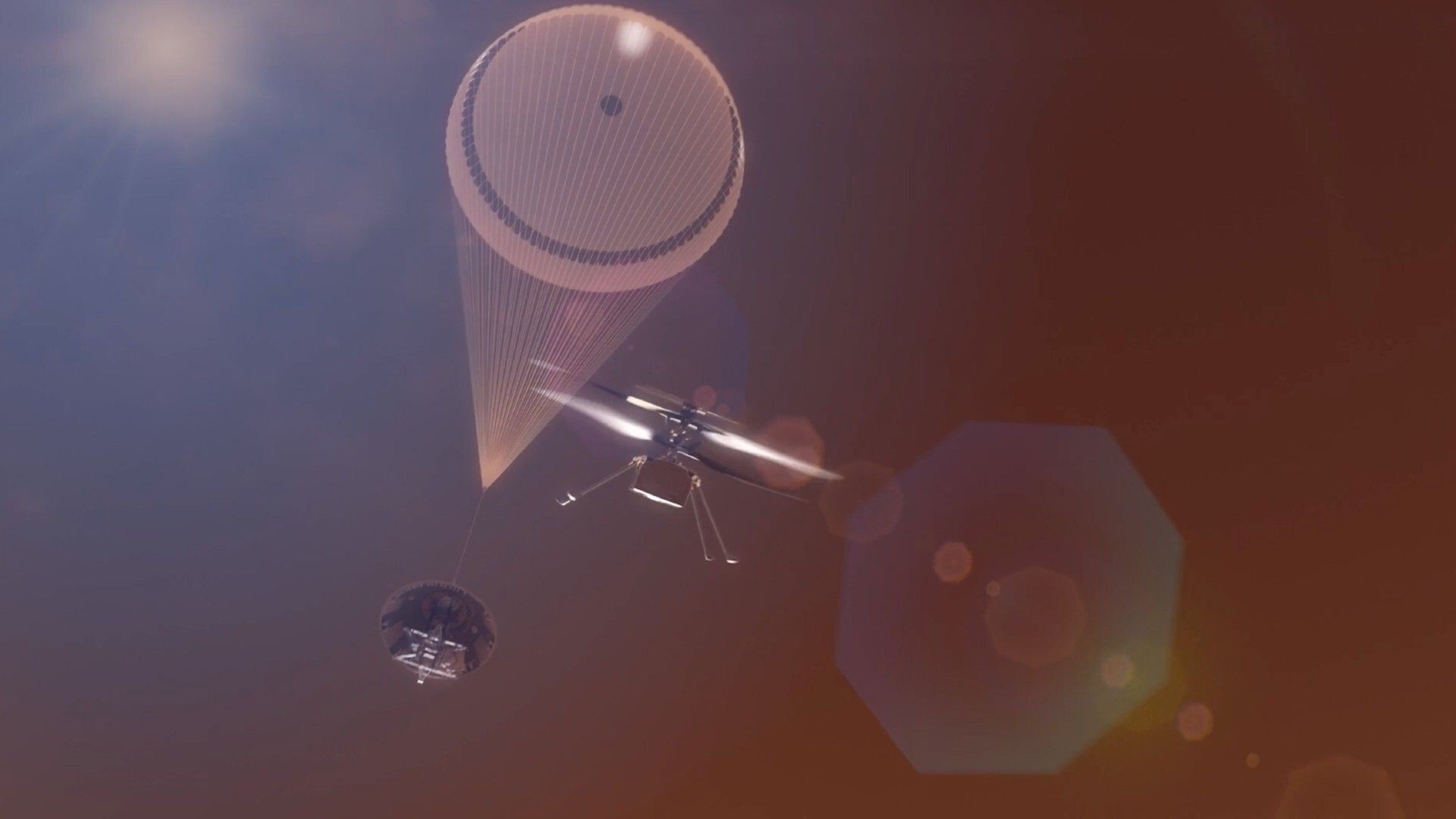
NASA is already planning higher. The Skyfall mission aims to launch in 2028. The plan involves sending three Ingenuity-like helicopters to Mars aboard a nuclear-powered rocket. These aren’t just toys. They’ll carry scientific instruments to map hidden ice deposits and analyze weather patterns. They’ll generate wide terrain maps to find safe routes for future human astronauts.
JPL in Southern California is looking further ahead. They’re designing larger, more capable helicopters for even heavier loads and wider surveys. Skyfall might just be the beginning.
The View From Above
Viking 1’s landing fifty years ago proved we could reach the Red Planet. It taught us patience. It taught us that “dead” is a hard label to prove. And it paved the way for a more nuanced approach to exploration.
We found the water. We found the organics. Now, we’re looking at the skies. The legacy of that 1976 touchdown wasn’t just the footprints in the dust. It was the permission to look beyond them.
The helicopters are ready. The plans are drawn. The atmosphere is waiting. We spent decades staring down at the soil. Now, finally, we’re learning how to lift off.