July 22. Beijing time. The sky above the East China Sea lit up.
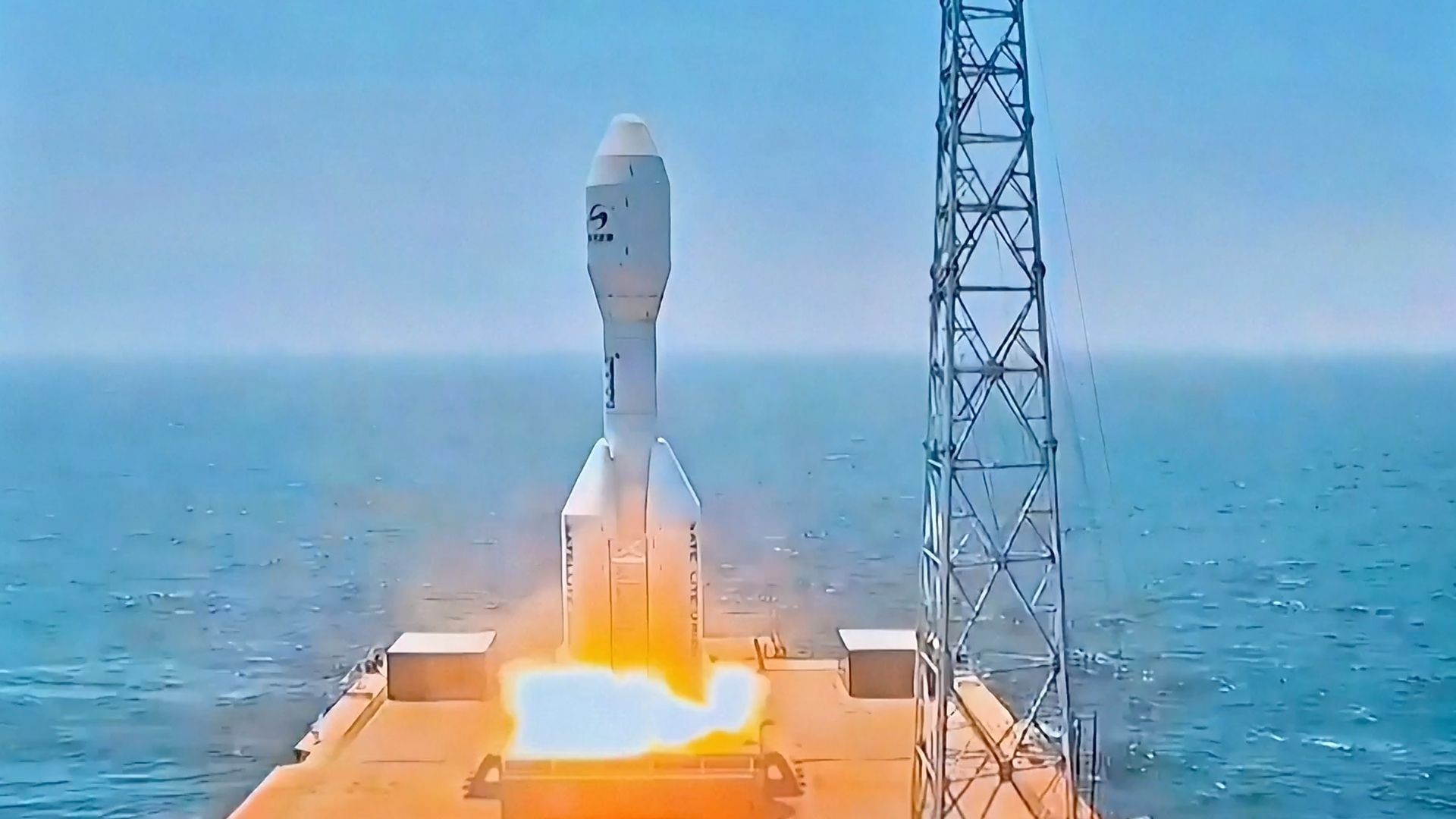
Gravity-1 roared to life.
Launched from a ship off the coast of Shanghai, the rocket didn’t just fly—it dominated. It was 10:54 p.m. back in the US, but here, the clock hit early morning. All nine satellites? Placed precisely in their orbits. No drama. Just cold, hard data delivered via state media.
Orienspace, the Shandong-based firm behind this beast, has officially entered the big leagues.
A Record-Setting Solid Fuel Giant
Let’s look at the specs, because they are intimidating.
Gravity-1 stands roughly 100 feet tall. Yes, it’s stubby. Compact. But don’t let the height fool you. This is the most powerful solid-fuel rocket on the planet.
It boasts three core stages. Plus four strap-on solid rocket boosters.
Total payload capacity: 14,300 pounds to Low Earth Orbit (LEO). That’s 6,500 kg of pure push. Compare that to the liquid-fueled Falcon 9, which tops out at 22,800kg. Sure, Falcon 9 carries more. But in the solid-fuel niche? Gravity-1 is the undisputed king. And that distinction matters for rapid-response launches.
Why? Because solid fuel doesn’t wait for months of integration. You load it. You launch it. You do it again.
The Third Strike Was Clean
This wasn’t a test run. Or a hopeful first step.
This was Gravity-1’s third mission. And its third success.
- January 2024. Liftoff from a sea platform. Success.
- October 2025. Again from the deck of a ship. Success.
- July 2025 (July 22 Beijing time). Same venue. Same result. All nine payloads reached orbit.
The gaps between these flights are shrinking. That’s the point. While traditional rocket programs churn out news about delays, Orienspace is shipping payloads. According to CGTN, the next batch—Chinese internet satellites—are already on the launchpad schedule for the coming months.
What’s Next? (And Why It’s Weirdly Exciting)
Xu Guoguang, Gravity-1’s chief designer, dropped a line that deserves more attention than the rocket itself.
“Sea launch of solid-propellant rockets paws the way for future launch of liquid rockets in the sea.”
Translation: We’re learning how to shoot things from boats. We’re learning to stabilize. We’re learning logistics. And soon, we might be shooting liquid-fuel giants from the water too.
There’s talk of launching from drilling platforms as well. Why? Because real estate in space is expensive. Logistics on land are rigid. The ocean? It’s open. Flexible. Hard to track until the smoke clears.
Orienspace isn’t stopping at Gravity-1 either. They’re building Gravity-2. And Gravity-3. These will be larger. More powerful. Hybrid designs mixing liquid cores with solid boosters.
Reports suggest Gravity-2 could be ready by year’s end. If so, expect more sea launches. Expect more pressure on legacy launch providers. Expect a shift in who controls the lower-orbit access market.
The satellites from this latest mission remain unnamed. Details are scarce. But the trajectory is clear.
China’s space sector isn’t just launching rockets anymore. They’re turning the coastline into a launchpad. And they’re moving fast.