




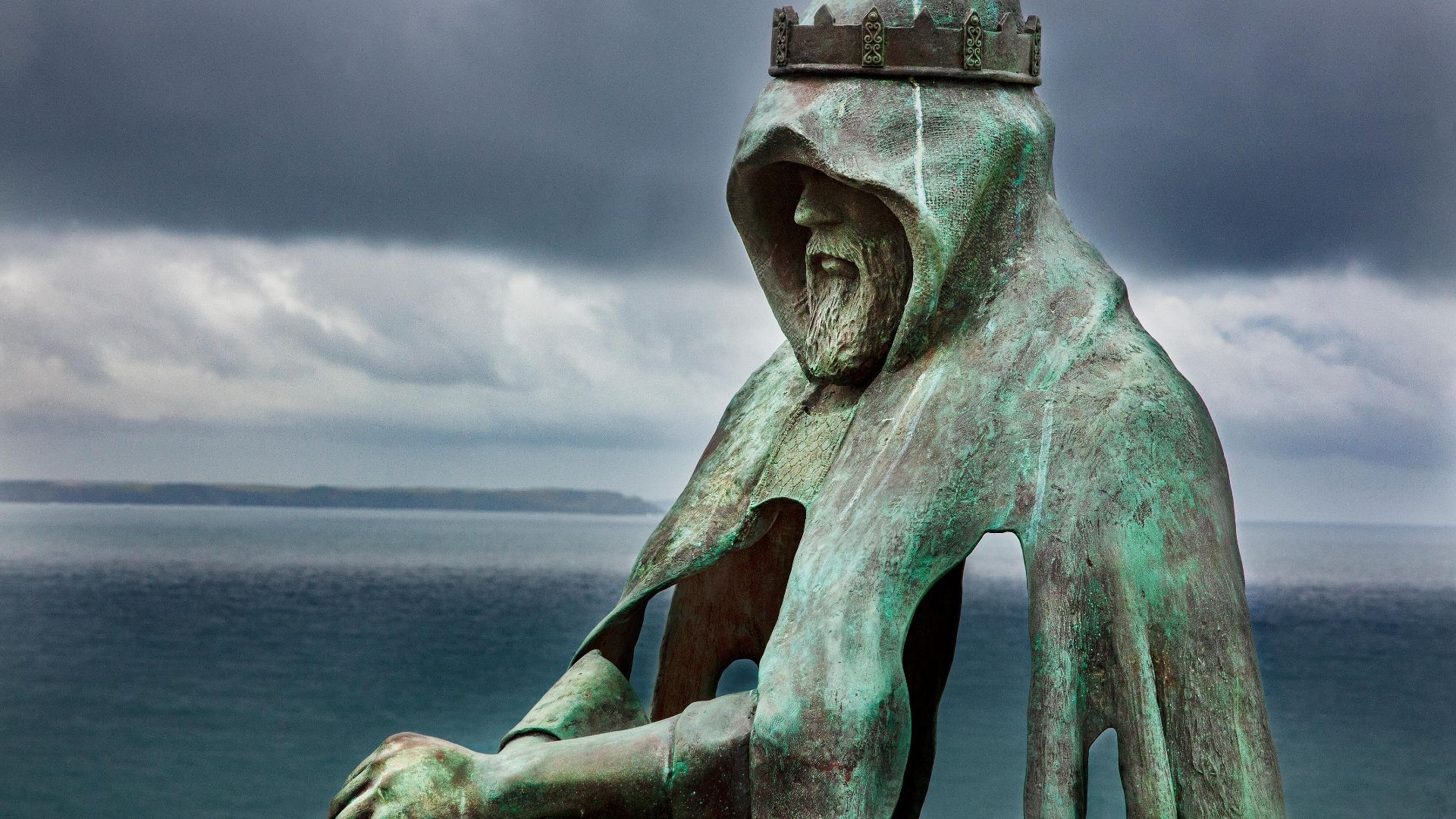
For centuries, the name King Arthur has conjured images of Camelot, the Knights of the Round Table, and a quest for the Holy Grail. Yet, beneath the sweeping romanticism of medieval literature lies a persistent historical mystery: Was Arthur a flesh-and-blood ruler, or merely a brilliant literary invention?
Historians and archaeologists remain divided, as the “facts” of Arthur’s life are buried under layers of myth, shifting timelines, and conflicting ancient texts.
The Case for Fiction: A Hero Created for Propaganda
Many scholars argue that King Arthur is a product of 9th-century imagination rather than 6th-century reality. The primary argument against his existence rests on the timing of the written record.
- The “Invented” Hero: Nicholas Higham, Professor Emeritus at the University of Manchester, points out that the earliest mention of Arthur appears in the Historia Brittonum (c. 829 AD). He suggests the text was “stitched together” from various conflicts to create a hero where none existed.
- Political Motivation: During the 9th century, Anglo-Saxon kingdoms were aggressively expanding into Wales. Higham posits that an “imaginative clerk” likely created Arthur as a symbolic war leader to provide the Britons with a sense of historical success and resistance against foreign invaders.
- The Silence of Early Sources: Helen Fulton, a professor of medieval literature at the University of Bristol, notes that while Britain was filled with real kings and war leaders during the post-Roman era, Arthur’s name is conspicuously absent from any contemporary records prior to the 9th century.
The Case for History: Clues in the Annals
Conversely, some researchers believe that the legend is anchored to a real person, likely a high-ranking war leader or prince from the 5th or 6th century.
Linguistic Fingerprints
Bernard Mees, a researcher at Monash University, argues that the Annales Cambriae (Annals of Wales) contain evidence of an older truth. While the surviving copies are from the 12th century, Mees identifies anachronistic spellings that reflect 6th-century linguistic patterns. This suggests the entries regarding Arthur may have been composed much earlier than the physical books we possess today.
Historical Coincidences
Archaeology and climate history provide further circumstantial support:
– The Battle of Camlann: One annal records the deaths of Arthur and Medraut (Mordred) in 537 AD.
– The Plague Connection: The same record mentions a plague sweeping through Britain. This aligns with historical evidence of a major epidemic—possibly the bubonic plague—that moved through the Mediterranean in 536 AD.
– The Name Legacy: Ken Dark, an archaeology professor at the University of Cambridge, notes a spike in royal family members named “Arthur” across Britain and Ireland during the 6th and 7th centuries. This suggests that later kings may have been naming their children after a legendary, real-life figure.
Reconciling Myth and Reality
If a historical Arthur did exist, he would bear little resemblance to the chivalrous king of modern cinema. The knights, the lady Guinevere, and the magic of Camelot are widely accepted as later literary additions designed to embellish a much grittier, more violent era of warfare.
As Mary Bateman, a lecturer at the University of Bristol, suggests, the truth may be a hybrid of both theories. Arthur could be a composite of several real historical figures whose lives were woven together by storytellers, or a mythical figure that eventually “absorbed” the deeds of real kings.
The Bottom Line: Whether Arthur was a single man or a symbol of British resistance, the legend persists because it captures a fundamental truth about the era: a time of profound transition, conflict, and the struggle for identity in a post-Roman world.