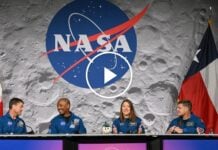



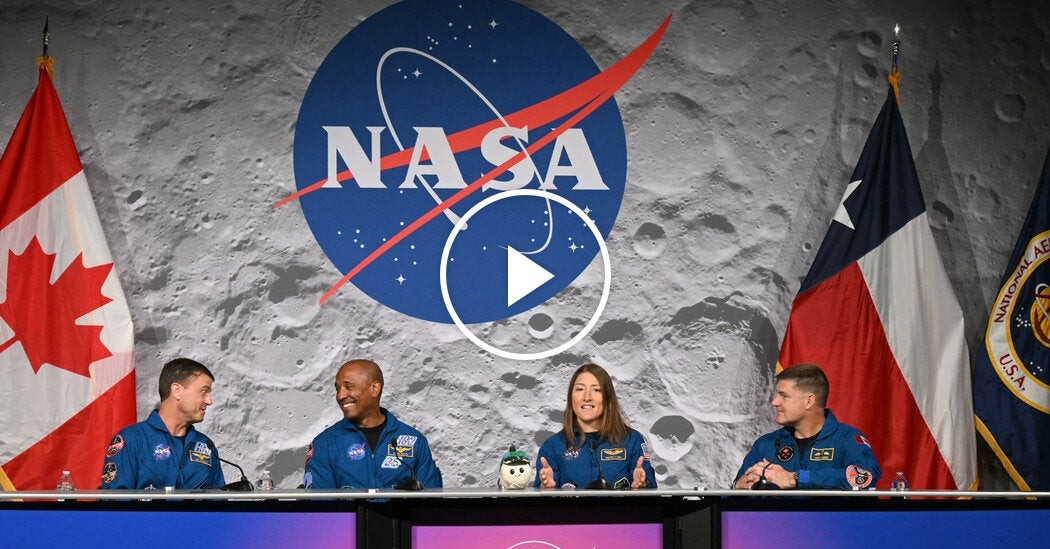
During a recent debriefing, NASA astronauts shared a gripping account of a technical anomaly that briefly disrupted their mission. The incident, involving a smoke detector activation while the crew was still deep in space, highlights the high-stakes reality of long-duration spaceflight.
An Unexpected Alarm 80,000 Miles from Home
The crew reported that a smoke detector was triggered during the penultimate day of their mission. While such an event might be a minor nuisance on Earth, the context of space travel transforms it into a critical emergency. At the time of the alarm, the spacecraft was approximately 80,000 miles away from Earth, leaving the crew with zero margin for error.
The activation of the alarm immediately triggered a series of automated safety protocols designed to protect the crew and the vessel:
– Ventilation shutdown: The life support system automatically halted airflow to prevent the potential spread of smoke or contaminants.
– Power system reconfiguration: The spacecraft began an automated sequence to manage electrical loads and isolate potential faults.
Managing Tension in Extreme Conditions
The astronauts described the atmosphere inside the capsule as “tense” rather than “scary.” This distinction is vital in professional astronaut training; crews are taught to manage physiological stress to focus on technical problem-solving.
The tension stemmed from the rapid, automated nature of the spacecraft’s response. In a closed environment like a spacecraft, an unexpected alarm forces the crew to move instantly from routine operations into emergency management mode. It took several minutes of intense focus to reconfigure the systems and stabilize the spacecraft’s environment.
Why This Matters: The Reality of Space Safety
This incident serves as a reminder of the inherent risks involved in space exploration. Even with advanced redundant systems, the “cautions and warnings” issued by spacecraft computers are designed to demand immediate, undivided attention.
As NASA prepares for the Artemis program —which aims to return humans to the Moon and eventually Mars—these small, localized anomalies provide critical data. Understanding how automated systems react to false positives or minor sensor errors is essential for designing the even more complex life-support systems required for deep-space missions.
The transition from routine flight to emergency reconfiguration happens in seconds, requiring both reliable automation and calm, decisive human intervention.
Conclusion
The smoke detector incident underscores the unpredictable nature of space environments and the necessity of robust automated safety protocols. Such moments