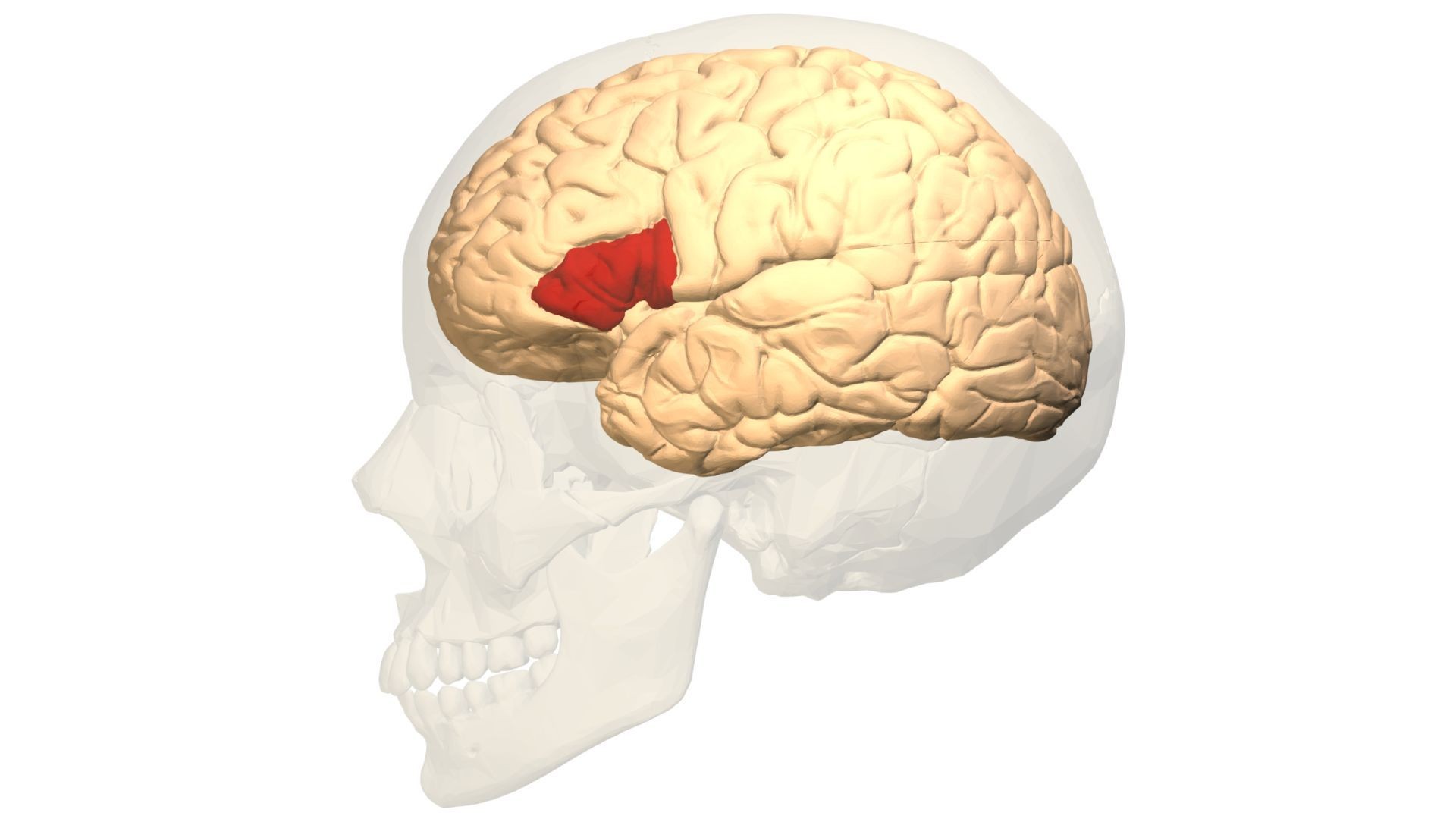
On April 18, 1861, a surgeon in Paris performed an autopsy that would fundamentally change our understanding of the human mind. By examining the brain of a man who had lost the ability to speak, Dr. Paul Broca provided the first concrete evidence that specific parts of the brain are responsible for specific functions—a concept known as localization of function.
The Case of “Tan”
The patient, Louis Victor Leborgne, had spent much of his adult life in a psychiatric ward at Bicêtre Hospital. His medical history was marked by childhood epilepsy and a sudden loss of speech at age 30. For two decades, Leborgne lived in a state of profound communicative isolation.
Despite his inability to form words, Leborgne’s cognitive abilities remained largely intact. He could:
– Understand complex language directed at him.
– Communicate his needs through gestures.
– Perform precise mathematical and temporal tasks, such as indicating exact times on a watch.
Because “tan” was one of the few sounds he could consistently utter, doctors nicknamed him “Tan.” His condition presented a neurological puzzle: how could a person retain their intelligence and comprehension while losing the physical ability to speak?
The Autopsy and the “Chicken Egg” Lesion
Following Leborgne’s death from gangrene, Dr. Broca conducted a detailed examination of his brain. He discovered a significant abnormality in the left hemisphere : a pocket of clear fluid roughly the size of a “chicken’s egg” located in the perisylvian region (near the frontal lobe). The surrounding tissue was soft and damaged, and the brain itself showed signs of reduced volume in several areas.
Broca made a direct connection between this physical damage and the patient’s symptoms. He concluded that the lesion in the middle part of the left frontal lobe was the direct cause of Leborgne’s loss of speech.
A Paradigm Shift in Science
At the time of Broca’s presentation to the Anthropological Society in Paris, the scientific community was divided. One school of thought believed that brain functions were diffuse —spread out across the entire organ—while another argued for localization.
Broca’s findings offered powerful evidence for the latter. While his discovery was initially overshadowed by the era’s preoccupation with craniometry (the study of skull measurements), his subsequent research on multiple patients with similar symptoms solidified his theory. He eventually pinpointed the specific region of the left frontal lobe as the “seat” of speech production.
Legacy: From Broca to Modern Neuroscience
Today, the region identified by the doctor is officially known as Broca’s area. Modern science has refined this understanding, noting that while this area is critical for producing speech, language is actually managed by a complex network of brain regions.
The distinction between speech production and comprehension is a cornerstone of modern neurology:
– Broca’s Aphasia: Patients can understand language but struggle to produce spoken, written, or signed words.
– Wernicke’s Aphasia: Discovered in 1874, this involves damage to a different region, resulting in patients who speak fluently but in sentences that lack meaning or coherence.
This discovery marked the transition of neuroscience from speculative philosophy to a rigorous, observation-based medical science, proving that the “mind” is deeply rooted in the physical structure of the brain.
Conclusion: Paul Broca’s study of Louis Leborgne transformed neurology by proving that brain functions are localized, laying the groundwork for our modern understanding of how the brain processes language and cognition.