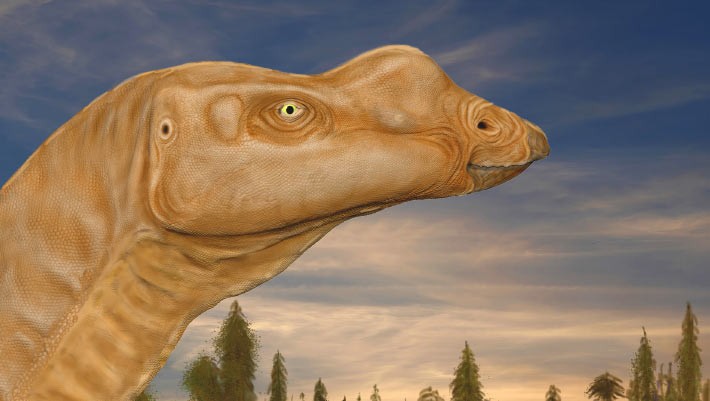
Recent paleontological research has fundamentally changed our understanding of Muttaburrasaurus langdoni , a large ornithopod dinosaur that roamed Australia approximately 96 million years ago. Once thought to be a standard herbivore, new anatomical evidence suggests this “bumpy-nosed” species was a highly specialized creature with a sophisticated sense of smell and a selective, perhaps even opportunistic, diet.
A Specialized Diet: More Than Just Grazing
For years, paleontologists assumed that Muttaburrasaurus possessed a toothless beak, similar to the famous “duck-billed” hadrosaurs of the Northern Hemisphere. However, new examinations of the skull have revealed a surprising feature: teeth located at the very tip of its snout.
This discovery suggests that Muttaburrasaurus was not a mindless grazer. Instead, its toothed beak likely allowed it to be a “picky eater,” capable of:
– Selecting specific leaves and seeds.
– Snatching small invertebrates for dietary variety.
– Navigating a diverse landscape near the ancient Eromanga Sea.
This trait also provides a vital link in the evolutionary timeline. It suggests that Muttaburrasaurus branched off from earlier ornithopods—such as Camptosaurus and Iguanodon —at a time when toothed beaks were still a common evolutionary trait among smaller relatives.
Sensory Sophistication and the “Bulbous” Nose
One of the most striking features of Muttaburrasaurus is its large, bulbous nose. Using advanced CT scanning and synchrotron technology, researchers have discovered that this structure was composed of unique bones containing two large, complex air chambers.
These chambers likely served a critical respiratory function by slowing down inhaled air. When combined with the discovery of exceptionally large olfactory bulbs (the brain regions responsible for processing scent), the picture becomes clear: this dinosaur possessed an extraordinary sense of smell. This heightened sensitivity would have been essential for:
* Locating specific food sources.
* Detecting approaching predators.
* Navigating its environment.
Movement and Locomotion
The research also shed light on how this massive herbivore moved. By analyzing the imprint of the brain and the structure of the inner ear, scientists found that the anatomy of Muttaburrasaurus closely resembled bipedal dinosaurs like Tyrannosaurus rex rather than quadrupeds.
This suggests a highly versatile mode of movement. While it likely used its front limbs to support itself while cropping food close to the ground, it was also capable of walking and running on its hind legs.
Why This Matters
This study, published in the journal PeerJ, represents a significant leap in how we reconstruct prehistoric ecosystems. By moving away from “one-size-fits-all” models of herbivorous dinosaurs, researchers are uncovering a much more nuanced reality: dinosaurs were individualistic, with specialized sensory tools and dietary habits tailored to their specific environments.
The discovery of unique cranial bones and a toothed beak redefines our understanding of Muttaburrasaurus, shifting its image from a simple grazer to a highly perceptive and selective survivor.
Conclusion
Through advanced imaging and anatomical analysis, scientists have revealed Muttaburrasaurus langdoni to be a sophisticated dinosaur defined by its keen sense of smell, versatile movement, and specialized feeding habits. This research underscores the incredible evolutionary diversity present in the Cretaceous period of Australia.