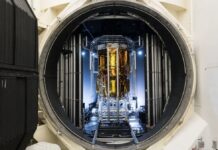


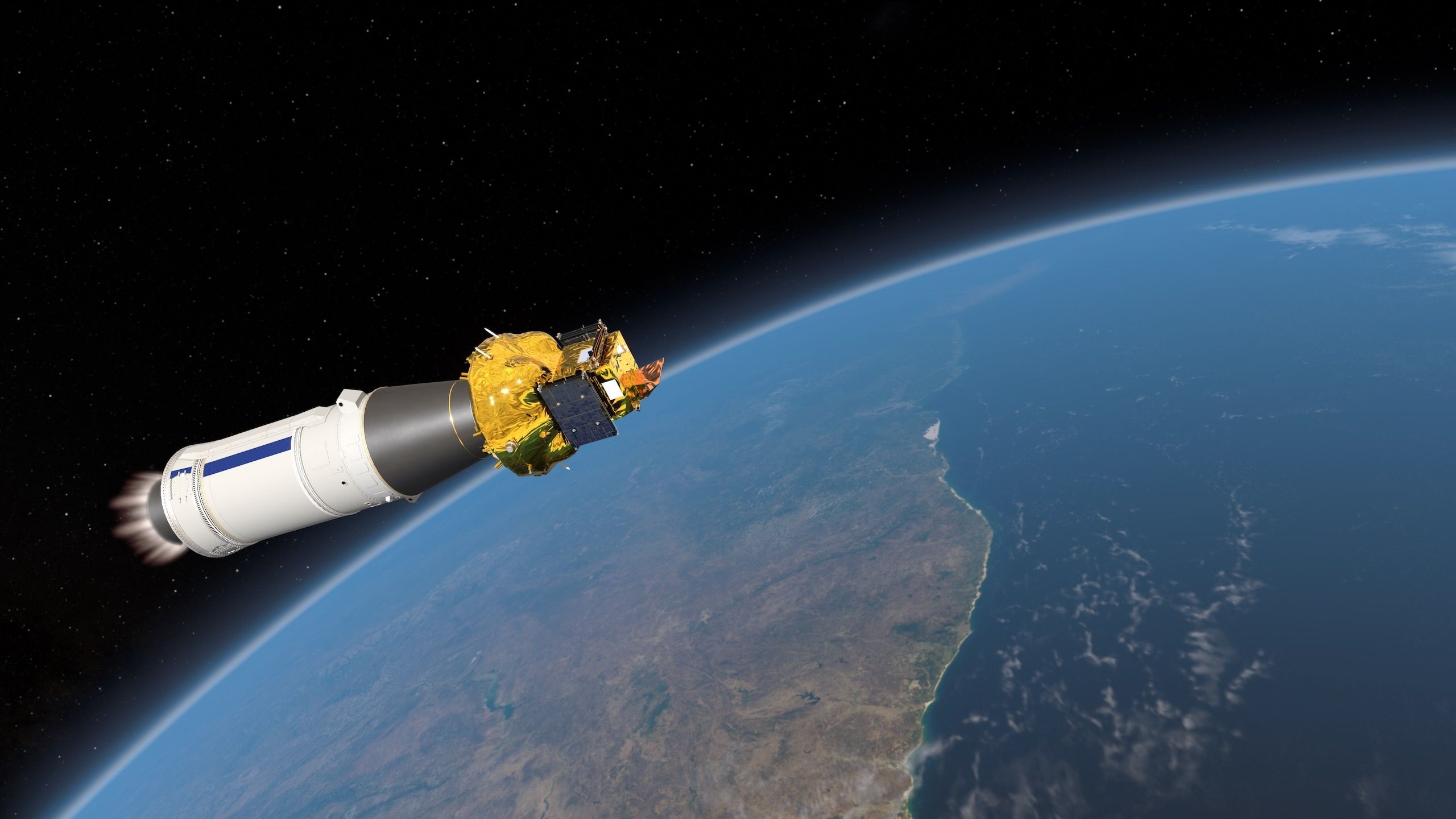
May 18 is the night. If you have time, or just idle curiosity, you should probably be looking up. Or at your screen, at least. The Vega C rocket launches tonight from French Guiana. It’s not just another satellite. This one matters to us. Directly.
Here’s what happens next.
The launch details
The mission is called SMILE. That’s an acronym for the Solar wind Magnetosphere Ionosphere Link * * Explorer*. Sounds friendly, which is good. The reality involves high-speed physics and charged particles screaming out from the sun.
The clock starts at 11:52 p.m. EDT on May 18. Or 5:52 a.m. Kourou local time on the 19th. If you’re tracking this globally, that’s 0352 GMT. The live stream opens at Space.com via the European Space Agency (ESA), or you can go direct to the ESA site. They start showing the countdown at 11:30 p.m. EDT. Don’t be late.
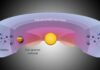
In doing so, SMILE will improve the understanding of solar storms…
A weird marriage
This project is a joint effort. China brings the heavy lifting. The Chinese Academy of Sciences handles the satellite platform, the operations, and three of the instruments: the Ultraviolet Imager, the Light Ion Analyser, and the Magnetometer.
ESA chips in the fourth instrument. That’s the Soft X-ray Imager. They also provide the rocket. Plus all the integration services. The team plans to collaborate on orbit operations. It works, seemingly. A European launch vehicle. Chinese tech. One orbit.
Into the dark
Vega C is a three-stage rocket. If tonight goes well, SMILE separates about 56 minutes after lift-off. The initial orbit is circular, sitting 435 miles (roughly 700 km) above us. That’s just the waiting room.
For the next 25 days, the spacecraft performs 11 engine burns. Each burn pushes the orbit higher, stretching it out into an ellipse. The north reaches 75,185 (121,0 geomagnetic North Pole. The south stays low, at 3,10 miles above the South Pole. This tilt captures the whole atmosphere in one swoop.
After all those burns, there is work left to do. The mission team checks everything out. Instruments calibrated. Systems green. Only then, three months post-launch, does the real science begin.
First images, UV light. X-rays follow. Three years total lifetime for the mission. Three years to map the storm clouds we usually only hear about in news headlines.
What else are we going to do, hide under covers every time the sun sneezes? Maybe we’ll finally get a heads up.