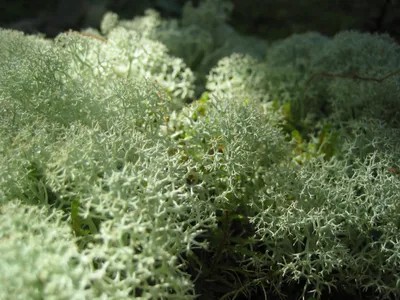
If you have ever walked through the high-latitude tundras of Scandinavia or northern Canada, you have likely stepped over it. It is not a plant. It is a composite organism, a stubborn survivor of the freeze, known as reindeer lichen (Cladonia rangiferina ).
This fruticose lichen—meaning it has a bushy, branched structure—dominates vast swathes of the Arctic tundra and taiga. It does not grow quietly. It covers immense areas, serving as the primary winter pasture for reindeer, caribou, musk oxen, and occasionally moose. Without it, the food chain in these frozen zones collapses.
The name also loosely applies to its close relative, Cladonia portentosa, but when people talk about the lichen that keeps northern herds alive, they are usually talking about Cladonia rangiferina.
The Anatomy of a Symbiotic Survivor
It is erect, standing up to 8 cm tall. Each main branch splits into three or four smaller ones, creating a complex, coral-like geometry.
Its color changes with the seasons and humidity. Look closely and you might see pale green, brown-gray, or a dusty whitish hue. But color is just the surface. The body of this lichen is a partnership. It is formed from the symbiosis of one or two fungi and a photosynthetic partner.
That partner is a single-celled green algae called Trebouxia. The fungus provides structure and protection. The algae provides sugar through photosynthesis. Together, they survive where nothing else can.
Why Reindeer Lichen Growth Is So Slow
In Scandinavia, humans have historically used this lichen to manufacture alcohol. The process is difficult. The yield is low. The reason is simple: reindeer lichen growth is excruciatingly slow.
It grows only 3 to 5 mm per year. That is 0.12 to 0.2 inches.
This slow growth rate creates a bottleneck for anyone trying to harvest it commercially. You cannot farm it quickly. You cannot force it to grow faster. You have to wait. Decades. Maybe centuries. This scarcity is why reindeer lichen has never been a major global crop, despite its abundance in specific geographic pockets.
When Does It Grow?
It is not active year-round. The periods of most rapid growth happen in the spring and fall.
Why then? Because of high humidity and cool temperatures. The lichen needs moisture to activate its fungal and algal partners. Summer is often too dry. Winter is too cold. The shoulder seasons offer the sweet spot.
Where Does Reindeer Lichen Thrive?
It is abundant in Arctic lands. Specifically, it thrives in the northern tundra and taiga ecosystems. These are cold, treeless (or sparsely treed) regions where the soil is often permafrost.
Reindeer dig through the snow to find it. In winter, when grasses are buried under ice and snow, this lichen remains accessible. It is the difference between starvation and survival for many Arctic herbivores.
The Bigger Picture
Reindeer lichen