October pulls the season into gear. The sky changes. It’s not subtle.
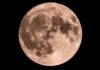
If you look up, you see the whole solar system showing off. Almost every planet lines up for a celestial reunion. The moon drifts through the zodiac. Winter constellations peek over the horizon. They are shy at first. Just hints of what is coming.
Then there are the meteors. Several showers light up the night. One source is famous. It comes from the dust of Halley’s Comet. That is the same comet that visits us every 75 years. Its debris burns up in our atmosphere. Creating streaks of light.
Why does this matter to you? You get a front-row seat to cosmic mechanics. You see planets moving in their orbits. You see the moon’s monthly journey. You see ancient cometary dust colliding with Earth. It connects you to the scale of space. It is not just pretty lights. It is physics in motion.
The first winter stars are already there. They wait for your eyes to find them. The meteor showers offer action. They are unpredictable. But the planets are reliable. They are steady points of light.
Which planets are visible? That depends on where you live. But generally, they are all out. The sky is crowded with them. It is a rare sight. The planets do not always align like this.
October is the month of transition. Summer fades. Winter approaches. The sky reflects that shift. It becomes darker. Colder. More dramatic.
You should look up. Even if it is cloudy. Even if you are busy. Take a minute. The planets are talking. They have been waiting for you to listen.
Cooler air means clearer skies. As autumn settles in and nights stretch longer, the atmosphere dries out. This isn’t just good for your lungs. It’s ideal for stargazing. The celestial backdrop becomes sharp. You aren’t just looking at summer stars fading out. You are watching winter make its grand entrance.
Tracking Orion and Sirius
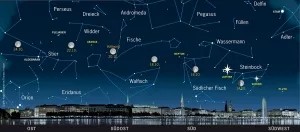
Look east. There it is. Orion. The celestial hunter dominates the winter sky with his iconic belt of three stars. He doesn’t come alone. He is followed closely by the Canis Minor, the Little Dog. But the real show happens around 2 a.m.
Then comes Canis Major, the Great Dog. It brings Sirius.
Sirius is the undisputed king of the night sky. Known historically as the “Dog Star,” this binary system outshines everything else. It is so bright that the next closest star only reaches half its luminous intensity. By morning, Sirius climbs into the southeast. If you want to know how to find Sirius, just look for the brightest point in the sky and trace the line of Orion’s belt downward. It leads you straight there.
The Great Square of Pegasus
While Orion commands the attention in the east, the west holds a different kind of geometric beauty. Pegasus, the winged horse, hangs high and prominent.
“The three brightest stars of the constellation Pegasus form the distinctive ‘Great Square of Pegasus,'” says Thomas Kraupe, director of the Hamburg Planetarium. “This pattern, along with the Summer Triangle in the southwest and Cassiopeia’s celestial W overhead, is the only conspicuous and easy-to-remember shape in the autumn sky.”
It’s a useful landmark. Why does this matter? Because it anchors your position. Once you find the Great Square, you can navigate the rest of the sector. The fourth and northeastern corner of that square isn’t part of Pegasus. It belongs to Andromeda. That point is Alpha Andromedae.
Why This Matters for Amateur Astronomers
Understanding these patterns isn’t just about memorizing shapes. It’s about understanding scale. Orion and Sirius are local neighbors. They are bright because they are close. Pegasus is different. The Great Square is a projection of stars at vastly different distances.
When you look up, you are seeing a snapshot of time. Sirius is a relatively young star. The stars in the Great Square have lived longer, evolved differently. Recognizing these differences changes how you perceive the night. It turns a random scatter of lights into a structured map.
Most people never learn to distinguish the belt stars from the shoulder stars. They miss the geometry entirely. But once you know where to look, the sky stops being a blur. It becomes a series of connected points. Andromeda waits just beyond Pegasus. Cassiopeia watches from the north. The summer stars are retreating.
The air is cold. The sky is clear. You have the map.
The Draconids kick off the autumn meteor season around October 8. They trail out of the constellation Draco and move at a leisurely pace. That slowness is a gift for stargazers. It gives your eyes time to track the streaks before they vanish. The timing helps too. A thin crescent moon sets early, leaving the sky dark enough for the fainter showers.
Two days later, the Southern Taurids take over. They are not about speed. They are about spectacle. These meteors are famous for producing large fireballs that light up the horizon. Then the tempo shifts.
The Orionids’ Ancient Origin
Late October brings speed. The Orionids streak across the sky with violent energy. Their radiant point sits in Orion, but the dust causing them is older and more famous. It comes from Halley’s Comet.
The comet itself is a visitor. It returns to the inner solar system only every 75.3 years. The dust, however, stays behind. It lingers in Earth’s orbital path for decades. Every year on October 21, our planet plows through that cloud. We hit the debris of what astronomers call a “dirty snowball.” The friction ignites the particles into ionized air tubes. This happens from early October into early November.
Where to Look for the Planets
Mars is missing. For now, our red neighbor is absent from the nightly show. But everything else is on display. You can see planets from Mercury to Neptune over the course of a single night.
Look south immediately after sunset. Jupiter and Saturn sit there as a bright double star. They outshine the brightest stars in the sky. This month, they are tightly packed. A handspan separates them. It is an easy pairing for casual observers.
Venus: The Evening Star’s Return
A third planet joins the evening show: Venus. It hovers low on the western horizon during twilight. It does not stay up long. But it gets brighter.
Venus is moving faster than Earth. It closes the distance, dropping from 132 million to 98 million kilometers away. The closer it gets, the more light it reflects. You can spot it for at least half an hour after sunset. It is hard to miss.
Save October 9. Around 19:00, Venus and a crescent moon pair up. The moon sits to the upper right of the planet. It is a clean, bright duo against the darkening blue.
Chasing the Outer Giants and Mercury
By 21:00, the game changes. The outer planets Uranus and Neptun appear. They are faint. You need a dark sky site. A telescope or strong binoculars are mandatory. They do not put on a show like Jupiter. You have to hunt for them.
Mercury makes its own move. Starting October 20, it begins to emerge from the sun’s glare. It moves to the farthest point in its orbit from our perspective. This eastern elongation makes it visible. It shines before sunrise on the eastern horizon. It is a fleeting target, but it is there.
Why Daylight Saving Time Ends on October 31: Adjust Your Clocks Now
The annual shift back to standard time hits us this weekend. On Sunday, October 31, 2021, we officially enter “winter time” in Germany and much of Europe. It’s that familiar, slightly disorienting ritual where we adjust our schedules and our hardware.
This Sunday marks the end of daylight saving time. The changeover happens in the early hours between Saturday night and Sunday morning. Specifically, at 3:00 AM, clocks snap back to 2:00 AM.
“We lose an hour in the morning but gain it in the evening darkness.”
For many, the immediate benefit seems obvious. You go to bed on Saturday night and wake up an hour later than usual. That extra hour of sleep isn’t just a luxury; it’s the compensation for the sleep we forfeited back in March when we spring-forward. It’s a balancing act built into the calendar.
But there is a catch. A significant one.
While you gain an hour in your sleep, you lose an hour of daylight in your evening routine. The sun sets an hour earlier. This means the commute home, the dinner prep, or that evening walk home from the pub happens in darker conditions. The return to Central European Time (CET) means the darkness arrives sooner, earlier in the day.
This is the trade-off. We trade twilight for rest. For some, the darker mornings are a bummer. For others, the darker evenings are the real hassle. Most people find themselves squinting against the gloom sooner than they’d like, especially as winter approaches and the days shrink anyway.
Adjusting Your Schedule
The transition isn’t just about the hour. It’s about how your body reacts to the sudden shift in light. Circadian rhythms don’t just flip a switch. They take time to sync with the new solar schedule.
If you rely on natural light to gauge your day, notice the change early. The afternoon will feel like it’s ending too soon. This can impact mood. It can impact energy levels. The “winter blues” might feel a bit heavier this year if you aren’t prepared for the earlier onset of night.
The Practical Impact
Why does this matter beyond just moving a clock hand? The shift affects safety. More people are driving or walking in the dark earlier in the evening. Commuters need to adjust their habits. Parents need to manage children’s outdoor playtime differently.
The winter time period lasts until March 2022. During these months, the lack of evening sunlight is a constant factor. It’s not just a one-night event. It’s a seasonal condition that we all navigate.
So, set your clocks. Don’t forget to turn them back one hour. The extra sleep is nice. But the earlier darkness is the real cost. We’ll get used to it. We always do. Until the clocks move forward again, the evenings stay dark.