Nearly two million people moved. Fast. Out of the way.
Typhoon Bavi didn’t ask permission. It slammed into the coastal city of Taizhou late Saturday night, then crossed again in Wenzhou by midnight. A second landfall so close to the first one feels like a punch to the gut that refuses to stop.
It is huge. One thousand kilometers wide at its peak. That’s about as wide as France.
Typhoon Bavi isn’t packing the wind it used to, dropping to Category 1 status. But don’t get comfy. The danger now isn’t speed, it’s weight. The sheer volume of water trapped in those rain bands is the real threat.
Authorities warn of “exceptionally heavy rains” across eastern Zhejiang and northeastern Fujian.
Evacuations were “undertaken entirely to guard against worst-case scenarios,” officials said. It’s not just caution, it’s panic management. Over 1.7 million fled in Zhejiang alone. Thousands more bailed out of neighboring provinces. Schools shut. Offices locked. Outdoor plans dumped. 400 flights canceled, plus dozens of trains sitting still.
Wenzhou, with ten million souls living in its radius, sat right in the crosshairs.
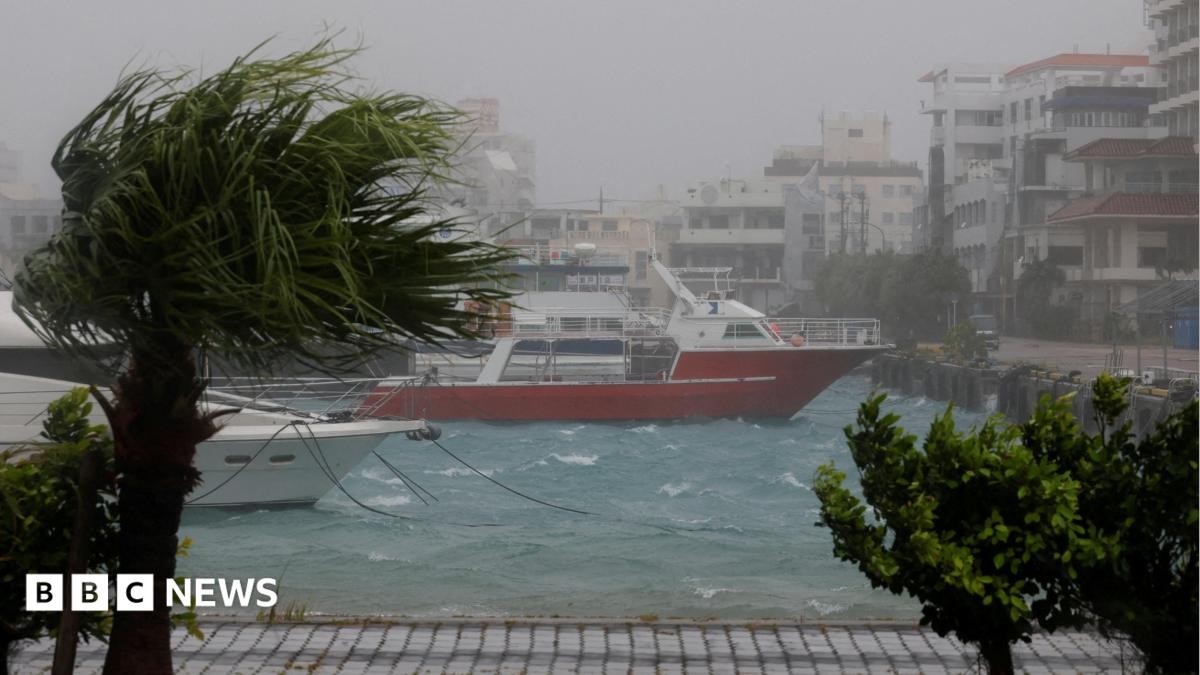
Did you know where it came from? Bavi started as a monster. A super typhoon. Last Monday, it whipped Guam and the Northern Marianas with winds hitting 290km/h. Roughly 180mph. That tears roofs off.
As it drifted across the Pacific, it cooled off a bit—down to 144km/h—but still hurt when it hit Japan’s Sakishima islands. Five injured. Power gone for thousands. Then it brushed the northern tip of Taiwan, dumping rain. No deaths reported there yet, though thousands fled homes fearing landslides.
Further west, the damage was already done. Earlier rains triggered slides in the Philippines that killed at least seventeen people. A grim preview.
Zhejiang suspended work and school. The city waits for the sky to open. Again.