Bees don’t just get buzzed on pollen. They get drunk on it. 🍯
A new study out of UC Berkeley flips the script on pollination biology. Turns out, as these tiny creatures flit from bloom to bloom, they aren’t just grabbing sugar. They are consuming ethanol. Real, fermented, floral alcohol.
The researchers tested 29 different plant species. Ethanol showed up in 26 of them. It is everywhere. Usually trace amounts. Just a whisper. Yeast eats the natural sugars in the nectar and spits out alcohol as a byproduct. Most samples were weak, sure. One hit 0.056%. Roughly one-tenth of proof. Barely a sip for a human. But these aren’t humans.
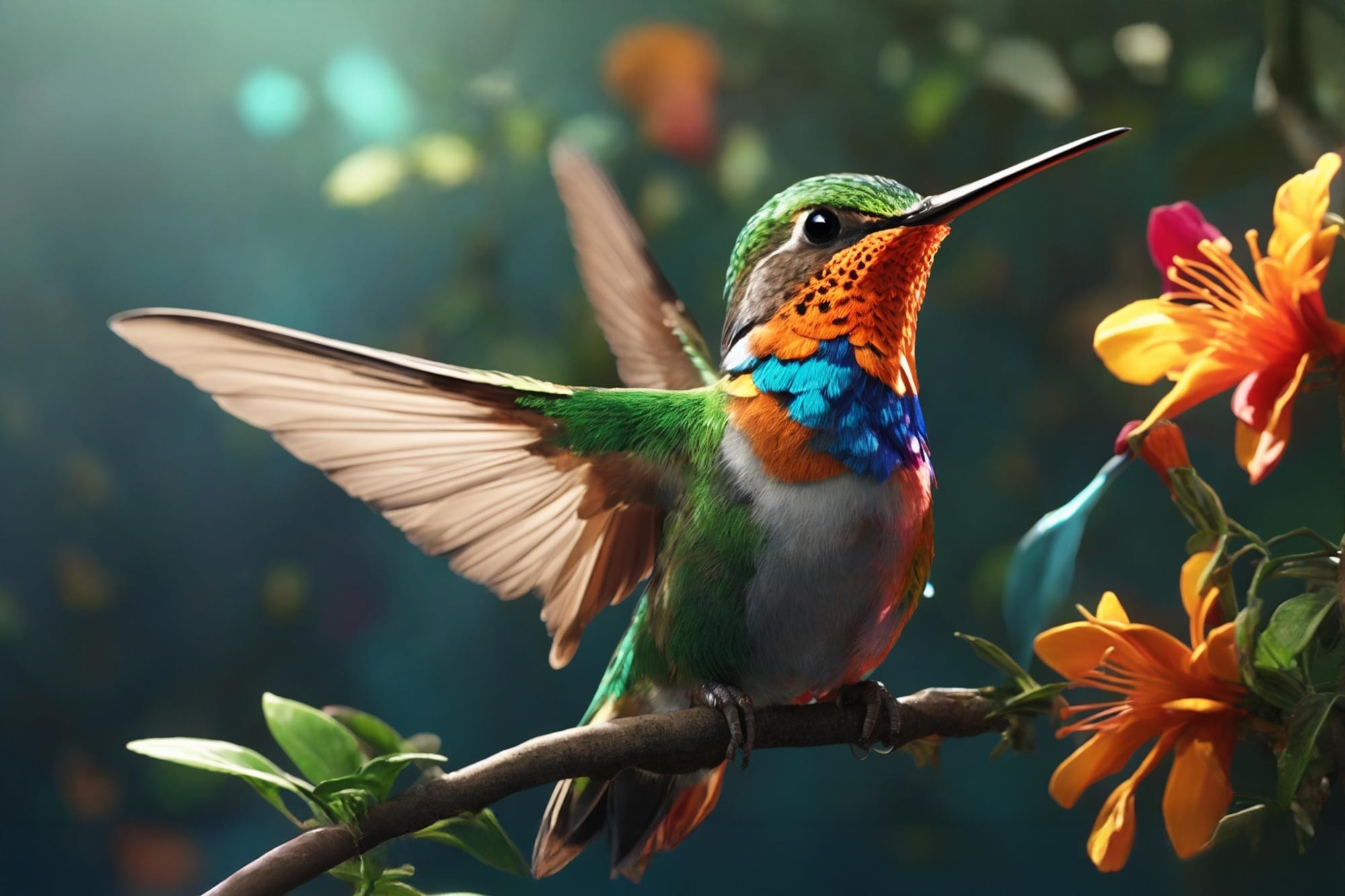
A Hummingbird on the Binge
Context matters here. Nectar is food. Primary food. A hummingbird eats 50 to 150 percent of its own body weight in nectar every day. They are metabolic furnaces, burning energy like crazy to stay warm and keep their hearts hammering.
Do the math.
An Anna’s hummingbird on the Pacific Coast drinks roughly 0.2 grams of ethanol for every kilogram of its tiny body, daily. For a human, that’s about one standard drink. Per day. While working. Flying, actually.
Do they stagger around? Slur their calls? No. The birds seem entirely unaffected. They just keep flying.
“Hummingbirds are like little Furnaces. They burn through everything so quickly nothing accumulates.”
— Aleksey Maro
They drink the poison without paying the price. Or so it seems.
Metering the Intake
The birds are smarter than they look.
Earlier tests with fake sugar water revealed their limits. Put out a feeder with 1% alcohol. They drink it happily. Crank it up to 2%. Visits drop by half. They know when the well has turned bad. They meter their intake. It’s a subtle control mechanism. They want the buzz, maybe? Or just don’t mind the slight sting as long as the calories hold up.
Then there was the feather evidence. Former grad student Cynthia Wang-Clay pool analyzed feathers. Found ethyl glucuronide in them. A metabolic byproduct of ethanol breakdown. Basically, the feathers proved the birds were processing alcohol exactly like mammals do. Their livers are working overtime. Or maybe they just evolved to handle it.
It suggests we aren’t alone in this. Many animals might have an evolutionary tolerance. Or preference. Chimpanzees eat fermented fruit. Tree shrews get wasted. Why not a hummingbird?
The Heavy Drinkers vs. The Sipper
Who drinks the most? The team compared everyone.
They looked at European honeybees. They looked at pen-tailed tree shrews. They even mapped out sunbirds in Africa, who fill the same ecological niche as hummingbirds. Sunbirds eat from flowers like Melianthus major in gardens that look surprisingly like California’s UC Botanical Garden.
The ranking came out clear:
- Pen-tailed tree shrew : The heavyweight champ at 1.4 grams per kilo per day.
- Hummingbirds and Sunbirds : Hanging tight between 0.19 and 0.27.
- Human (1 drink) : 0.14.
- Honeybee : The light drinker at 0.05.
Interesting twist: The Anna’s hummingbird in the lab experiment with artificial feeders actually consumed more ethanol (0.30) than models predicted for wild feeding. They might be more tolerant in a controlled setting than nature suggests.
Evolution Doesn’t Sleep
This isn’t a party trick study. It’s part of a five-year NSF project. The goal is genetic. They want to know how.
How do these animals adapt to high altitude? High sugar? High ethanol? Professor Robert Dudley thinks our human hangovers might be outliers. Not the rule.
“Maybe there are other detox pathways we haven’t found.”
— Robert Dudley
For these birds, this isn’t a Friday night event. It is chronic exposure. From weaning until death. Every single day. If it killed them, they’d be extinct. So it must serve a purpose. Maybe behavioral signaling? Maybe it changes how they forage. Who knows.
We project our inebriation onto them. We imagine a drunk bee. But maybe, just maybe, the ethanol is part of the nutrition package. A tiny kick that keeps the furnace running hotter, longer.
We still don’t know exactly why the flowers ferment in the first place. Whether the plant wants the birds buzzed. Whether the alcohol attracts them away from predators.
The data is clear on one thing though: Nature serves cocktails. And someone is always drinking.