July 14, 2016? No, it’s 2026.
Fourteen years after touchdown. NASA’s Curiosity rover is still out there, scraping along the surface, digging for answers. Or just weird textures.
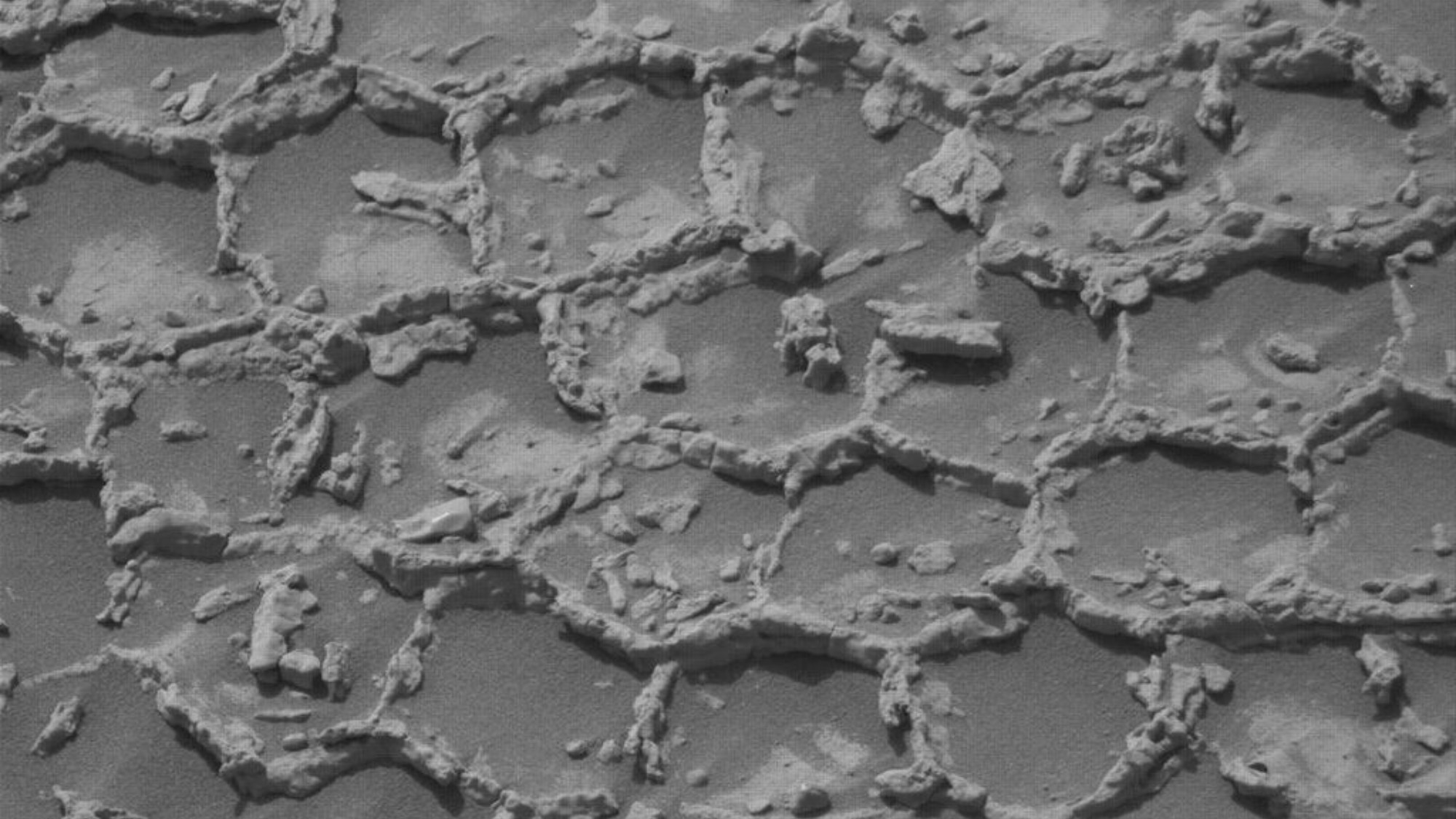
Recently it snapped a pic. The view was… well. Peculiar.
It went down to check an anomaly first spotted from orbit. Got close. Zoomed in.
There it was.
A honeycomb structure right on the Martian soil. Polygonal cells, uniform, tight, repeating like a cosmic carpet. A wallpaper design no human designer could justify. But nature doesn’t care about justification. It just makes patterns.
What is it though? Why does the Red Planet need a beehive layout? No one has the final say.
Dark stones, open questions
The site wasn’t just pretty geometry.
The ground was littered with dark rocks. Just lying there. Scattered.
How did they get there? Did they float down from a cliff face above? Maybe they launched out of Gale crater during some ancient, violent impact. Or worse, better—did they arrive from elsewhere entirely?
Meteorites.
It’s possible these rocks aren’t from Mars at all. They could be space debris, hitching a ride on a fireball billions of years ago. Previous finds in similar locations showed traces of nickel—a metal common in cosmic projectiles, rare in Martian geology.
So are these new guys part of that same club? Did one big event shatter space and scatter fragments here?
We don’t yet know.
That’s the point isn’t it. Mars keeps hiding its diary. Curiosity flips through pages but never reads the last word. Researchers plan to look closer. They’ll analyze the cells, the rocks, the silence between them.
No neat bow. No grand summary.
Just a honeycomb waiting in the dust. And us, staring at a screen, wondering if we’ll ever truly know where it came from. 🤷♂️