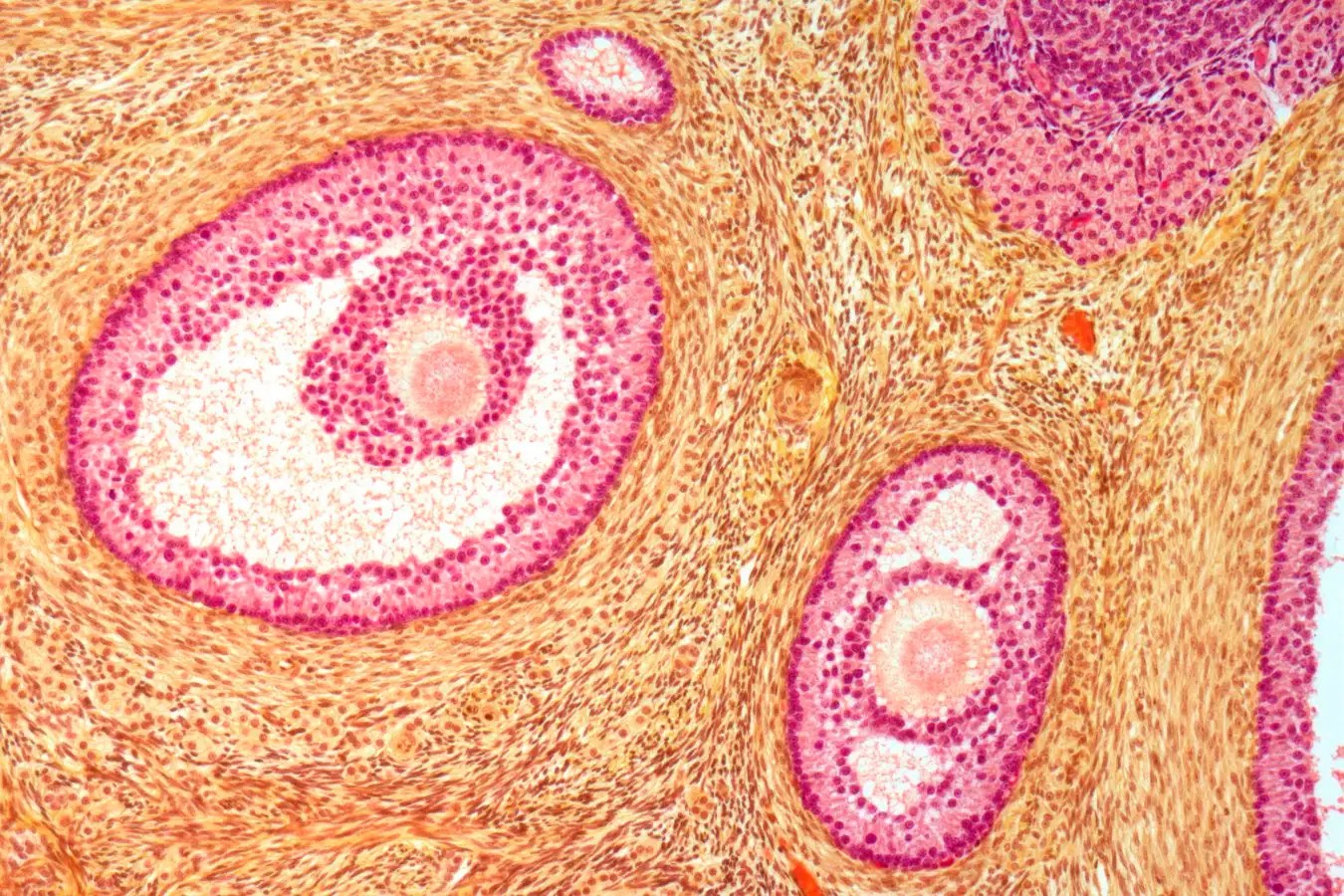
Make them soft. That is the new idea for fixing the aging egg. A simple drug tweak did something remarkable to older rats. It doubled their chance of getting pregnant. Five times more babies, too.
Huge claims? Maybe. But the math checks out.
We all know the drill. Fertility drops off a cliff around the mid-thirties. In places like England and Wales? People keep putting it off anyway. Why? The eggs run out. They age. Quality dips.
But here is the twist we missed for so long. The ovaries get hard. Like old rubber bands. This stiffness isn’t just a byproduct. It actively screws with egg development.
Shixuan Wang from Huazhong University of Science in Wuhan decided to measure that stiffness. He looked at women ranging from eighteen to fifty-two. All had had gynaecological cancers removed, meaning the tissue was pristine when taken. The data showed a clear villain: interleukin-11.
As age ticks up, this protein spikes. It tells fibroblast cells to pump out collagen. Collagen makes tissue stiff. Stiff tissue makes bad eggs. It’s a straightforward chain reaction.
The ovaries don’t just age—they calcify.
So Wang’s team built a workaround. They made mice that couldn’t hear the signal from interleukin-11. Result? Their ovaries stayed pliable as they got older. They ovulated more, too. Better yet than the controls.
Then came the drug trial.
The researchers injected a gene-silencing agent into mice that were roughly human-equivalents in their late thirties. Two shots a week. For four weeks.
The change was visible. The ovaries were 36 percent softer.
Did it work? Absolutely. The conception rate jumped from twenty-five to fifty percent. Litter sizes went from three pups to five. When they tried it on similarly aged rats, the results were even more stark. Conception hit fifty percent again. Litter sizes went up fivefold. One pup becomes five.
It is easy to get excited. But pause.
Francesca Duncan from Northwestern University sees the promise, yes. She notes that human ovaries show the same rise in interleukin-11 with age. But the data comes from cancer patients.
Is the average woman’s body behaving the same way? We do not know yet.
Then there is Barbara Vanderhyden from the University ot Ottawa. She sees a bigger picture here. This isn’t just about having babies later. If you keep the ovaries working longer, you might delay menopause entirely.
Think about what that means. Less osteoporosis. Fewer heart conditions. It is a health bonus that ripples outward.
The drug needs refinement before it ever touches a human. Right now it travels through the whole system.
And that is the danger.
Interleukin-11 exists everywhere in the human body. Blocking it globally could cause havoc. Duncan warns that the safety bar for any drug targeting egg cells is astronomically high. One mistake affects the next generation. Literally.
We also do not know how long this fix would last.
A week of injections? A year? We are guessing. Short-term therapy might reduce the stiffness, but nobody knows if the effect sticks.
The rats had no side effects. Mice? None either. But humans are not rats.
The window for motherhood is tight. This study suggests the wall isn’t solid brick, after all. It is soft tissue.
Can we soften it for good?
The question lingers. We want to believe yes. We just have to wait and see.