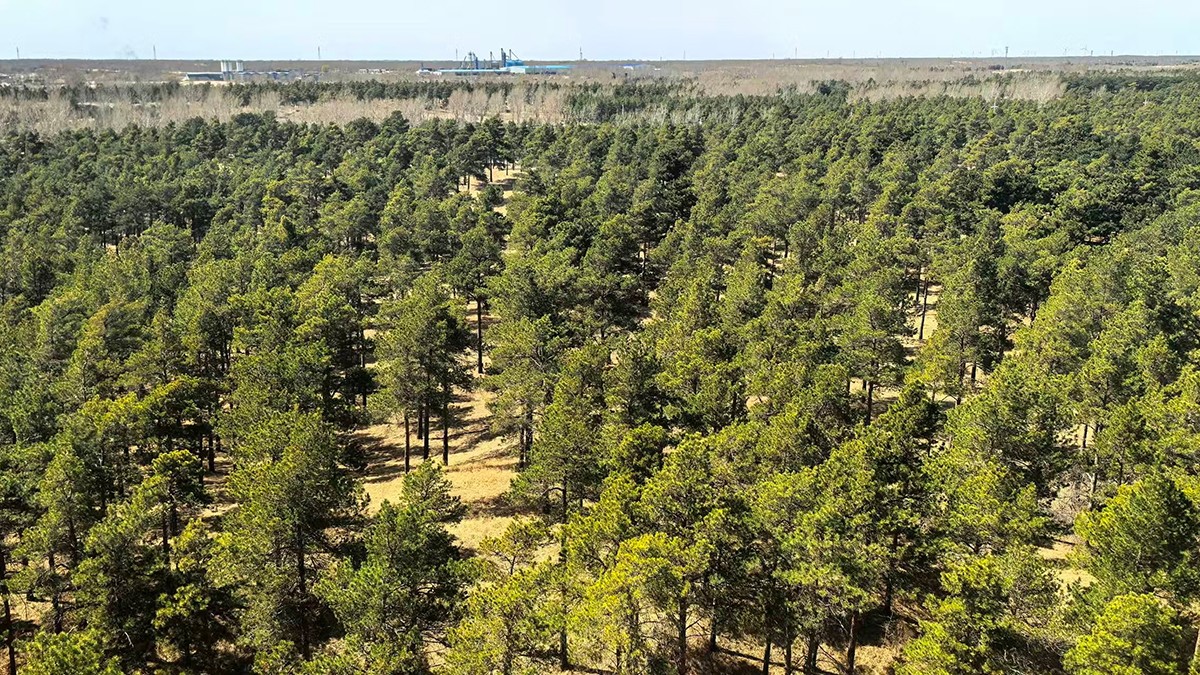
One of the world’s most unforgiving environments, the Taklamakan Desert in northwestern China, is undergoing a surprising transformation. After decades of intentional reforestation, the desert’s margins now function as a measurable carbon sink, absorbing more greenhouse gases than they emit. This demonstrates that with long-term investment and stability, even the most challenging landscapes can contribute to climate change mitigation.
Decades of Afforestation Pay Off
For nearly five decades, China has implemented a large-scale tree-planting initiative around the Taklamakan Desert, an area once described as a “biological void.” Recent analysis by scientists from the U.S. and China, using satellite data, confirms the program’s success. The findings reinforce the idea that smaller-scale afforestation projects can be effective, even if they don’t rival the impact of major rainforests.
“This isn’t about replacing the Amazon,” explains King-Fai Li, an atmospheric scientist. “Some areas are just shrublands, but the consistent drawdown of CO2 is measurable and verifiable.” The program’s success stems from strategic planting along the desert’s edges, where mountain runoff provides vital water sources.
Beyond Carbon: Additional Benefits
The reforestation has yielded multiple benefits beyond carbon sequestration. The trees now impede wind erosion, reducing the intensity and frequency of damaging sandstorms. Local agricultural lands are also better protected. The initiative is part of the larger Three-North Shelterbelt Program, aiming to increase forest cover across 13 northern Chinese provinces from 5.05% to 14.95% by 2050.
A Scalable Solution?
While the carbon uptake from the Taklamakan Desert is not yet massive (estimated at around 60 million tons of CO2 offset annually, compared to global emissions of 40 billion tons), every reduction counts. The research suggests this approach could be replicated in other arid regions. However, it’s crucial to recognize that the desert’s unique features – specifically the surrounding mountains that feed water to the trees – mean this won’t work everywhere.
“Even deserts are not hopeless,” says Li. “With the right planning and patience, it’s possible to bring life back to the land, and help us breathe a little easier.”
The Bigger Picture: Carbon Sinks Under Pressure
The Taklamakan Desert’s transformation is particularly timely given growing concerns about existing carbon sinks. Rising temperatures and changing weather patterns threaten to reverse the role of many forests, turning them from carbon absorbers into carbon emitters. This research underscores the urgent need for diversified climate mitigation strategies.
This is not a standalone solution to the climate crisis, but it’s a vital piece of the puzzle. Understanding where and how CO2 can be drawn down is essential for effective future action.