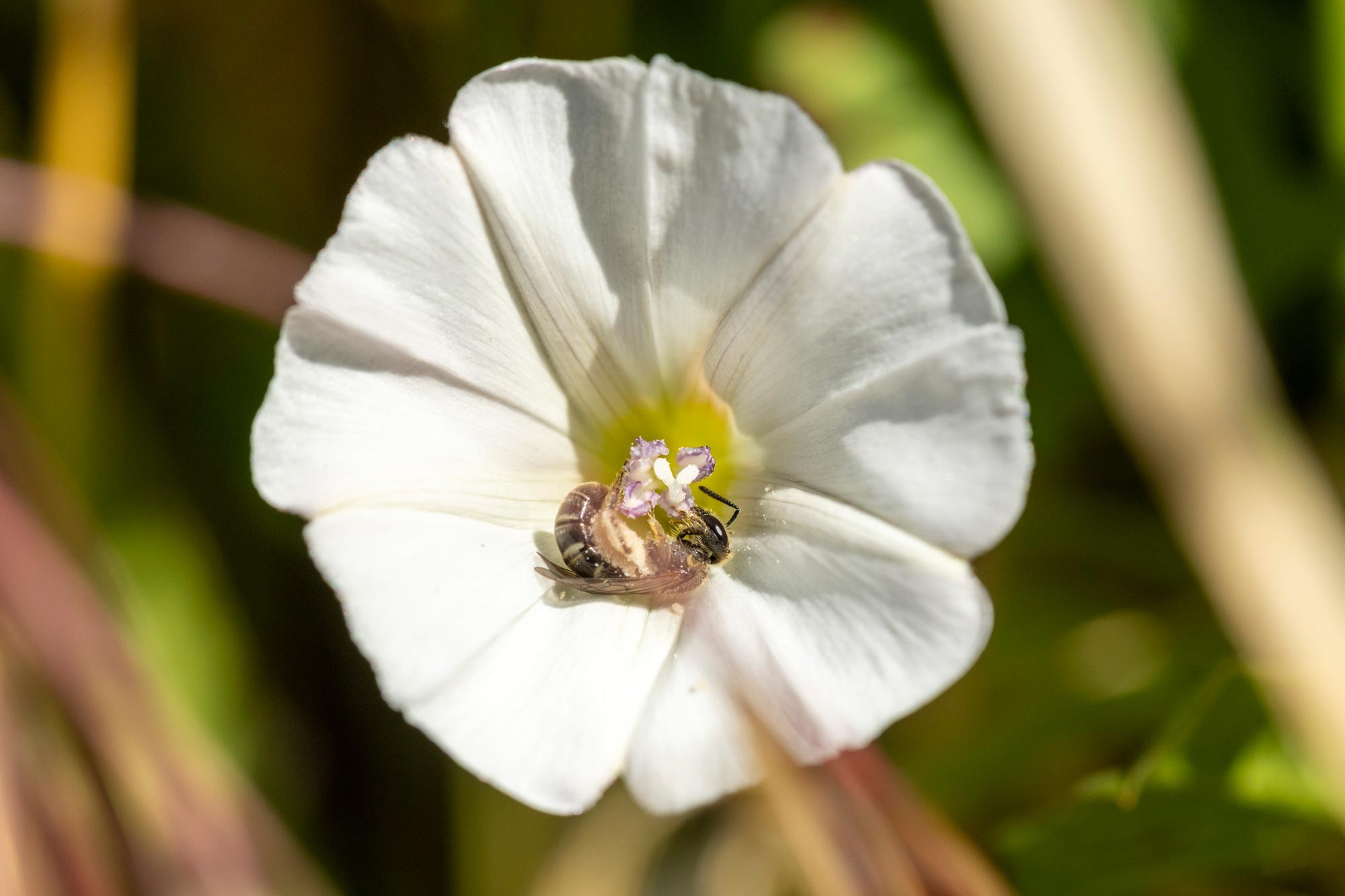
Wild morning glories aren’t adapting to a hotter world. Or rather, they’re trying, but they’ve hit a wall. Not a brick one, a genetic one. A new study from the University of Michigan shows their rate of adaptation has crashed. Ninety-six percent down, just nine years. That’s not a stumble. It’s a freefall.
You’d expect plants to shift. Bloom earlier. Catch the spring before the summer scorches everything. Simple. But evolution isn’t simple when you’re trying to feed both the bees and yourself. And if the bees stop showing up, the flowers change shape to beg them back. Big blooms. Bright traps. Suddenly the plant isn’t thinking about climate. It’s thinking about sex.
Love vs. Survival
It’s a tug of war. Climate change wants earlier flowers. Pollinators want bigger ones.
Usually, a plant can handle both. But these morning glories got locked in. Flower size and flowering time became tethered. If you grow a bigger bloom to catch a bee, your internal clock gets dragged along. You can’t just shift your schedule without dragging the bloom size into it. Or vice versa.
The result? A massive slowdown.
The plant isn’t running out of evolutionary燃料—it’s increasingly locked into a trait set that favors attracting mates, even if the world around them is burning.
Regina Baucom, the professor leading the U-M side of things, sees it as a trap. The genetic material is still there. The potential to adapt hasn’t vanished. The fuel tank is full. But the car is steered wrong. The traits are connected. Linked. One move affects the other in ways that shut down the efficient paths to survival.
Is this good news for farmers? Morning glory is a weed. A pest. Maybe a slower-adapting weed is an easier weed to crush.
Maybe not. No one really knows. The unpredictability is part of the horror.
Not Just Hot
Heat isn’t the only thing killing these plants. Or shaping them.
It’s a cocktail of human messes. Pesticides. Habitat loss. The general grim decline of pollinator populations. Wild plants have to deal with the thermometer and the disappearance of their reproductive partners. Most studies look at climate in a vacuum. This one looked at the whole mess.
Sasha Bishop, who led the fieldwork, called out the contradiction in evolutionary theory. On paper, organisms with high genetic diversity should adapt fast. Theory says: evolve or die. If you have the genes, you change.
Reality says: look. Look at all the dying things.
There’s a lag. A disconnect. The math works. The world doesn’t.
We are looking at a situation where adaptive rates in the wild are trailing far behind what we think should be possible.
They didn’t just guess. They dug up seeds. Literally.
Digging Up the Past
They compared seeds collected from the wild in, say, 2013 with seeds collected nine years later. Then they grew them all under controlled, identical conditions. Controlled. Meaning: if the plants look different, it’s not because the room temperature changed. It’s because their genes changed.
They measured everything. When did they first bloom? How long did the bloom last? Size? Sugar content? Distance between pollen makers and pollen catchers.
Looking at the flowers individually told them nothing. A big flower isn’t a problem. An early flower isn’t a problem. The problem is how they moved together.
The team used a statistic called R to map this. R calculates expected adaptation while accounting for how traits pull on each other. It revealed a stark decline.
In the original generation, adaptation was moving at about 76 percent of expected capacity. Slow, but moving. Nine years later? Down to nine percent.
The genetic diversity remained. The raw materials for evolution were still on hand. But the organization of those traits had collapsed. Evolutionary pathways narrowed. The plants became obsessed with size. And in doing so, they forfeited their ability to adjust timing for a changing climate.
Why does timing matter? Because temperature shifts. Precipitation patterns shift. Flowering earlier or later can be the difference between reproduction and extinction. Thousands of studies back this up. Phenology matters.
But pollinators demand size. So the plants prioritize the immediate need for mates over the long-term need to survive the heat. It is a very human flaw. Optimizing for now at the cost of tomorrow.
The weed survives the farmer. Maybe. It survives the pesticide. Maybe. But the combination of climate stress and pollinator pressure might just grind it down from the inside out.
We assume nature adjusts. It often doesn’t. Sometimes it just locks itself into a bad decision.
What happens next is unclear. The data shows a constraint. A slowing. It does not show extinction. But it does show that evolution can be a tangled mess rather than a clean upward march.