It happened on July 30, 1604. Well, 1610.
The date sticks. Galileo Galilei looked up. He didn’t see rings. Not really.
He saw something weird. Something asymmetrical. The planet Saturn wasn’t just a dot anymore. It was lopsided. Galileo stared into his newly minted telescope—the tech was barely two years old—and scratched his head. What was he looking at?
For a while, he was convinced Saturn had “ears.” Or “handles.” He called them appendages. He thought the planet was somehow hugging two huge moons. A cosmic pair of satellites clinging to its sides. That’s what the data showed him. Or so it seemed.
Galileo thought Saturn might have planetary “love handles” that gave it a weird shape.
He wasn’t crazy. The optics were garbage by modern standards. The rings are thin. Edge-on. When the angle is wrong, they vanish. When they tilt just right, they look like a bulge. Galileo was fighting the limits of early 17th-century glass. He documented the shifting shape in his notebooks. Sometimes the “handles” looked like a disk. Sometimes like distinct moons. Sometimes they disappeared entirely.
Confusing? Yeah.
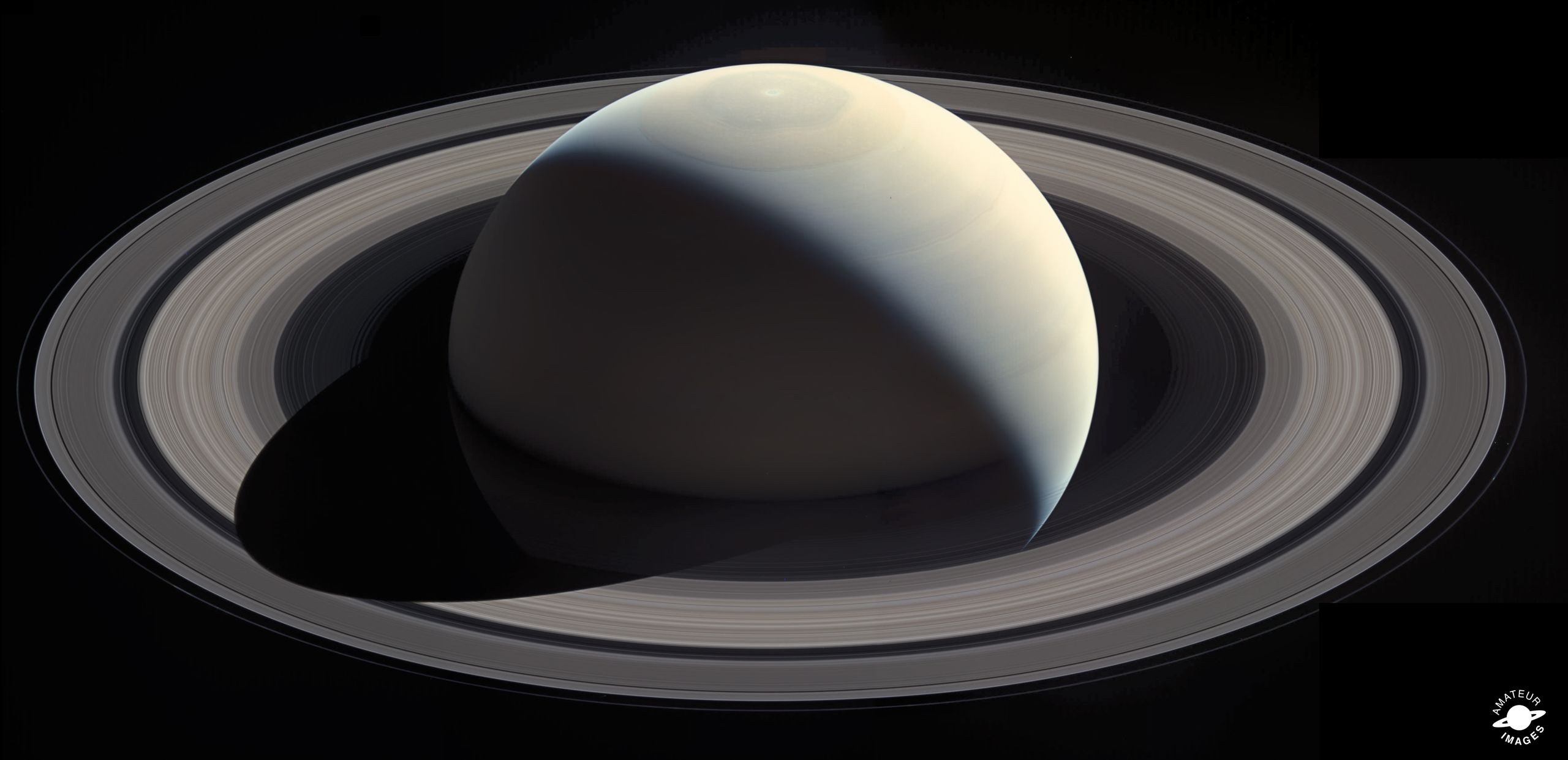
It took fifty more years for the truth to surface. Christiaan Huygens did the math. He cleaned up the optics. He looked closer. 1659. That’s when the fog lifted. Huygens confirmed it: not moons. Not ears. Flat, flat rings.
Why does this specific moment matter?
We take Saturn for granted now. It’s the jewel. The ringed planet. But in 1610, the very concept of planetary rings didn’t exist. If Galileo had stopped there, the history books might have recorded a baffling anomaly rather than a foundational discovery. Instead, he forced astronomy to look at the mechanics of the solar system differently.
The telescope had been invented for merchants and mariners. Distance. Navigation. Gold. Galileo repurposed it. He turned a tool for trade into a window for science.
And that shift changed everything.
He didn’t just find rings. He found the Galilean moons around Jupiter. He mapped the moons. He proved the Copernican model wasn’t just math—it was physical reality. Objects orbiting things that orbited the Sun. The universe had a center that wasn’t us.
Saturn’s rings were the cherry on top.
In time, astronomers discovered rings around otherlarge planets in our solar system (Jupiter and Uranus).
Those rings taught us something else too. They aren’t solid. They’re debris. Tiny particles. Ice. Rock. The leftovers. Stuff that didn’t coalesce. Maybe a moon broke apart. Maybe tidal forces ripped it apart. The rings are a graveyard of planetary history.
Shepherd moons play a role here too. Tiny satellites. They orbit within the bands. They herd the particles. They keep the gaps clean. Without them, the rings would smear out into a disk. They’re the gardeners of the ring system.
Scientists are still figuring it out. We’ve found “kittens.” Those are distinct clumps or formations within the rings. Small structures. We’re only starting to understand their lifecycle.
This is why the July 30 date matters. It marks the moment humanity stopped looking at the sky as a static dome and started seeing it as a dynamic, mechanical system. Galileo didn’t just see Saturn’s rings.