
It is late afternoon in a quiet Midwestern town. Shadows stretch long across the pavement as the orange light of twilight fades into gray. Inside a small apartment, a guy named Ben is slumped over his desk. He isn’t sleeping. He is playing an online role-playing game. The blue glow of his monitor reflects in his tired eyes. He controls a small elfin avatar, moving it through a dusty landscape filled with trees and monsters.
Ben clicks the mouse. He taps the keyboard. His character fights enemies and picks up their loot. He is grabbing virtual coins. He has spent ten hours straight to build up a stash. He needs those coins. They buy armor. They buy weapons. They help him level up.
“I’d be level 100 by now,” he thinks, “if this didn’t take so damn long.”
He blinks. He keeps playing.
Half a world away, in a cramped office in China, the scene looks similar but feels different. Fluorescent lights buzz overhead. Dozens of workers sit at long tables. Each one has a computer. Each one is playing the exact same game Ben is playing. But these people are not playing for fun. They are working.
They earn coins faster. They sell them for real money. The faster they kill monsters, the more cash they make. This is gold farming. It is a trade where people grind through online games to collect virtual currency and items. Then they sell those assets to other players. Players like Ben who want to skip the grind and buy their way to the top.
A History of Gold Farming
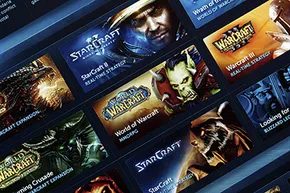

Massively multiplayer online games (MMOGs) aren’t just playgrounds. They are the primary marketplace where gold farming thrives. These games let thousands, sometimes millions, of people interact at once over the internet. The roots go back to the late 1980s. Networked mainframes ran text-based games called multi-user dungeons (MUDs).
MUDs were fantasy worlds. They had virtual objects like currency, weapons, and armor. Technology improved. By the late 1990s, graphics-based MMOGs exploded onto the scene. Titles like “Ultima Online,” “EverQuest,” and “Lineage” changed the landscape. Role-playing games (RPGs) became a dominant type of MMOG. Players navigated characters through virtual worlds to complete tasks.
Analysts predicted “World of Warcraft,” a major MMORPG, would hit 8.2 million subscribers by the end of 2015.
Gold farming existed from day one. Text-based MUD players were the first to trade virtual currency for real money. The scale was tiny back then. The practice skyrocketed in 1999. Players started using eBay to sell virtual goods. Winning bidders met sellers in-game to swap items. Entrepreneurs saw real money in virtual commerce. They set up businesses to create and sell game wealth.
The results were massive. Third-party transactions hit an estimated $3.023 billion by 2009.
The Economics of Virtual Wealth
Gold farming is central to the virtual economy. This term describes economies inside online games. Like the real world, fantasy worlds have finite resources. Supply and demand still apply. Gold farming expands this definition. It links virtual goods to actual money.
So how does it work? Farmers obtain goods by playing games. They collect currency and items. Some are amateurs. They do it for a hobby or extra cash. Others are professionals. They do it for a living.
Since the early 2000s, the trend shifted. Businesses now employ multiple gold farmers. These are called gaming workshops. Operations exist globally. You find them in Mexico, Romania, Russia, and Indonesia. Most are in China. That country had an estimated 2,000 gaming workshops in 2007. They employed about 500,000 gold farmers.
Advertising is key. Farmers need buyers. They use fan sites and search engines. They create characters to chat with players in-game. One “World of Warcraft” farmer used dead bodies to spell out their website name. It was gruesome. It was effective.
Buyers pay real money. This used to happen on eBay. The platform banned the practice in January 2007. Now, websites handle payments through PayPal. Delivery happens two ways. Buyers meet farmers in-game. Or, trades occur via in-game mail functions.
Who actually uses these services? Surveys show 22 to 25 percent of players, depending on the region. That’s high. Gold farming has a bad reputation. Yet people still buy in.
Power-Leveling as a Shortcut
Power-leveling is closely tied to gold farming. Characters in MMORPGs like “World of Warcraft” gain levels. Higher levels mean more effectiveness. Power-leveling lets players hire someone to advance a character. You can buy a character at a higher level directly.
It can be lucrative. In 2007, a player paid $9,500 for a “World of Warcraft” character. The line between playing and buying is thinner than it looks.

If the whole gold farming thing feels sketchy, you’re not wrong. A lot of players view it as toxic. It changes how you play. Human rights groups have even pointed out the grim reality behind the screens. Yet, there are defenders. They make surprisingly solid arguments for why these operations should stay.
The hate comes from the shift in gameplay. Gold farmers don’t really play. They don’t quest. They don’t party up. They just wander. They collect virtual cash. Or they post ads. Some aren’t even human. Bots are scripted characters. They do the work while the farmer sleeps.
Then there’s the economy. Many argue it causes inflation. Farmers kill monsters. They dump gold. The market floods. Currency loses value. Goods get expensive. It takes forever to buy anything. Some people dispute this. They say farmers just take coins that would be earned anyway. But the theory sticks. It’s widely accepted in the community.
The Reality of Virtual Sweatshops
The labor issues are harder to ignore. Workers in some Chinese workshops live on-site. Dorms are cramped. Shifts last 12 hours. Seven days a week. Few evenings off. The pay? Roughly $145 a month in 2007. Critics call them “virtual sweatshops.” Some reports even suggest prisoners are forced to work. No pay. Just long hours.
The Economic Counter-Argument
Defenders have a different view. Grinding for gold is slow. It rewards those with too much time. It punishes busy people. Farmers level the playing field. They let professionals play without spending weeks.
There’s also the money angle. In 2009, gold farms generated over $3 billion. Most of it stayed in the host countries. Compare that to coffee. In 2002, coffee made $70 billion. Only $5.5 billion stayed in growing countries. The math favors the farmers.
Gamers vs. Gold Farmers
The disdain runs deep. Some gamers harass collectors. They use slurs. They kill their characters. Channeling that rage productively is hard. NoGold.org tried. It launched in 2005. Its goal? Stop gold farming. Stop power leveling. Tactics included getting fan sites to boycott ads for these services.
Rules and Regulations for Gold Farming

You’ve read about the massive operations. You’ve seen the screenshots. But is actually buying that gold a crime? Here is the reality check.
It’s complicated.
Technically? No. You aren’t going to get handcuffed by federal agents for purchasing in-game currency. Practically? Yes. It’s a violation of the rules you agreed to. That makes it a legal gray area. A murky, unstable zone.
The terms of service are clear. Blizzard Entertainment, the giant behind World of Warcraft, spelled it out in plain English: you may not sell in-game items or currency for real money. Simple. Understandable. Completely ignored.
Why? Because enforcement is a nightmare.
Detecting gold farmers is hard. They operate in shadows, using alt accounts and bots. Even when you catch them, the penalty is weak. Account suspension. Fine. They log off. They make a new account. They keep playing. The deterrent value is near zero.
When Game Makers Strike Back
Developers haven’t just sat idle. They’ve fought back with lawyers.
In 2008, Blizzard won a significant victory against In Game Dollar. The company, which specialized in gold farming and power-leveling, was forced into a settlement. The terms? Stop advertising inside the game. Stop selling virtual items for real cash. Game over for them.
But this is rare. Most cases never make it to court.
Government Intervention: A Global Patch
Some countries have stepped in to write their own rules.
South Korea moved first. In 2006, they passed legislation. It was amended later to specifically ban the exchange of virtual goods for real money—if those goods were obtained through security vulnerabilities or automated bots. Note the caveat. If you grind manually? It’s still okay. The law targets the cheaters, not the grinders.
China took a different path. Reluctance.
Developing nations often look at gold farming as an economic engine. While there is some social stigma, the industry is huge. It creates jobs. It generates revenue. China hasn’t cracked down with the same intensity.
The IRS Wants Its Cut
Here is the part most players ignore until it’s too late.
Taxes.
The U.S. Internal Revenue Service (IRS) has a dedicated webpage. It is titled: “Tax Consequences of Virtual World Transactions.” It doesn’t play games. It states clearly: if you make more money in the virtual world than you spend, that profit is taxable income.
Local officials in China are also cashing in. They require gold farms to register with the municipality. Then they collect taxes on the earnings.
Ignoring this isn’t a risk. It’s a liability.
Free-to-Play vs. Subscription Models
How do studios stop the gray market? They change the business model.
Enter the free-to-play strategy.
Games like World of Warcraft rely on monthly subscriptions. There is no official marketplace. Players want items the game doesn’t sell. So they turn to third-party gold farms. High demand. High profit.
Free-to-play changes the equation.
Players access the game for free. But the company controls the marketplace. You want that flashy sword? You buy it with real money through the official store. It’s fast. It’s legal. It’s built-in.
This model takes gold farmers out of the loop. Why risk a ban when you can just buy the loot directly from the developer?
It’s a smarter approach for some. But not all.
The subscription model persists. The demand remains. And the gray area stays open.
Will regulators ever close it? Probably not. The money is too big. The enforcement too hard.
So you keep playing. You keep buying. Or you don’t. The choice is yours.
The rules, however, are watching.