Cinematography has never been static. It’s always been a tug-of-war between what the director wants to show and what the tools can actually deliver. We tend to think of modern film innovation as purely digital—the shift from film stock to sensors, or analog sound to digital audio. But the early pioneers didn’t have code to write. They had physical problems to solve.
Take the tracking shot. You can’t just glide a camera through a room if the machine weighs half a ton. Early crews would physically move the background sets to create the illusion of movement. Silent films relied on live orchestras and intertitles because microphones didn’t exist yet. Once cameras got mobile and audio became synchronized, location shooting exploded. The look of cinema shifted overnight.
From Louis Lumière’s first camera in 1895 to today’s IMAX rigs, technology has always served the story. Here are five breakthroughs that changed how we watch movies.
5: The Steadicam
Garret Brown had a specific headache in 1976. He wanted handheld fluidity without the shakiness. Before his invention, you had two choices: mount the camera on a wheeled dolly or shoulder it. Both had limits. Dollies required tracks. Shoulder shots were exhausting and jerky.
Brown didn’t reinvent the wheel. He reinvented how the weight was distributed. His solution involved a gimbal system and an elastic arm that absorbed the operator’s body movements. The operator wore the rig like armor. Counterweights balanced the heavy lens and body. The result was a shot that floated.
This wasn’t just a gimmick. It allowed cinematographers to follow characters in ways that felt intimate and unstable yet controlled. You saw it clearly in Rocky, where the camera climbs the museum steps with Balboa. You saw it in The Shining, where Jack Nicholson winds through the hedge maze. The camera became a character. It didn’t just record; it participated.
4: The Dolly
Before the Steadicam, if you wanted to move with an actor, you needed a track. And if you needed a track, you needed a flat surface. And if you needed a flat surface, you often needed to build a set for it. The dolly solved the mobility issue, but it introduced a new constraint: the track.
Early dollies were simple. A wooden platform on four wheels. Pushed by hand. But the innovation wasn’t the cart itself. It was the realization that movement could be choreographed. Directors could plan the camera’s path as carefully as the actors’ lines.
This led to the era of the “gliding eye.” Think of the opening of Citizen Kane. The camera doesn’t just sit there. It moves through the windows, into the room, following young Charles as he plays in the snow. The dolly created a sense of scale and space that static shots couldn’t match. It allowed the audience to feel like they were drifting through the scene.
But the dolly was still tethered. If the terrain wasn’t perfect, the shot failed. If the track was uneven, the image shook. Filmmakers wanted more freedom. They wanted to capture movement in real-time, in real-world environments where tracks couldn’t be laid. That desire led to the next revolution.
“The camera became a character. It didn’t just record; it participated.”
The tension between stability and mobility defined the next century of film. Every time

The Hidden Tracks Beneath Your Feet
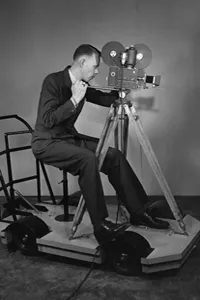
Segundo de Chomón likely had no idea he was changing cinema forever when he rigged up that camera dolly in 1907. It took another seven years for the first tracking shot to hit a popular screen. Putting a lens on wheels seems obvious now, but for over a decade, filmmakers were stuck filming from a static tripod. The heavy, stable dollies you see on sets today are direct descendants of those early experiments.
If you look closely at the side of a modern dolly, you will usually see one of two names stamped there: J.L. Fisher or Chapman/Leonard. These are the brands that power the smooth shots we take for granted.
The secret to a fluid camera movement isn’t just the machine. It is the weight of the unit and the surface it rolls across. While some hard, smooth concrete roads allow a dolly to glide solo, most directors need a rail system. Think of it as a miniature railroad track made from round metal tubes. This infrastructure is what allows for those seamless tracking shots we’ve all seen a thousand times.
Modern dollies function like heavy sleds on four wheels. They can move in any direction, thanks to a hydraulic lift system that holds the camera steady. The cameraman sits on a seat bolted to the dolly itself. A dolly grip stands by the side, pushing the entire assembly with precise, calculated accuracy. Next time you watch a romantic scene of a couple strolling down a busy street, look down. You will likely see the faint line of metal track hidden in the grass or pavement beside them.
The Evolution of Computer Generated Imaging
Computer generated imaging, or CGI, did not originate on a movie set. It was born in university research labs. The initial goal was simple: create images directly from computer data. By the late 1970s, this early imaging technology was adopted by special effects teams at production companies, kicking off what we now recognize as the CG era.
“Westworld” holds the title for the first film to use 2-D CGI. The shots from the perspective of Yul Brenner’s robotic cowboy were mind-blowing at the time. Today, they look a bit silly. Still, that film opened the door for “Tron” in 1982. That sci-fi adventure was the first to make extensive use of CGI.
A few years later, director Barry Levinson pushed the boundary further. His team created the first CGI character in “Young Sherlock Holmes.” From that point, innovators like James Cameron and Steven Spielberg, along with the newly minted Pixar studio, revolutionized the medium. Films like “The Terminator,” “Jurassic Park,” and “Toy Story” set new standards.
Today, you would be hard-pressed to find a mainstream movie released by a major studio that lacks some form of CG effect.
The Shift to Digital Technology
The next leap wasn’t about creating fake worlds, but about capturing real ones. The transition to digital technology changed how movies were shot, edited, and distributed. It wasn’t just a new tool; it was a new language.

The Slow Climb to Digital Reality
Back in the late 1980s, Sony dropped the first digital cameras on the market. Small scale. Niche. Nobody really knew where that was going. We look back now and see the seismic shift, but at the time? It was just another gadget. Then, in 1995, Fox took a leap. They used a digital camera for a pilot called Pasadena. The show didn’t last. The technology did.
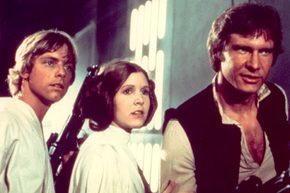
Hollywood was hesitant. Why risk it? Film looked better. Digital looked… digital. It wasn’t until the tech caught up to the aesthetic that studios would commit. George Lucas changed the game in 2002 with Star Wars: Episode II – Attack of the Clones. He made the bold move to shoot a major blockbuster digitally. Since then, the gear shrank. It got better. Now you can capture HD footage on your phone. The barrier to entry collapsed.
Why 3-D Wasn’t Just Gimmicky Glasses
People argue about what the last big innovation was. Some say it’s streaming. Others say CGI. But a lot of filmmakers swear it’s stereoscopic imaging. You know it as 3-D. The concept isn’t new. It dates back to 1838. There was a “golden age” between 1950 and 1960. Alfred Hitchcock’s Dial M for Murder got into it. The tech was clunky. The screening methods were restrictive. It fizzled out until the early 1970s.
When it returned, it felt like a novelty. Jaws 3-D. Friday the 13th Part 3. Cardboard glasses. It was a fun night out, not a revolution. The real shift happened in the mid-1980s. Transitions hit a Canadian tech expo in 1986. It was an IMAX 3-D film. That’s when the gears started turning.
“Breakthroughs in screening technology and the cameras used to shoot in 3-D have spawned a boom in big-budget stereoscopic films.”
The hardware improved. The experience got immersive. Then James Cameron arrived. Avatar didn’t just use the tech; it weaponized it. It jarred the world’s consciousness. Audiences weren’t just watching a movie. They were in a CGI world. The immersion was total.
The Future of Viewing
So where does that leave us? We have high-definition video in our pockets. We have immersive 3-D spectacles. The gap between consumer tech and professional filmmaking has all but vanished.
But here’s the thing. We’re still chasing the “final” innovation. What comes after 3-D? What comes after VR? The tech keeps shrinking. The resolution keeps climbing. But the human desire for storytelling remains the same. The tools change. The stories don’t.
We’re left with bigger screens. Sharper images. Deeper immersion. And still, the question lingers. Is that it? Or is the next big leap already loading?