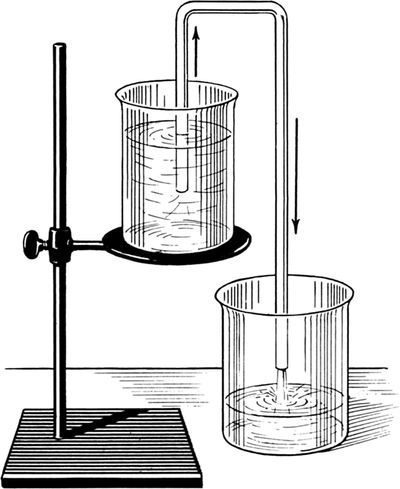
A siphon is deceptively simple. It is usually just a tube bent into an L-shape with one leg longer than the other. You drop the short end into a container of liquid, suck or pump the air out to start the flow, and suddenly the liquid climbs over the rim and spills down the long leg to a lower level. It looks like magic. It is physics.
We often assume that atmospheric pressure pushes the liquid up the tube. That is a common misconception. A siphon works in a vacuum. The real drivers are gravity and cohesion. Gravity pulls the liquid down the longer leg. This creates a slight vacuum at the top of the bend. Cohesive forces—the internal stickiness of the liquid—keep the column intact so it doesn’t break under its own weight. As long as the liquid holds together, gravity does the work.
The height limit is strict. At sea level, water cannot be lifted more than about 10 meters (33 feet). Push it higher, and the cohesive forces snap. The column breaks. The flow stops.
This principle applies to more than just garden hoses. Civil engineers use inverted siphons to manage infrastructure. These pipes carry sewage or stormwater under streams, highways, or deep cuts in the ground. Unlike standard sewers that rely on open-channel gravity flow, an inverted siphon is completely filled with liquid. It flows under pressure. This allows water to traverse depressions it would otherwise be unable to cross naturally.
The distinction matters. A standard siphon relies on gravity pulling a hanging column. An inverted siphon relies on pressure pushing a filled pipe. Both move liquid against the slope, but they do it differently. One hangs. One pushes. Both work because liquids resist breaking apart.
Why do we still get this wrong? Probably because we can’t see air pressure in action inside a clear tube. We see the water rise and assume the atmosphere is holding it up. But remove the air. Remove the pressure. The water still rises. Gravity is the engine. Cohesion is the chain. Without either, the siphon fails.
Inverted siphons keep cities from flooding when the ground gets in the way. They are hidden underground, pressurized and full. They don’t look like siphons. They don’t act like siphons. But they solve the same problem: moving liquid from high to low, even when the path requires going down and then back up.
The limit remains the same, though. Ten meters. No more. Push past that, and the chain breaks. The flow dies. Gravity wins.