Earth gets bombarded.
Not just occasionally. Every single second, actually.
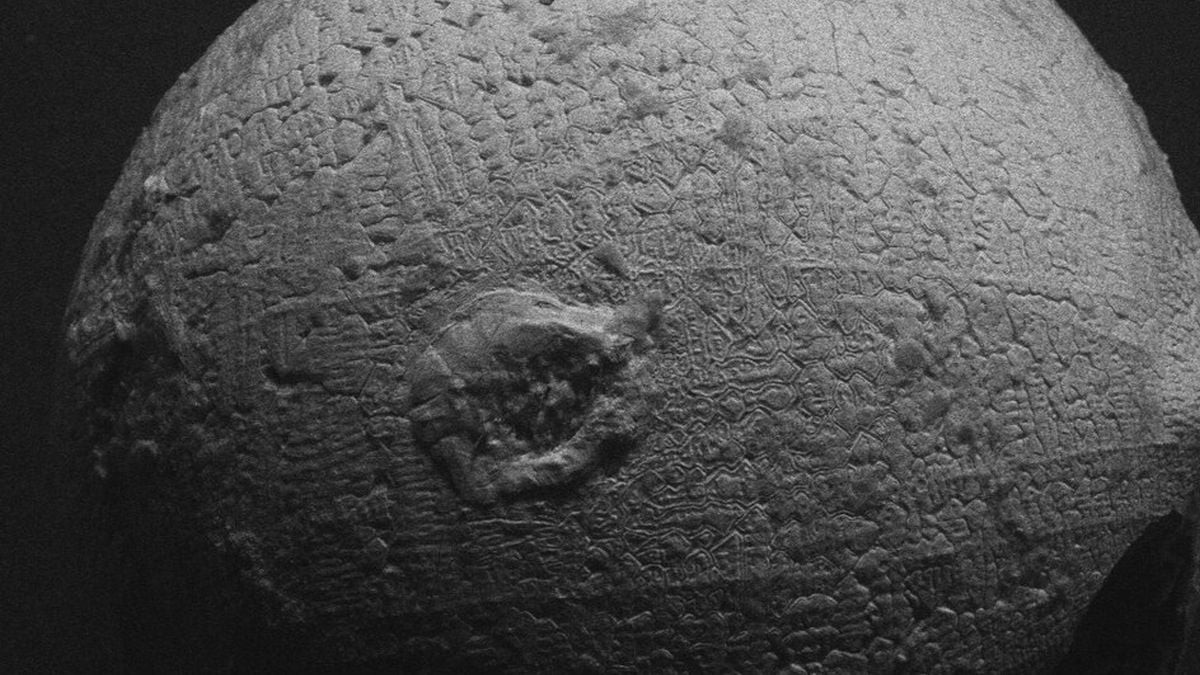
Thousands of tons of cosmic debris hit us every year, most of it smaller than a poppy seed. It’s like invisible snow. You walk through it, you breathe it in, and you don’t notice. Scientists call them micrometeorites. They start as dust shed from asteroids and comets out there in the void, then burn up in our atmosphere, turning into tiny, melted glassy spheres.
For years, these little balls of glass were just… well, dust. Background noise. But researchers looking closer recently found something strange locked inside. Fingerprints.
They found evidence of a specific asteroid. A parent body.
And here is the kicker.
We don’t have a sample of this rock. Not in any museum. Not in any collection. It’s “missing” from the catalog of meteorites we already know, which is our primary way of understanding what space rocks are made of.
Connecting the dots in ice
Matthias Van Ginneken at the University of Kent led this charge. He argues that micrometeorite research is still in its infancy, barely scratched.
“This new research shows that micrometeorities may hold evidence that a significant part… is ‘missing’ from collections.”
We rely on meteorites. Big, heavy chunks that survive the trip and crash into deserts or oceans. But those are biased. They represent only the tough stuff. Micrometeorites are the soft stuff. The fine grain.
Studying them lets us see the full spectrum. Without spending billions on sample return missions to fly to distant asteroids and drag rocks back. That’s the appeal. You get the data without the rocket fuel.
But some of this dust has been annoying scientists since 2005.
Researchers digging through Antarctic ice sheets—because that’s where the clean, unpreserved stuff settles—noticed some micrometeorites had weird oxygen isotopes. Heavier than usual. They tagged this batch as “Group 4” and shrugged. It didn’t match anything we had in the jars.
Then in 2020 things got weird.
A team led by Martin Suttle found unmelted Group 4 particles. Still in ice. Still carrying those heavy isotopes.
This changed everything.
Previously, people thought the melting process itself might have twisted the isotopic signature. Wrong. The heavy isotopes came from the rock itself. From the parent body.
Simultaneously, another puzzle emerged. Matthew Genge at Imperial College London had spotted particles where olivine—a specific mineral—had drifted to one side while the meteor burned up. Cumulate olivine.
Van Ginneken looked at these two oddballs. Group 4 heavy isotopes. Cumulate olivine shifting.
He wondered: What if they’re the same thing?
He overlaid the data. The match was almost perfect.
“Research is about connecting the dots,” he says.
These aren’t two separate anomalies. They are two features of one unique asteroid type.
Sulfur, silence, and secrets
The team dug deeper. They called this new group SCumPo. Sulfur-rich Cumulate olivine Poor-magnetite.
Three strikes.
- Heavy Oxygen Isotopes: Implies the rock was altered by water that was isotopically distinct. Not standard asteroid water.
- Sulfur-Rich: It smells like the rare CY chondrites, a class of rocks so rare they barely exist in our databases.
- No Magnetite: This is the clincher. Magnetite forms when iron burns in air. If it’s missing, the iron didn’t have time or opportunity to oxidize. It implies the atmosphere around the particle was consumed of its oxygen. Or the rock was so carbon-rich it grabbed the oxygen for itself before iron could.
Basically. It suggests the parent body was incredibly reduced. Carbon-heavy.
And it’s not a trace.
Simulations say about 10 percent of the micrometeoritic flux to Earth comes from this thing. That is not a trickle. That is a deluge.
So where is it?
The speed at which these particles hit us is too fast for the main asteroid belt between Mars and Near Earth objects. It’s too quick. They come from near-Earth asteroids (NEAs).
There are 40,000 of those in our catalogs right now.
So, logic dictates.
Is one of those 40,000 rocks the parent? Probably. Maybe it already has a number and a boring name like 2004 BL86. We just don’t know because we’ve only touched the big survivors, not the dust.
“So it is very possible that… this has already been identified.”
To know for sure? Send a probe. Pick it. Bring it home. Expensive. Hard.
Or keep studying the snow on your roof.
Hiding in plain sight
Here is the unsettling thought.
We have boxes and boxes of micrometeorites collected from Antarctica over decades. Boxes sitting in labs, waiting. We only look at the surface of that iceberg.
If SCumPo is hiding there…
Are there other missing asteroids?
Groups that never crashed big enough to make a splat on the news? Rocks that have been silently rain-fed to us for millions of years?
Likely yes.
We are blind to them because we ignore the fine stuff.
The paper is in Science Advances. The door is open. But nobody is really looking yet. Not deeply.
We keep looking up at the dark sky. Waiting for the fireball. While the evidence rains down. Silent. Glassy. Gone.