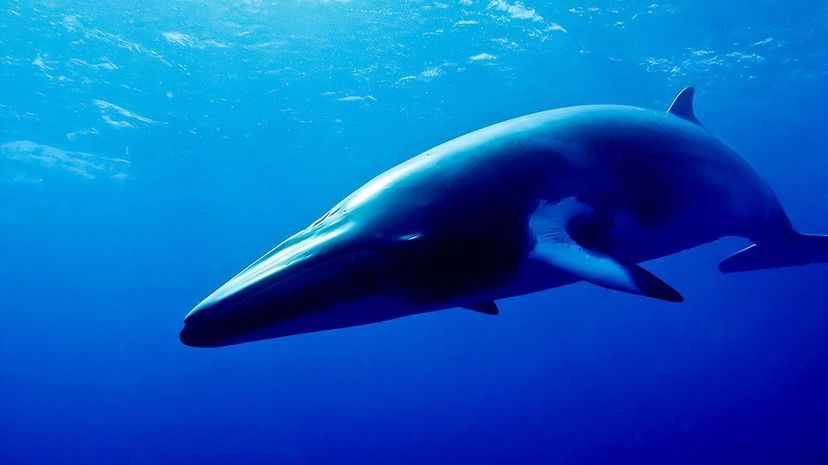
The name sounds like a 70s funk band. This is not the case with Western Pacific Biotwang. This is the signature of a peculiar five-part whale call that has baffled marine biologists since it was first recorded by hydrophones in 2014. The sound changes from a low moan to a harsh metallic bang that cannot be easily classified. Now a new study suggests that the culprit is a minke whale.
Decode the Biotwang frequency
Researchers from Cornell University and Oregon State University published their findings in the Journal of the Acoustical Society of America. They tracked the noise with a passive acoustic ocean gliders. These autonomous vehicles will venture into the deepest parts of the Pacific Ocean, especially east of Guam and near the Mariana Trench.
The call itself was short. Duration is 2.5-3.5 seconds. Its frequency range is wide and extends from 38 Hz to 8000 Hz. This covers the low rumble of distant thunder and the high pitch of human speech. The sound profile matches the “Star Wars” sounds of the Great Barrier Reef minke whales. This similarity led the researchers to conclude that minke whales likely developed the unique Western Pacific Biotwang.
Why do minke whales make noise?
Minke whales are baleen whales. They are the smallest species of the group. Instead of teeth, they have baleen plates in their mouths. These keratin structures allow them to filter krill and small fish from the water.
Baleen whales make noise. They produce regionally specific sounds. They tend to call mostly during the winter months. Often these sounds are associated with mating rituals. Western Pacific Biotwang breaks that mold. The researchers recorded the calls periodically from the fall of 2014 to the spring of 2015. This timing suggests that the noise has a purpose other than reproduction. This can be a social thing. Probably navigation. The exact cause is unknown.
Find more Biotwang
Identifying the source was a breakthrough. The next challenge is understanding the context. Marine scientists need to find out how often whales sing in summer and winter. You also need to check if that call exists elsewhere.
If the Western Pacific Biotwang has spread widely to different ocean basins, a new name may be necessary. For now, it remains a mysterious acoustic feature in the deep Pacific. The sound persists in the data. More clues are awaited. What do whales tell us in the dark ocean?