We can’t imagine life without instant text messages. We struggle to picture the world before email. Going further back, before the telegraph? Even harder. And the idea of a sophisticated postal system feels almost antiquated now. Yet, for millennia, one method of communication survived. It wasn’t built on wires or satellites. It was built on feathers.
Carrier pigeons were the internet of the ancient and medieval worlds. Their reliability was unmatched for centuries. They worked from ancient Rome right up until the mid-20th century. The secret lay in their homing instinct. Release a pigeon hundreds of miles from its nest. It will find its way back. Always.
Scientists still debate the exact mechanics. Most agree on a “map and compass” approach. They track the sun’s position. They sense the Earth’s magnetic field. The result is a biological GPS that humans still can’t fully replicate. This instinct made them invaluable. Commanders relied on them when all other lines of communication failed.
Some pigeons became celebrities. Governments decorated them. Stories of their heroics circulated widely. These weren’t just birds. They were lifesavers. Here are the stories of the pigeons that changed the course of history.
5: Brutus and the Siege of Modena
The year was 43 BC. The political landscape of Rome was fracturing. Mark Antony had laid siege to Modena. He was a powerful figure. His forces were pressing hard against the defenders. The situation looked dire for the Republic.
Enter a pigeon named Brutus.
The name might sound like a Shakespearean villain. But this bird was a hero. Brutus carried a message from the defenders to the Roman Senate. The message was simple but critical. They needed help. They were holding on, but barely.
The Senate read the plea. They dispatched relief forces. The reinforcements arrived in time. The siege was lifted. Mark Antony’s momentum was broken.
Without that flight, the outcome of the siege might have been different. The balance of power in Rome could have shifted. Brutus didn’t just deliver mail. He helped preserve a government. It’s a small act. A tiny bird flying against the wind. But the consequences rippled outward.
This wasn’t an isolated incident. Pigeons had served in conflicts before. But the Siege of Modena cemented their reputation. They were fast. They were reliable. They were indispensable.
History remembers the generals. It remembers the politicians. It rarely remembers the birds. But without them, the generals might have lost their armies. The politicians might have lost their power.
Life before modern communication was a gamble. You sent a messenger. You hoped he wouldn’t be killed. You hoped his horse wouldn’t die. You hoped the message wouldn’t be lost. Pigeons removed some of that risk. They didn’t stop the risk. They just managed it.
Brutus proved that a small creature could bear the weight of a city’s survival. That lesson held true for thousands of years. It would be tested again. And again. In wars that would dwarf the scale of Modena.

The utility of these birds wasn’t limited to battlefield strategy. It extended into the high-stakes world of finance and gossip.
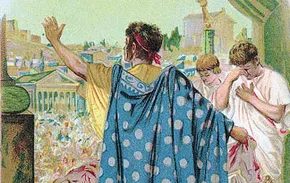
Consider the 4th-century Roman magistrate. He didn’t use his pigeon to coordinate an invasion or request backup. He used it to send a simple, personal update: he was going to be late coming home from the theater. A little bird told his wife he’d be delayed. A little bird kept his reputation intact.
But the military application? That’s where things got serious.
Pliny the Elder captured the strategic panic of that moment in 44 B.C. He wrote about the siege of Mutina (now Modena). Marcus Junius Brutus held the city. His allies, Decimus Brutus and Hirtius, were outside. The enemy, led by Marc Antony, had surrounded them. They had sentinels. They had circumvallations (walls built to keep the enemy out). They had nets over the rivers to stop fish or swimmers.
None of it mattered against aerial messengers.
Pliny asked the rhetorical question that still haunts military strategists today: “Of what avail were sentinels, circumvallations or nets obstructing the rivers, when intelligence could be conveyed by aerial messengers?”
Brutus used the birds. The messages got through. The allies arrived. The city was saved.
It was a tactical miracle. But the real test of homing pigeons would come centuries later. A test that wouldn’t just change a battle. It would make a family fortunes.
4: The Rothschild Fortune and the Battle of Waterloo
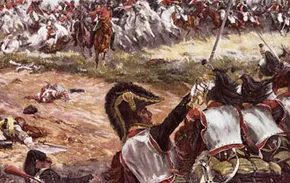
We often think of the Battle of Waterloo (June 18, 1815) as the final nail in Napoleon’s coffin. It was. But the race to get the news to London was just as important as the fighting itself.
The British Army, led by the Duke of Wellington, had just defeated Napoleon’s French forces. The victory was decisive. But in London, trading floors were a nervous wreck. Prices for British government bonds (consols) were plummeting. Traders assumed the worst. They assumed Wellington had lost.
Enter James de Rothschild.
James, the head of the Frankfurt branch of the banking dynasty, didn’t have to wait for the official dispatches. He had his own network. He used homing pigeons to get news from the continent faster than the government couriers could.
He got word that Wellington had won.
Now, here’s where it gets tricky. And where history has been twisted by myth.
James didn’t just buy stock because he knew the outcome. He didn’t sell because he knew the outcome. The myth says he bought consols first, driving prices up, then sold them after the official news confirmed the British victory, making a massive profit.
It’s a seductive story. It paints him as a master manipulator who used inside information to crash and pump the market.
But it’s likely not how it happened.
If James had bought before the news broke, he was betting heavily on a British victory. If he lost, he’d be ruined. That’s not speculation. That’s gambling.
The more plausible scenario? He waited. He got the news via his pigeons. He bought a significant amount of consols.
The story of the Rothschilds and their wealth often circles back to that single day in June 1815. Everyone knows the broad strokes. Napoleon lost at Waterloo. The Duke of Wellington won. The world moved on. But the financial machinery behind the scenes was a different beast entirely. It relied on speed. And not just any speed. It relied on feathers.
Before the electric telegraph could zip information across continents, news moved at the speed of horse hooves or sailing ships. For traders in London, this gap was a chasm. It was a window where fortunes could be made or lost based on who heard the news first. Nathan Mayer Rothschild understood this better than anyone. He didn’t just watch the markets; he built a nervous system for Europe.
His network was a mix of human couriers, trusted agents, and something far more resilient: pigeons.
Early Pigeon Communication: A Strategic Advantage
The idea wasn’t new. Humans had been using homing pigeons for millennia. But the Rothschilds industrialized the practice. They turned it into a proprietary logistics chain. While other bankers were waiting for the morning post, the Rothschild network was already moving.
This system gave Nathan a full day’s head start on the London market. When the news of Waterloo finally trickled in, most traders were paralyzed by uncertainty. Was it a victory? A defeat? A stalemate? The market froze. But Nathan knew. He knew before the government did.
He didn’t just know; he acted.
“The financial sector held its breath, waiting to see whether the value of British government debt would rise with a victory — or sink with a loss.”
Nathan rushed to the stock exchange. He began buying up government bonds. He pushed prices down slightly to create fear, then pulled them up as the official news arrived. The market rallied. His fortune grew exponentially. It wasn’t insider trading in the modern legal sense, but it was certainly information asymmetry of the highest order. He had beaten the clock using birds.
This wasn’t an isolated incident. It was a repeatable model. And it scaled.
### The Siege of Paris: Pigeons as Lifelines
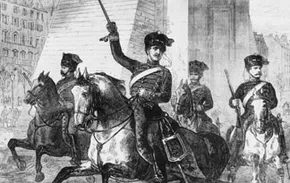
Fast forward to 1870. The Franco-Prussian War. Paris is under siege. The Prussian army has surrounded the city. The telegraph lines are cut. The postal service is blocked. The people inside are starving, isolated, and desperate for news from the outside world.
The French government needs to communicate with the provincial armies still fighting. They need to coordinate strategy. They need hope.
They turn to pigeons again.
This time, the use of avian messengers wasn’t for financial arbitrage. It was for survival. The city of Paris, a population of over a million people, was cut off. The only way out was through the air.
How Pigeon Post Worked Under Siege
The setup was ingenious in its simplicity. Engineers built a balloon launch site at the edge of the city. Balloons drifted into the Prussian lines, carrying thousands of pigeons and tiny rolls of microfilm. Once the balloons landed (or crashed) outside the siege lines, the birds were released. They flew back to their home lofts in Paris.
The telegraph had been around for decades by the 1870s. It was reliable. It was fast. You would think anyone sending a message would use wires instead of wings. But pigeons didn’t go away. They just waited. They waited for the moments when wires broke and technology failed.
Paris was a good example.
In 1870, Prussian forces surrounded the city. The blockade lasted months. Families were cut off from each other. Panic set in. But some locals still kept homing pigeons. They had trained them. They knew how they worked. The birds were smuggled into Paris in baskets.
Here was the catch. Pigeons only fly home. They don’t know where home is if they are born elsewhere. So how did Parisians send messages out? They used balloons.
Balloonists launched birds from the city. The birds carried microphotographed notes attached to their legs. This was smart. Standard messages were too long. The bird would die or drop the message under the weight. Microphotography shrank text down to tiny dots. You could fit a whole letter on a single strip. The birds flew over enemy lines. They landed at their home lofts. The messages were retrieved. Replies were sent back the same way. It was a fragile loop. But it worked.
2: Cher Ami and the Lost Battalion
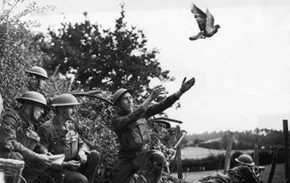
Fast forward to World War I. The trenches were mud and blood. Communication lines were cut constantly. Artillery fire snipped telephone wires like thread. Commanders were blind. Soldiers were lost.
The 77th Division, known as the “Lost Battalion,” was trapped in the Argonne Forest. They were surrounded by German forces. They had been cut off from their supply lines and command structure for days. No one knew if they were alive or dead. The situation was dire.
A carrier pigeon named Cher Ami was called in.
Cher Ami wasn’t a new bird. He had survived a bullet wound to the chest before. He had a collar on his left leg with a message attached. The message was simple. It said they were under friendly fire. They needed help. And they were running out of time.
The bird took off.
A German gunner saw him. The bird was hit. The bullet tore through his breast. He was bleeding. He was losing altitude. But Cher Ami didn’t stop. He kept flying. He was flying blind in one eye. The bullet had also blinded him in his right eye.
He flew for 25 miles.
He reached his loft in Verdun. The message was delivered. Commanders realized the mistake. They stopped the friendly fire. The battalion was saved.
Cher Ami is now in the Smithsonian. A plaque explains what he did. It is hard to imagine a bird flying through flak with a bullet in its chest. We think of war as machines. We think of satellites and drones. But sometimes it comes down to a small animal with a message.
Why do we forget this? We forget how fragile our connections are. We assume the wire will hold. We assume the signal will get through. When it doesn’t, we look for another way. Sometimes that way is small. Sometimes it has feathers.
Cher Ami got a medal. He got a place in history
The Price of One Life
The 77th Infantry Division’s “Lost Battalion” wasn’t lost by choice. They were American soldiers who had marched too far, too deep, into the Argonne Forest during the Meuse-Argonne Offensive in October 1918. German forces had cut off their supply lines and surrounded them on three sides. The artillery barrage was constant. Men were dying by the hour. But there was a small window in the heavy fire where a signal could get through.
The men had pigeons. Pigeons don’t care about shrapnel. They don’t care about the stench of mud and blood. They just know one thing: get home.
Enter Cher Ami.
A Bird With a Mission
Cher Ami wasn’t just any bird. The name, French for “beloved,” was a cruel irony given what happened next. The pigeon was British-trained, a veteran of the war before he ever saw American soil. He had already delivered over a dozen messages for the U.S. Army. He knew the route. He knew the instinct.
On October 3, 1918, a sergeant named Raymond H. Pottier managed to strap a tiny canister to Cher Ami’s leg. Inside was a note that would change the course of the battalion’s fate. It read, in part, “We are along the road parallel to 276 [target line]. Our own artillery is dropping a barrage directly on our location. For heaven’s sake, stop it.”
The artillery was friendly fire. The Americans were killing their own men.
Cher Ami took off.
The Twenty-Five-Minute Flight
The distance was twenty-five miles. The time allowed was twenty-five minutes. That’s a pace that would make elite human athletes weep.
The German gunners saw the bird. They opened fire. The sky turned into a hailstorm of lead. Cher Ami was hit. Bullets tore through his chest. One shot shattered his left leg, leaving nothing but bone and tissue hanging. Another grazed his head and chest. Most birds would have dropped instantly. They would have become kindling for the enemy.
Cher Ami kept flying.
He pushed through the pain, through the blood loss, through the sheer impossibility of the task. He broke the tree line at the American lines. He landed on the perch. The message was retrieved.
Within minutes, the American artillery shifted its fire. The shelling stopped. The “Lost Battalion” was saved. Six hundred men, alive because a twelve-ounce bird refused to quit.
The Aftermath
Cher Ami didn’t survive the landing. The wounds were too severe. He died later that day, but not before he had completed his duty. The French government awarded him the Croix de Guerre with a palm, one of the highest military honors they could give to an animal. The U.S. Army later named a Liberty ship SS Cher Ami.
Today, you can see him at the Smithsonian’s National Museum of American History in Washington, D.C. He is taxidermied, posed mid-flight, a testament to a moment where biology outperformed ballistics.
Why It Still Matters
We talk about the Lost Battalion in history books. We talk about the Meuse-Argonne Offensive as a turning point.
The date was October 1943. The location was Colvi Vecchia, a small Italian town sitting squarely in the crosshairs of World War II.
American bombers were prepped. Their orders were clear: drop payload on German positions. The plan relied on timing. Precision. Iron.
But the situation on the ground shifted faster than the pilots could react. The British 56th Infantry Brigade had pushed through German defenses. The enemy retreated. The British held the town.
Now came the problem.
Radio transmissions were dead static. The lines were down. The command structure was blind.
Someone needed to tell the Americans to stand down. If they didn’t, Colvi Vecchia would be rubble. The British troops inside would be caught in the crossfire.
They didn’t have a radio. They had a pigeon.
The Flight That Mattered
The bird’s name was G.I. Joe.
He wasn’t a fancy show bird. He was a working animal with a job to do. The message was simple: Do not bomb. We are here.
G.I. Joe took off.
The distance was roughly 20 miles. The window was tight. The bombers were minutes away from liftoff.
He flew fast. Hard. Against the wind if there was any.
It took him 20 minutes.
He arrived just as the engines were spooling up. The message got to the command center. The order was scrubbed. The bombs stayed in the racks.
Colvi Vecchia survived. 150 British soldiers stayed alive.
For that flight, G.I. Joe received the Dickin Medal. It is the military’s highest award for animal bravery. He wasn’t the only one.
Beyond the Medal
G.I. Joe’s story is iconic because of the stakes. But his utility wasn’t unique.
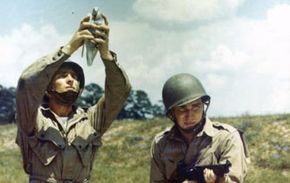
The U.S. Army kept a “Pigeon Corps” running until 1956. They trained hundreds of birds. They studied their navigation. They understood that technology fails. Birds don’t.
In war zones, carrier pigeons were vital for communication. They crossed enemy lines. They flew over difficult terrains where wires couldn’t reach. Their speed and reliability made them indispensable when other methods failed.
Modern Homing Instincts
The war ended. The Corps disbanded. But the instinct didn’t.
We still use the technology in different forms.
In the 21st century, French researchers have looked back at these methods. Not for war. For health.
Pigeons are being used to carry blood samples from remote locations to testing facilities. It sounds odd. It’s actually efficient.
The birds navigate using a mix of visual landmarks, the sun’s position, and the Earth’s magnetic field. This innate homing ability allows them to find their way back over long distances without GPS.
Why does this matter now?
Remote healthcare is hard. Labs are centralized. Transport is slow. Pigeons are fast. And they don’t get stuck in traffic.
G.I. Joe saved a town by carrying a note. Today’s birds carry biology.
The medium changes. The method stays the same.
We built satellites to talk to each other. We lost the signal sometimes. We forgot