




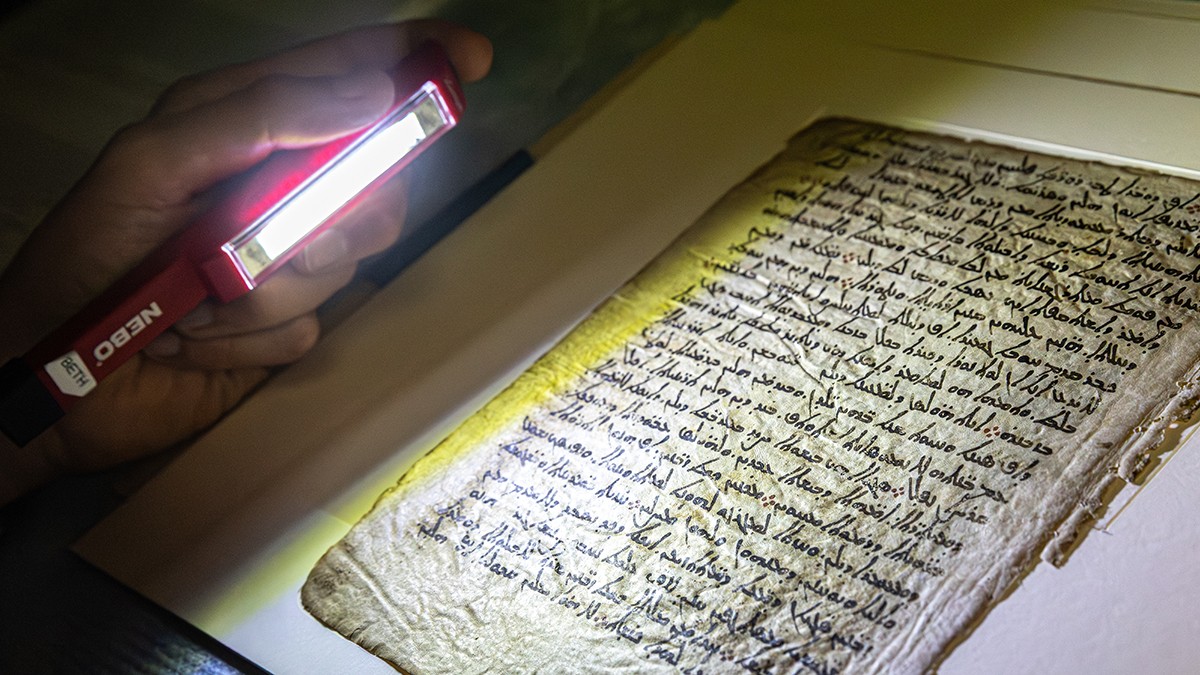
Researchers are using cutting-edge technology to resurrect the oldest known map of the night sky, a groundbreaking astronomical catalog created by Hipparchus over 2,200 years ago. This work, previously believed lost, has been hidden for centuries beneath layers of medieval text on a repurposed manuscript. The rediscovery challenges assumptions about the origins of Western astronomy and provides unprecedented insight into ancient scientific methods.
The Lost Legacy of Hipparchus
Hipparchus, a Greek astronomer active between 190 and 120 BCE, is recognized as a pioneer in Western astronomy. He was the first to systematically catalog stars and accurately measure the motions of the Sun and Moon. However, his complete star map was thought to have vanished with time. Until now, only fragments of his work remained – criticisms of earlier stellar descriptions – offering incomplete glimpses into his full achievement.
The breakthrough came in 2022, when scholars identified faint astronomical text beneath later writings on a 6th-century manuscript, the Codex Climaci Rescriptus. This manuscript’s very existence is a testament to the resourcefulness of medieval scribes who reused valuable parchment by scraping off and overwriting old texts.
Unveiling the Hidden Cosmos
The key to unlocking Hipparchus’s map lies in the chemical composition of the inks used. Monks who rewrote the manuscript used iron-rich ink, while the underlying Greek text contains calcium. This distinction allows researchers to differentiate between layers using X-ray imaging at the SLAC National Accelerator Laboratory.
The process relies on a synchrotron, a particle accelerator that generates high-energy X-rays capable of penetrating the parchment without causing damage. These X-rays reveal the hidden Greek script, revealing coordinates of stars as they appeared over two millennia ago. Early findings include references to the constellation Aquarius, and scientists are confident further scanning will reveal more.
A Scientific Revolution in Antiquity
The implications of this discovery are significant. The recovered coordinates are remarkably accurate, considering they were obtained using only the naked eye. This raises fundamental questions about how ancient astronomers achieved such precision so early in history. As historian Victor Gysembergh notes, “Why did they start doing science 2,000 and more years ago? How did they get so good at it so fast?”
The Codex Climaci Rescriptus was originally recovered from St. Catherine’s Monastery in Egypt, one of the world’s oldest continuously inhabited Christian monasteries. Transporting the fragile manuscript to the SLAC lab involved meticulous handling: custom-made frames, humidity-controlled cases, and strict light control to prevent further deterioration.
The Path Forward
While only 11 of the manuscript’s 200 pages have been scanned so far, the progress is promising. Recovering the full map will require coordinating access to pages scattered across the globe. Nevertheless, the effort is worthwhile.
The reconstruction of Hipparchus’s star map represents a monumental achievement in historical astronomy, offering an unprecedented window into the dawn of scientific inquiry.
This rediscovery is not just about recovering a lost map; it’s about understanding how early humans charted the cosmos with astonishing accuracy, paving the way for centuries of astronomical advancement.