After a historic 10-day journey around the Moon, the crew of NASA’s Artemis 2 mission has safely returned to Earth. The mission, which marks the first crewed lunar expedition since the conclusion of the Apollo program in 1972, concluded on Friday, April 10, with a precise splashdown in the Pacific Ocean.
The Final Descent: From Orbit to Ocean
The return journey was far from routine. To transition from lunar orbit back to Earth, the crew traveled within the Orion capsule at speeds exceeding 24,000 miles per hour (38,000 km/h). As the capsule entered the Earth’s atmosphere, it endured extreme thermal stress, with temperatures soaring up to 5,000 degrees Fahrenheit (2,760 degrees Celsius).
Following the intense reentry and a successful splashdown, the recovery process unfolded in several stages:
1. The crew transitioned from the Orion capsule into a small recovery boat.
2. Each of the four astronauts was airlifted via helicopter.
3. The team was finally transported to a U.S. Navy recovery ship to reunite with NASA personnel.
A Moment of Triumph
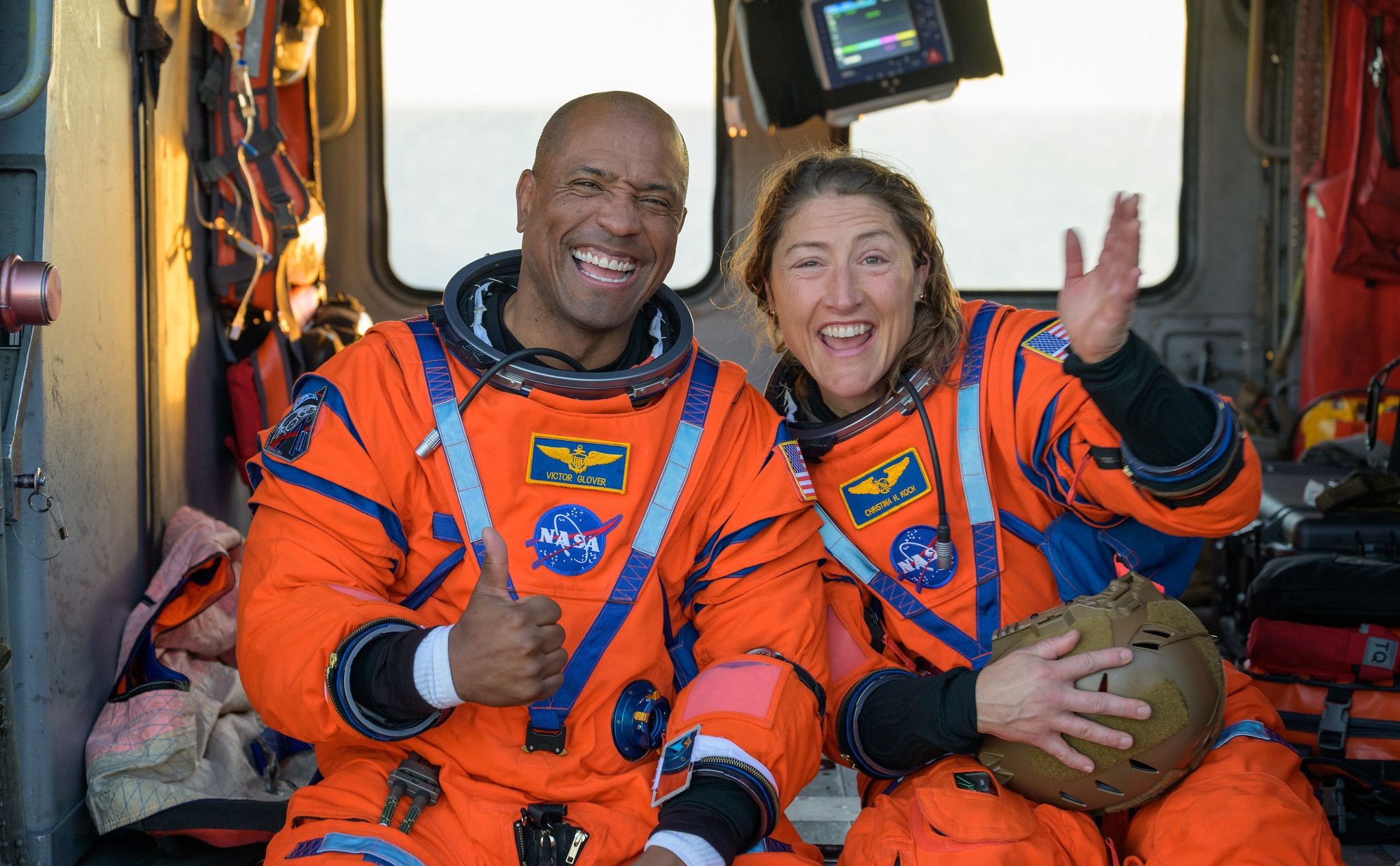
Captured in the aftermath of the mission, mission pilot Victor Glover and mission specialist Christina Koch were seen celebrating their safe return. Despite the physical and mental toll of the mission, the astronauts appeared jubilant, offering smiles and waves to the global audience that had been monitoring their descent.
The crew consists of a diverse international team:
– Reid Wiseman (NASA)
– Victor Glover (NASA)
– Christina Koch (NASA)
– Jeremy Hansen (Canadian Space Agency)
Beyond the technical milestones, the mission gained significant public attention for the strong camaraderie displayed by the crew. Their ability to maintain high morale and a visible bond throughout the mission has become a hallmark of the Artemis era, humanizing the high-stakes nature of deep-space exploration.
Why This Matters: The Path to the Moon
The success of Artemis 2 is not merely a celebratory milestone; it is a critical validation of the hardware and procedures required for long-term lunar presence. By successfully navigating the complexities of lunar orbit and the violent physics of atmospheric reentry, NASA has proven the viability of the Orion spacecraft for human transit.
This mission serves as the essential bridge to the next phases of the Artemis program:
* Artemis 3: The upcoming mission intended to land humans on the lunar surface.
* Artemis 4: A subsequent mission focused on establishing a more permanent lunar presence.
The successful return of the Artemis 2 crew confirms that humanity is once again capable of traveling to the Moon and returning safely, setting the stage for upcoming lunar landings.
The completion of Artemis 2 marks the transition from theoretical lunar exploration back to practical, crewed lunar operations, clearing the way for NASA’s next goal: landing humans on the Moon once again.