While exercise is traditionally viewed as a cornerstone of health, a growing debate among scientists suggests that for millions living with Long COVID, the standard advice to “stay active” might actually be doing more harm than good.
As researchers search for treatments for this complex, incurable condition, a tension has emerged between studies suggesting exercise boosts recovery and emerging evidence that it may trigger severe setbacks for certain patients.
The Promise of Resistance Training
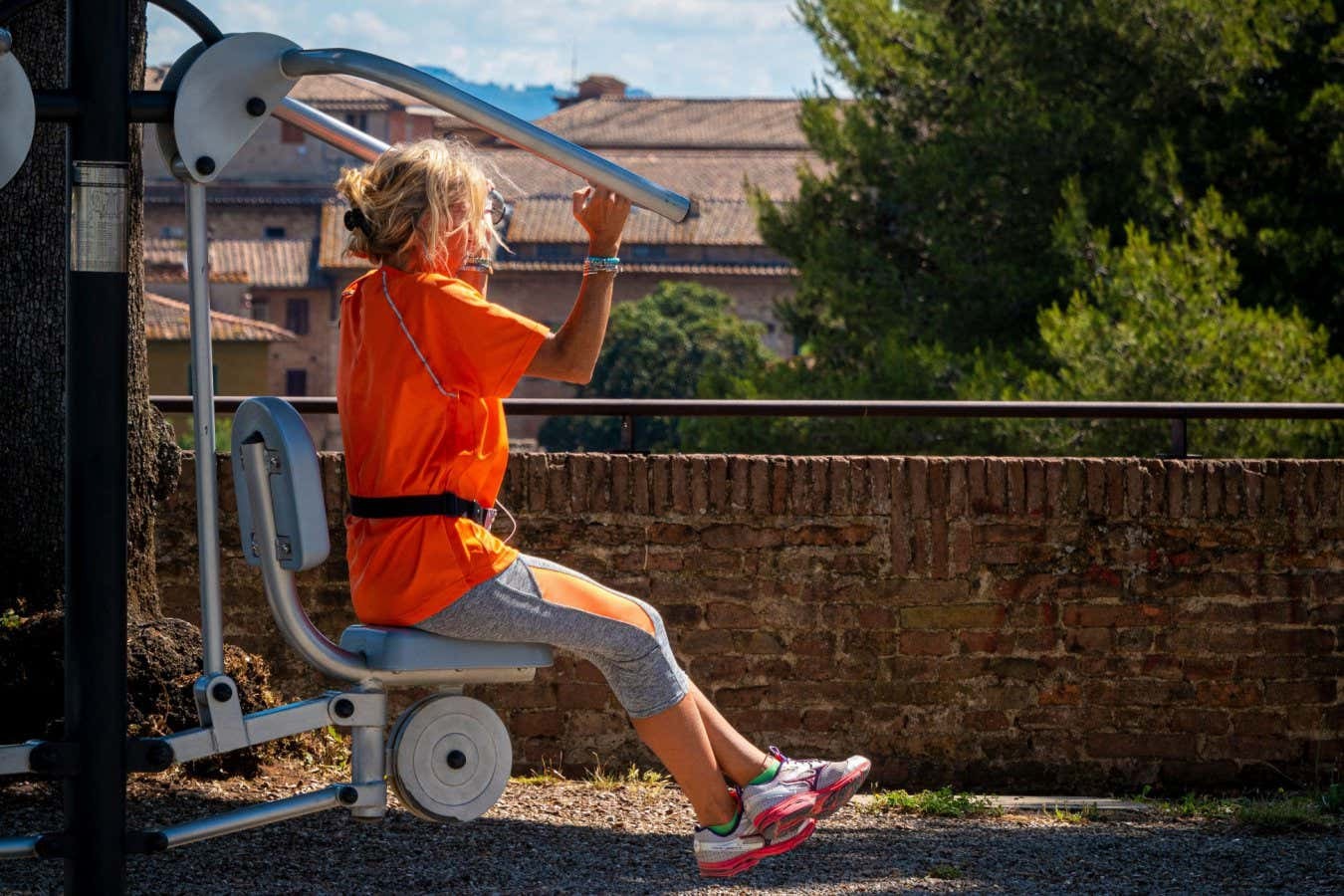
In an effort to find immediate, low-cost interventions, researchers have looked toward lifestyle changes. A prominent study led by Colin Berry at the University of Glasgow (2021–2024) tested a three-month resistance training program on Long COVID patients.
The study reported that participants in the exercise group showed greater improvements in walking distance during a timed test compared to a control group. Based on these results, the researchers suggested that resistance training could be a “generalizable therapy” to combat fatigue and muscle weakness.
Critical Flaws in the Research
Despite the positive headlines, the scientific community has raised significant red flags regarding the Berry study:
- Lack of Clinical Significance: The difference in walking distance between the exercise and control groups fell short of the “minimum clinical importance” threshold established at the start of the study.
- Homogeneous Data vs. Diverse Patients: The study grouped together people with vastly different experiences—ranging from those recovering from intensive hospitalizations to those with very mild initial infections. This creates a “mean” result that may not accurately represent any specific subgroup.
- The Missing Metric: Post-Exertional Malaise (PEM): Perhaps most critically, the study failed to properly account for Post-Exertional Malaise (PEM) —the profound, debilitating worsening of symptoms following even minor physical or mental exertion.
“Post-exertional malaise is the most unifying and profound and debilitating aspect of Long COVID,” says Danny Altmann of Imperial College London.
In fact, the Berry study revealed a concerning trend: 67% of the exercise group reported they would not recover within an hour or two after activity, compared to only 49% of the control group. This suggests that while exercise might improve certain physical metrics, it may actually worsen the core debilitating symptom of the condition.
Lessons from the ME/CFS Controversy
The current debate over Long COVID mirrors a decade-long controversy involving Myalgic Encephalomyelitis/Chronic Fatigue Syndrome (ME/CFS).
In 2011, the Lancet published the PACE trial, which promoted “graded exercise therapy” (gradually increasing activity). However, subsequent re-analyses revealed that the researchers had altered their definitions of “improvement” to make the results look more favorable. Furthermore, data indicated that patients in the exercise group faced a higher risk of serious adverse events, including hospitalization.
As a result, major health organizations like the UK’s National Institute for Health and Care Excellence (NICE) no longer recommend graded exercise for ME/CFS, instead advising “pacing” —managing energy within strict limits to avoid crashes.
The Need for Precision Medicine
The central problem is that “Long COVID” is an umbrella term for a highly diverse set of symptoms and underlying causes. The impact of exercise likely depends on a patient’s specific “phenotype”:
- Viral Persistence: Some may have lingering SARS-CoV-2 in their system.
- Immune Dysregulation: Others may have a hyperactive or misfiring immune system.
- Mitochondrial Dysfunction: Some may have cells that cannot effectively produce energy.
For those with mitochondrial issues or PEM, exercise can cause severe muscle damage and metabolic degeneration.
Conclusion
The medical community is facing a delicate balancing act: while exercise helps many, it may be physically damaging to those with specific Long COVID profiles. Moving forward, researchers must move away from “one-size-fits-all” advice and instead focus on subtyping patients to ensure that the pursuit of recovery doesn’t inadvertently cause lasting harm.