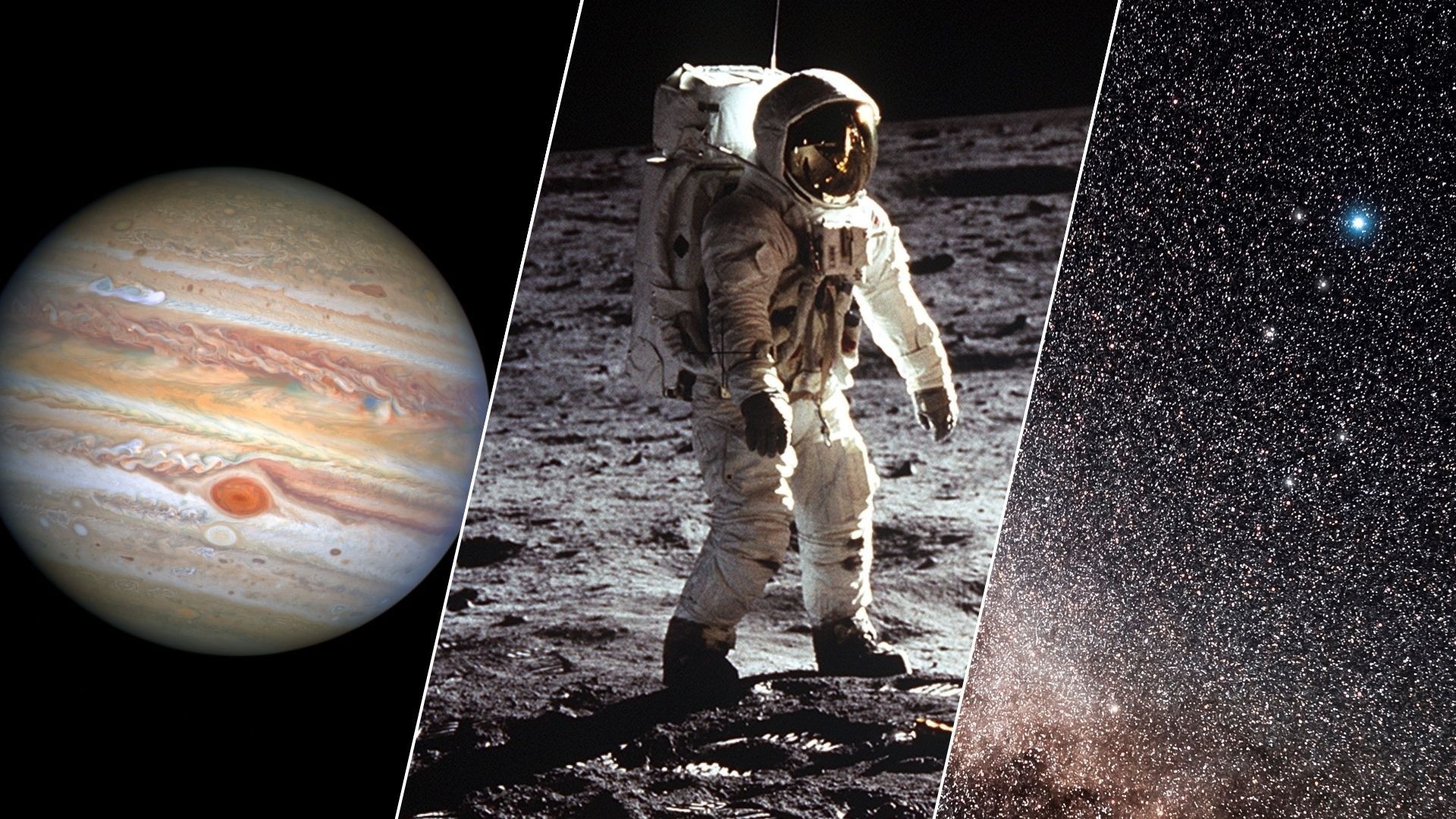
The history of space exploration is defined by moments that fundamentally shifted our perspective of the universe. From the first time humans touched another world to the moment we realized other stars host their own planets, these “firsts” represent the pinnacle of human curiosity and technological evolution.
If you look up tonight, you can find the celestial locations associated with these groundbreaking achievements. Whether you are using a smartphone app with augmented reality or a modest pair of binoculars, these four targets offer a direct connection to the history of science.
1. The Footsteps of Apollo 11
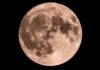
On July 20, 1969, humanity achieved the impossible: landing humans on the Moon. The Apollo 11 mission established Tranquility Base, marking our first physical presence on another celestial body. While the landing site itself is far too small to be seen with the naked eye, you can locate the region where history was made.
- How to find it: Look for the Mare Tranquillitatis (the Sea of Tranquility), which appears as a dark, basaltic plain on the eastern side of the Moon, slightly above its equator.
- Observation Tip: Use a 6-inch telescope or binoculars when the area is well-lit by sunlight (in the weeks leading up to a full moon). Locate the Ritter and Sabine craters on the southwestern edge of the sea; the landing site lies along an imaginary line extending from them.
2. The Discovery of an Alien World
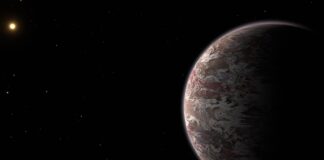
In 1995, astronomers Michel Mayor and Didier Queloz changed our understanding of the cosmos by discovering 51 Pegasi b (also known as “Dimidium”). This was the first confirmed exoplanet orbiting a sun-like star. It is a “hot Jupiter”—a massive gas giant that orbits incredibly close to its star, completing a full circuit in just four days.
This discovery was made possible by detecting the tiny “wobble” of a star caused by the gravitational tug of an orbiting planet, a method that has since become a cornerstone of modern astronomy.
- How to find it: Locate the constellation Pegasus in the eastern sky shortly before sunrise during early spring.
- Observation Tip: Find the “Great Square of Pegasus” using the stars Scheat and Markab. The star 51 Pegasi is a dimmer point of light located roughly halfway between these two bright stars.
3. The First Photographic Star
In 1850, astronomer William Cranch Bond and photographer J.A. Whipple captured the first image of a star other than our Sun. This milestone transitioned astronomy from mere observation to a visual, photographic science. Centuries later, this evolution culminated in the Hubble Space Telescope’s ability to directly image the surface of the red giant Betelgeuse.
- How to find it: Look for the star Vega in the constellation Lyra.
- Observation Tip: In early spring, Vega rises above the northeastern horizon after sunset, climbs high overhead, and eventually fades as the sun approaches the horizon.
4. Galileo’s Revolutionary Moons
In 1609, Galileo Galilei used an early telescope to observe Jupiter and discovered four objects orbiting the planet. This was the first time moons were observed orbiting a body other than Earth, proving that the universe did not revolve solely around our own world. These are now known as the Galilean moons : Io, Europa, Ganymede, and Callisto.
- How to find it: Locate Jupiter, which appears as a steady, bright light near the constellation Gemini in the western sky at sunset.
- Observation Tip: You do not need professional equipment; a pair of binoculars or a small telescope (4-inch aperture or larger) is sufficient to see these moons as bright specks arranged in a line around the planet.
Summary: By observing these specific coordinates, stargazers can connect with the pivotal moments—from lunar landings to exoplanet discoveries—that have defined our journey through the stars.