Superconductors are fussy.
That’s the problem. You get zero electrical resistance, yes, but you have to bribe the material with either extreme cold or crushing pressure, or a cocktail of both. Imagine putting a diamond anvil in your trunk to power an EV. It defeats the purpose.
Now, though, things look different.
Physicists at the University of Houston just smashed a record. They coaxed a superconductor to operate at -122.15 Celsius. Sounds cold? It’s brisk. But compared to the near-absolute zero baseline, it’s practically sweltering.
The previous record for ambient-pressure superconducting was held by a mercury-barium-calcium-oxide mix since 1993. It topped out at -140 Celsius. This new batch? Up more than 20 degrees.
Squeeze It To Release It
So how did they do it?
They abused it.
The team took Hg1223 —a cuprate superconductor layered with copper oxide, mercury, and calcium—and squeezed it in a diamond anvil. Hard. Up to 30 gigapascars. That is nearly 300,00 times the pressure of air at sea level.
Then, they let go. Fast.
This protocol, called pressure-quenching, traps the material in a metastable state.
Think of a diamond. It is carbon subjected to Earth’s crust, but once you bring it to the surface, it doesn’t pop back into graphite. It stays hard. It stays stuck in its high-pressure geometry.
Hg1223 behaves similarly. When you release the pressure instantly, the atoms can’t relax back to their normal layout. Small defects form. These defects keep the superconducting electrons dancing, even when the pressure drops back to everyday levels.
“With this material still superconducting atnormal pressure, scientists can study itwith widely available instruments,” says Hua Zhou from Argonne National Lab.
No more diamond anvils for every experiment. Just normal lab equipment.
The Catch Is Still There
Don’t get too excited.
There are superconductors that work at warmer temps. Lanthanum decahydride works at -13 Celsius. You can get that temperature in a home freezer.
But you can’t generate 190 gigapascals of pressure in your garage. That’s Earth’s outer core levels of squeeze. So that trade-off remains: warm but crushingly expensive to power. Or cold (-122 Celsius) but normal pressure.
Hg1223 wins the pressure lottery, but it loses the warmth one.
Why does it matter?
Because now we have a sample to play with that doesn’t require special geological conditions to observe. We can study how it works. We might learn how to break the final chain binding these materials to the deep freeze.
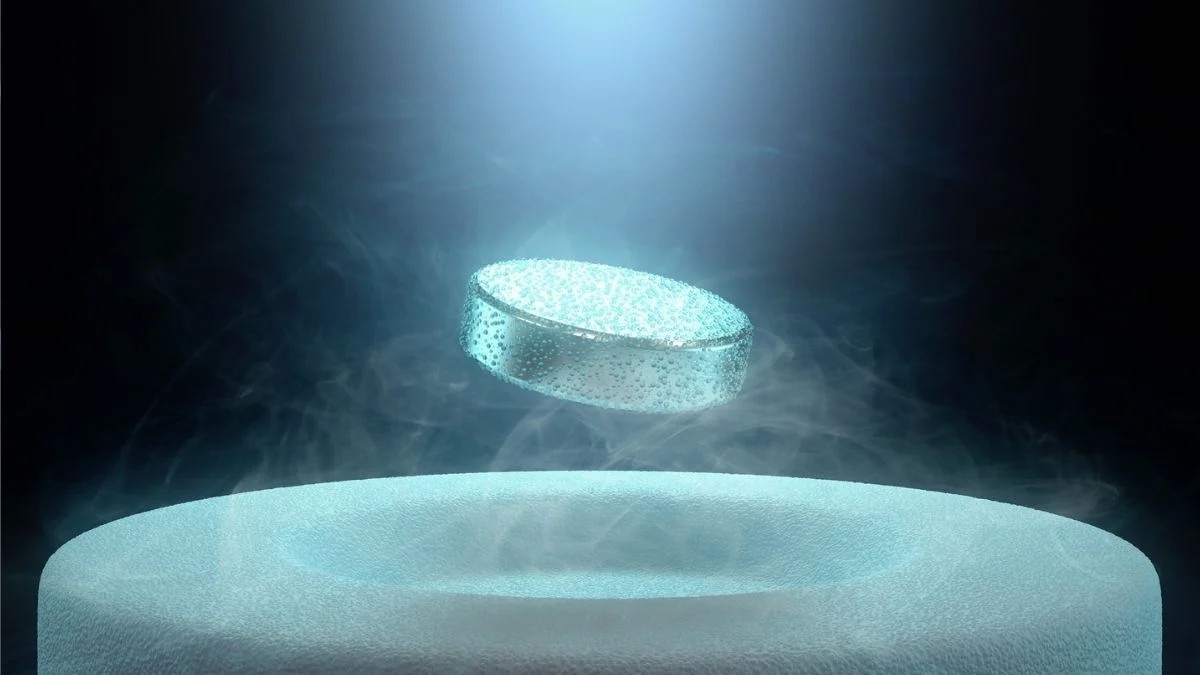
Room temperature superconductors could revolutionize energy grids. Instantly charged cars. Magnetic levitation that doesn’t need a cathedral of magnets.
We are far from there.
The research lands in Proceedings of the National Academy of Sciences. It’s a step.
One small, frozen, slightly pressurized step.
Are we close enough to care?
Maybe.
Or maybe we’re just waiting for the right kind of pressure.