



Two sites. Thousands of tons of gold. If the surveys check out, we are looking at the largest deposits ever found inside China’s borders.
The Wangu Surprise
Late 2024. Xinhua reports it as a ‘supergiant’ find. The Wangu deposit, tucked into Hunan province, is turning heads. Chen Rulin, a bureau prospector there, saw things others might miss.
“Many drilled rock cores showed visible gold,” Chen said.
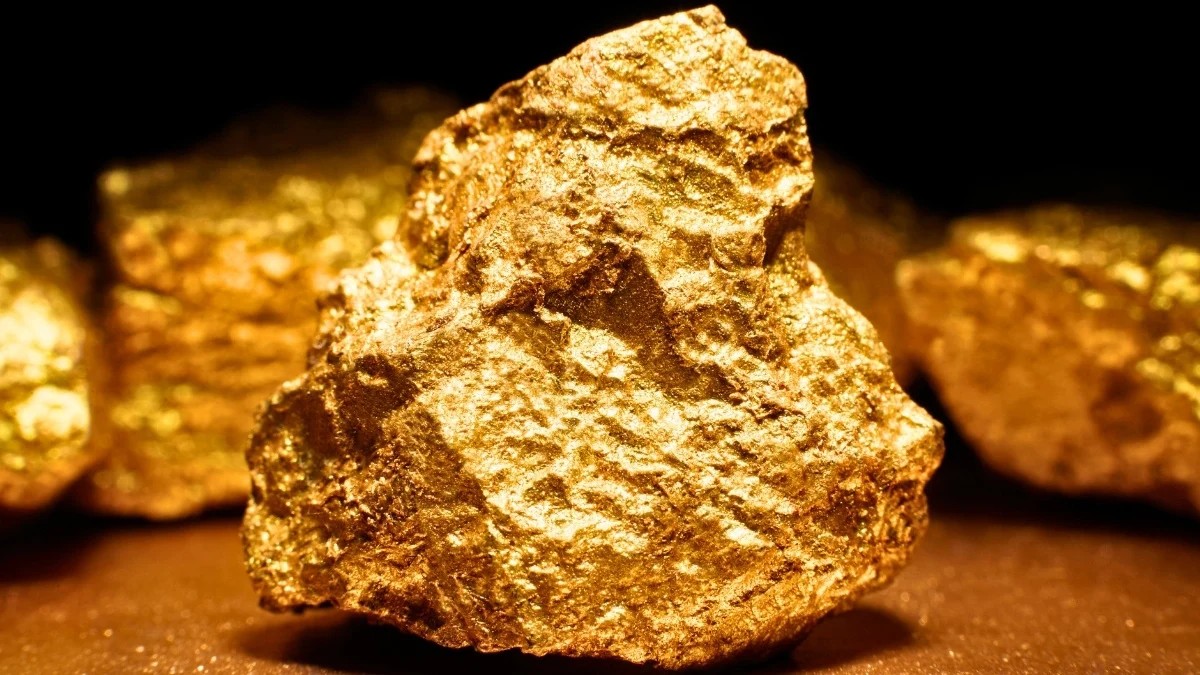
That is rare. Visible. Not just spectral traces, but actual, tangible yellow. The report estimates 300 tons already quantified down to 2,000 meters depth. The guess goes higher for deeper digs, over 1,000 tones past the 3,000 meter mark. Valuations for Wangu alone previously hit over 600 billion Yuan, roughly $83 billion US. A staggering number for one site.
Dadonggou: The Bigger Beast
But Wangu might not be the star anymore. Look to Liaoning province. Look to Dadonggou.
Government briefings suggest resources approaching 1,50 tons. That eclipses earlier reports of just over 1,00 tons published in China Mining Magazine. The Liaoning Fifth Geological Brigade made this discovery by connecting the dots on old data.
Back in the 80s, traces of gold were dismissed as uneconomic scraps. Too low grade. Not worth the trouble.
Now, they know better.
Those scattered traces form a continuous mineral belt. 3,00 meters long. 1,50 meters wide. Every single borehole hit gold. The grade is low, 0.3 to parts per million, yes, but extraction is surprisingly easy. Recovery rates of 65 percent, sometimes up to 91. That changes the math.
Geology Gets a Rewrites
The real kicker is where this sits. The Tan-Lu Fault. A massive tectonic zone with horizontal shear fractures. Minerals like gold and pyrite dropped into those cracks over time.
Here is the problem we faced before.
This geology looked different from the ‘standard’ models of big gold deposits. So, we missed them. Dadonggou proves that standard was wrong. It serves as a signpost. If extraction holds up, the real value might just be knowing where to look next.
How many other bonanzas have we overlooked simply because they didn’t fit the textbook description?
Gold isn’t abundant. Earth’s upper crust has a tiny 0.04 grams per ton. Bonanza zones are statistical outliers. Canada’s researchers in 2021 argued they are more common than thought. This finds backs them up.
What Else Are We Missing?
Gold does strange things. Sweden’s team in 202 created goldene, a two-dimensional sheet just one atom thick with properties normal gold lacks. Australians suggested earthquakes forge big nuggets underground. An English detectorist found a record-breaker recently.
Then there are the medical angles. Nanoparticles fighting drug resistance. Saving sight. Treating Parkinson’s. Even fixing the taste of wine, apparently.
Is the era of big discoveries over?
Some say peak gold arrived in 208. Evidence is murky. But until more data emerges, the Wangu and Dadonggou numbers remain provisional.
For perspective, Canada’s Kerr-Sulphurets-Mitell has ~4,7 tons estimated. Pebble, US, holds ~3, tons. China’s finds are impressive, yes, but the giants remain abroad.
Or perhaps the giants were here all along. Waiting for us to update our maps.
The research sits in China Mining Magazine. We watch. We wait.