In the dense cloud forests of Costa Rica, mammals have developed a sophisticated, albeit messy, method of communication. Recent research suggests that certain trees serve as “arboreal latrines”—communal restrooms where a diverse array of species gather to defecate, urinate, and leave scent marks.
A Discovery in the Canopy
The phenomenon was identified by Jeremy Quirós-Navarro, a plant taxonomist at the University of Connecticut, who stumbled upon a pile of waste at a branch junction while documenting plant life. This accidental find led to a systematic survey of 169 trees across 29 different species.
The results were striking: researchers identified 11 distinct latrines, and every single one was located within a specific type of tree—the strangler fig (Ficus tuerckheimii ). In fact, 73% of the strangler figs surveyed contained at least one latrine.
Why the Strangler Fig?
The preference for F. tuerckheimii is likely due to its unique architecture. Unlike many trees, the strangler fig develops a specific structure at its crown that resembles a wide, spreading hand.
- Structural Platforms: The junctions where large branches meet create flat, stable platforms up to a meter wide.
- Accumulated Substrate: These platforms collect soil and small plants, creating a “ground-like” surface high in the canopy.
- A Keystone Role: Beyond being a bathroom, the strangler fig is a keystone species, meaning it is vital to the ecosystem. It provides food, shelter, and serves as a “highway” for animals moving through the treetops.
A Multispecies “Message Board”
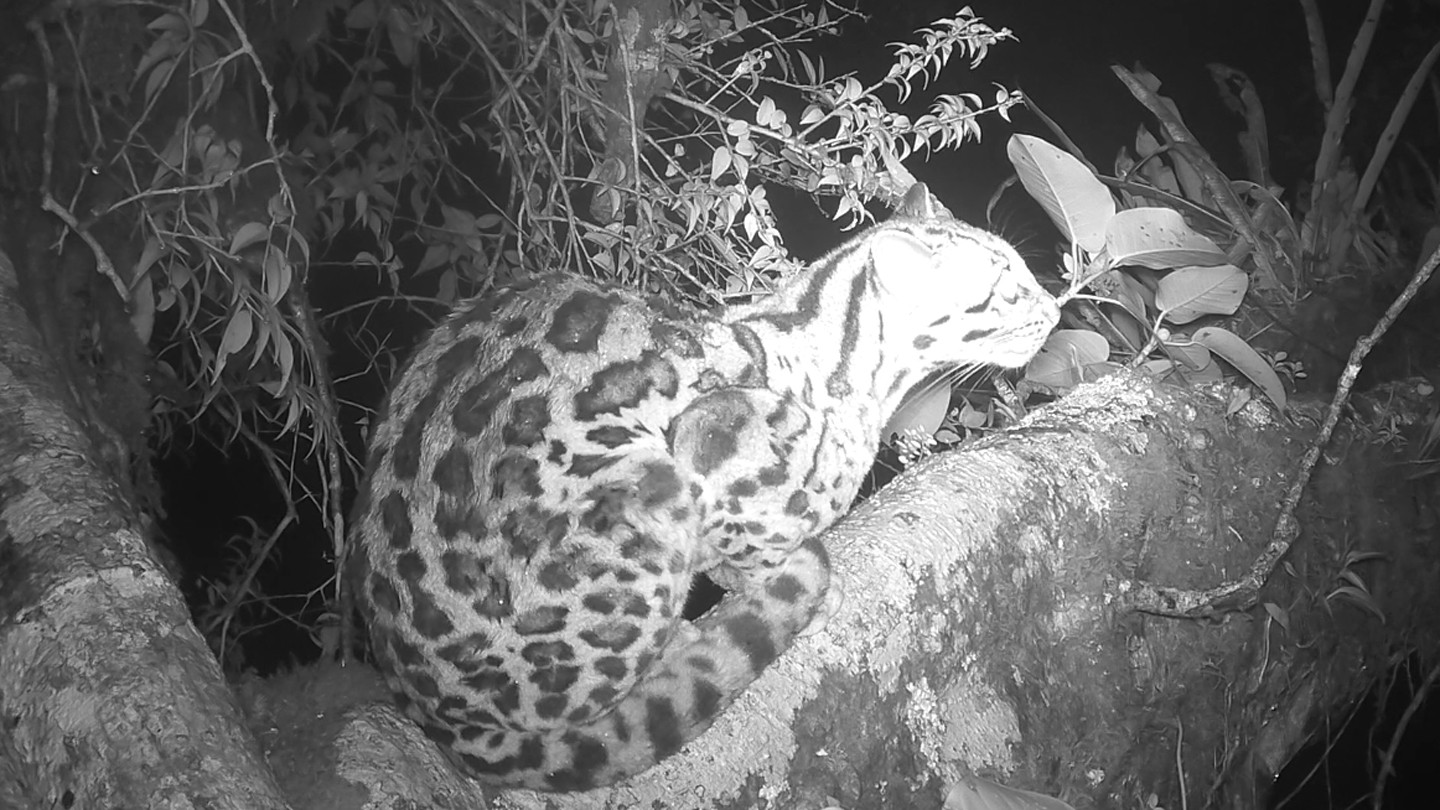
To understand the social impact of these sites, researchers installed a camera trap at one latrine. Over a two-month period, the camera recorded approximately three visitors per day, representing 17 different mammal species.
The visitors included:
– Frequent users: Mexican hairy dwarf porcupines.
– Diverse residents: Kinkajous, opossums, pocket mice, coatis, and capuchin monkeys.
– Predators: Even the secretive margay (a small arboreal cat) visited the site, though primarily to spray urine.
“You have all of these animals coming together, scent marking, defecating, urinating and then, in some cases, rolling in it,” notes Mike Cove, a mammologist at the North Carolina Museum of Natural Sciences.
This behavior transforms the latrine into a communication hub. By leaving waste and scent marks, animals can broadcast information about their presence, sex, and health to others, effectively using the fig tree as a high-altitude social network.
Challenging Assumptions about Sloths
One of the most surprising findings involved Hoffmann’s two-toed sloths. Previously, it was believed that these animals had to descend to the forest floor to defecate. However, the camera trap captured two instances of a female sloth with young using the canopy latrine.
This suggests that sloths may prefer the treetop “toilets” to avoid the high risks associated with descending to the ground, where they are more vulnerable to predators.
Conclusion
The discovery of these arboreal latrines highlights the critical role of the strangler fig as a multifunctional hub for tropical biodiversity. By providing a centralized location for waste and scent marking, these trees facilitate essential interspecies communication within the forest canopy.