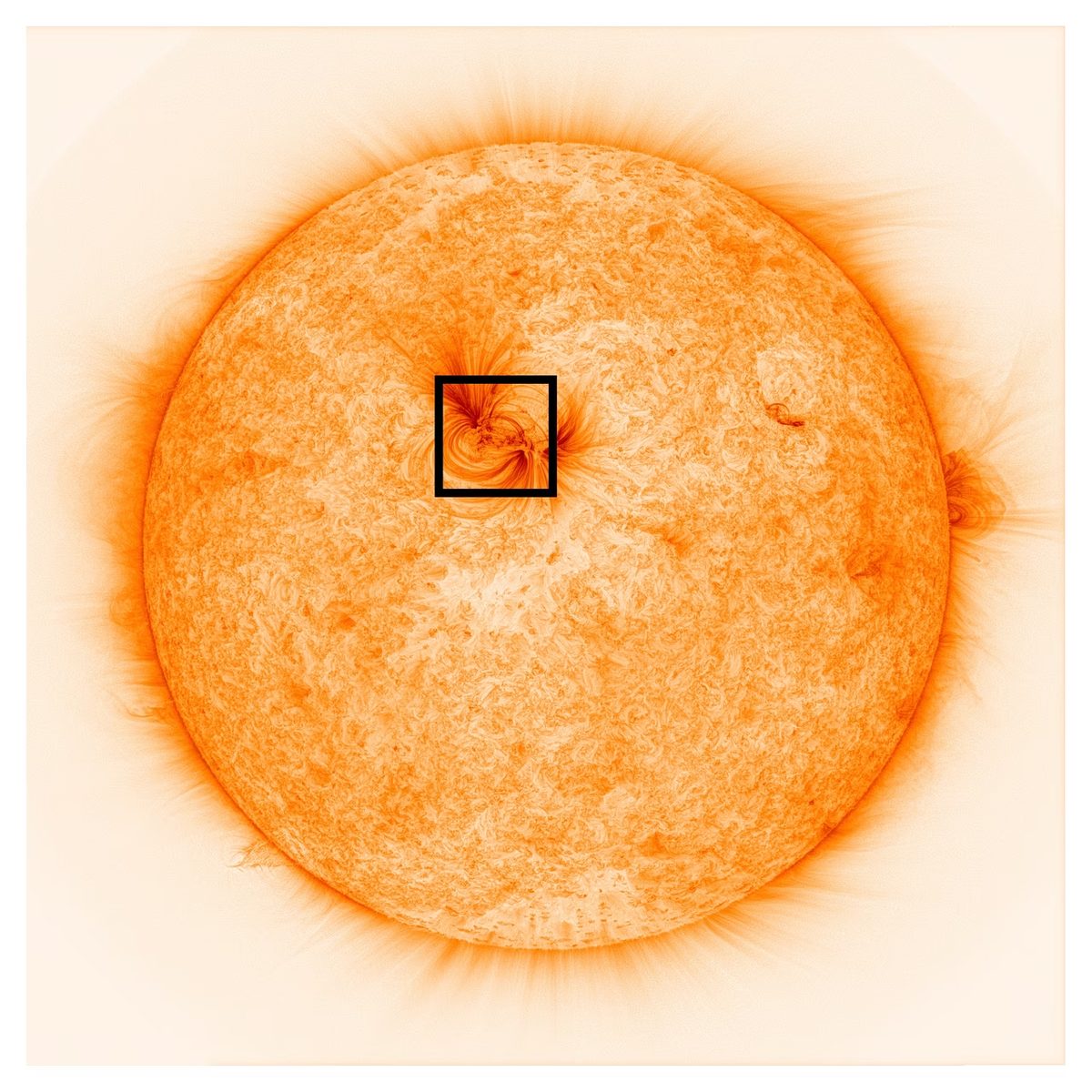
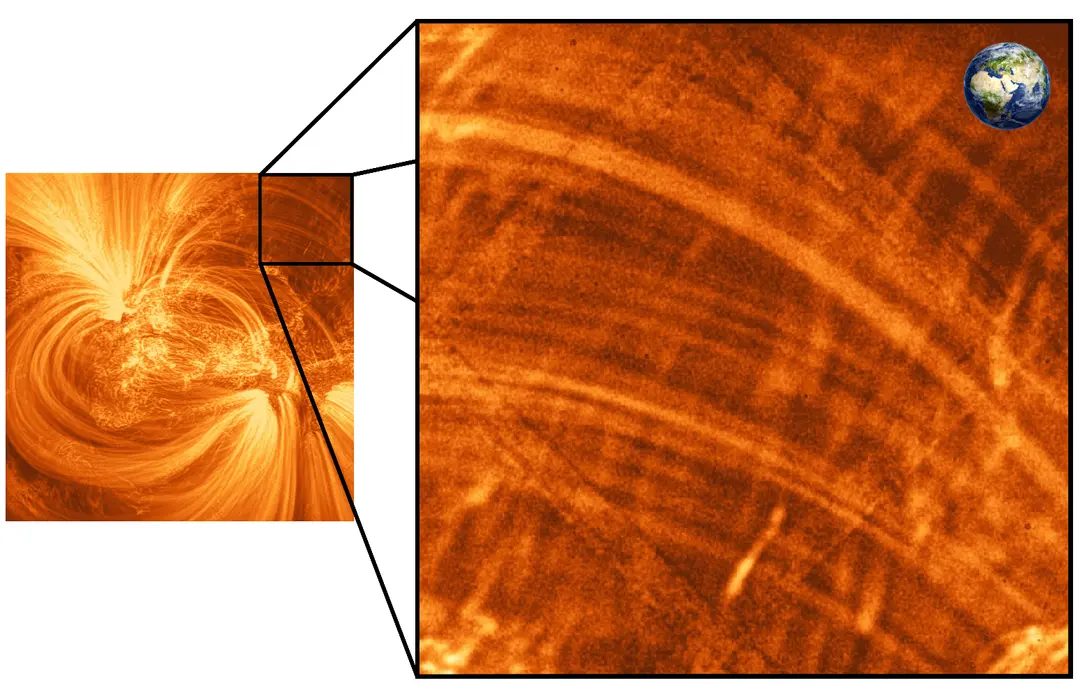
To the naked eye, the sun always looks like a blurry light. It was too bright to look at directly. Too far to resolve the texture. But now NASA’s High-Resolution Coronal Imager (Hi-C) has broken that ambiguity.
These are the clearest images taken of the sun.
The images reveal filaments of superheated plasma in the Sun’s atmosphere in a level of detail never seen before. Scientists have been fighting haze for decades. In normal observations, a large part of the Sun’s outer atmosphere remains dark and indistinct. Hi-C is a game changer.
Resolution that changed solar science
Spatial resolution is a key part of this breakthrough. Hi-C provides about five times more detail than the Atmospheric Imaging Assembly (AIA), which has been the workhorse of solar observation for several years.
This leap in clarity is not just gradual. This is a huge leap in visibility.
This increased resolution allows scientists to observe formations up to 70 kilometers in diameter. In perspective, 70 kilometers is roughly the distance from New York City to Philadelphia. At the moment, the scale of the features we see on The Sun’s surface is about the same as on Earth’s surface.
“Hi-C reveals superheated plasma filaments in the sun’s atmosphere in such detail that it has never been possible.”
Why the outer layers of the sun matter
The sun is not a solid sphere. It is a swirling ocean of plasma. The outer layer, or Corona, is the place where the magnetic field lines twist and break. This activity causes a solar flare and coronal mass ejection. These events can disrupt Earth’s power grids. They can threaten satellites.
Understanding the corona is not just an academic problem. This is very important to protecting our infrastructure.
Before Hi-C, the corona was a mystery of light and shadow. The new images reveals the mysterious structure. The intricate details of the plasma filaments are clearly visible. They are not smooth. They intertwine, intertwine, and are full of life.
How Hi-C achieves this clarity
Hi-C is not a ground-based telescope. It is carried by a sounding rocket. It flies into the upper atmosphere for a short time. This allows images to be taken that overcome the distortions of the lower atmosphere.
This device focuses on the corona. In particular, it targets the extreme ultraviolet light emitted by the sun’s outer layer. Hi-C isolates plasma structures by filtering out other wavelengths. The result is a sharp, high-contrast image.
Hi-C’s data complements data from other solar observatories. It doesn’t replace them. It adds a layer of precision that is missing. Scientists can now correlate these high-resolution images with data from other instruments. This multi-angle approach gives a more complete picture of the Sun’s dynamics.
What this means for future research
The success of Hi-C reinforces the need for high-resolution solar imaging. This proves that the small structure of the sun can be seen even from far away. This has an impact on future missions.
Designed observatories may also use similar technology. They aim for higher resolution. They monitor the sun’s activity in real time. The goal is to predict solar storms more accurately.
The sun is more than just a source of light. It is a complex magnetic motor. Hi-C
The mystery of burning plasma
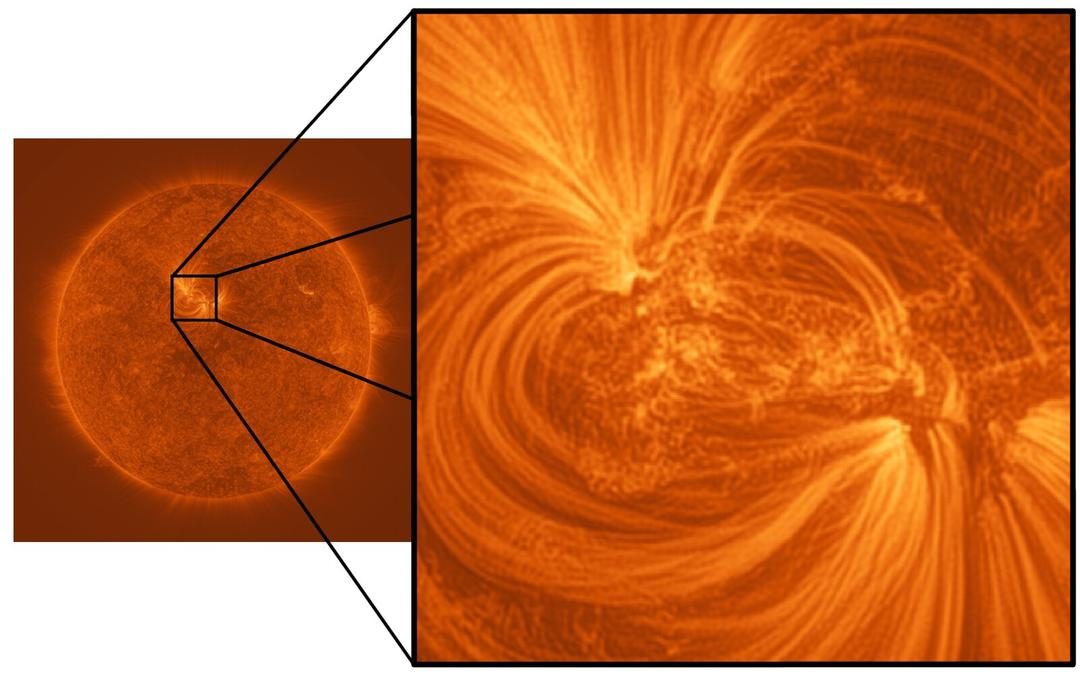
New images taken in 2018, officially published in The Astrophysical Journal on April 7, reveal the chaotic dance of the plasma. These are not just wisps of gas. They are powerful eddies of ionized matter, each with an average diameter of 513 kilometers. They twist and turn, forming so-called coronal loops.
We have known about these structures since the 1940s. Despite decades of observations, this mystery remains unsolved. It is still difficult to understand exactly how they formed. The physics behind their creation is still elusive.
Why solar storms matter to Earth
These loops are more than just aesthetic features on the surface of The Sun. They are associated with large solar phenomena. Scientists believe they have a direct effect on the solar flares and coronal mass ejections.
When these eruptions occur, charged particles are sent toward Earth. the result? Our atmosphere is disturbed. Satellites falter. Power grids flicker. Communications stall. Understanding the loops is key to predicting these disturbances. This is not just an academic curiosity. This is the protection of technology-based infrastructure.
Future direction
New information is required to crack the code. Future research should focus on two specific areas. First, how does the temperature progress along these loops? Thermodynamics is complex and poorly mapped. Next, we need to estimate the associated magnetic fields.
The magnetic field is the skeleton of the loop. Without precise measurements, it is impossible to understand the forces that form the plasma.
“Corona loops have been studied since the 1940s, but we still struggle to understand how they form.”
The gap between observation and understanding is still wide. There are pictures. We have scale. We lack an explanation of the mechanism. Until we map magnetic fields and track heat flow, these loops hide their secrets. The next breakthrough won’t come from a better camera. It comes from a better model. And even then, the sun may keep a few surprises.

Why photos are more important than headlines
The whole story cannot be found in the text alone. The true meaning of recent discoveries often lies in the pixels. High-resolution images are more than just decorations. It is evidence.
When scientists publish their research results, the summary tells you what they think happened. These pictures show you that it actually did. This is especially true in fields such as astronomy, biology and materials science. An indistinct image may suggest a pattern. Sharply processed images confirm this.
How to see what others have missed
The gallery linked to the original source contains detailed visuals. These aren’t just pretty pictures. They are data visualizations. Each frame represents a specific condition, time or variable.
Let’s take a closer look. The difference between assumption and fact often comes down to resolution. With the help of high-quality images, researchers can detect abnormalities. These anomalies could lead to the next big breakthrough. It also helps journalists and educators explain complex topics without oversimplifying them.
Where can I find the entire visual archive?
The entire collection is on Flickr. This platform was chosen because it can handle large uncompressed files. If you zoom in, you can see the texture. You can verify these claims for yourself.
Follow news sources like Futura on platforms like WhatsApp and Google News so you don’t miss the first announcements. But these pictures tell a deeper story. They provide the context that you can’t get from text alone.
What does this mean for your understanding
Ignoring visuals is like looking at a map without looking at the terrain. The text gives you the route. The images show the obstacles. Together, they give you the journey.
The next time you read about a scientific advance, don’t just read the abstract. Find a photo. Ask yourself what the picture shows, what the words might be glossing over. Here’s the real news.