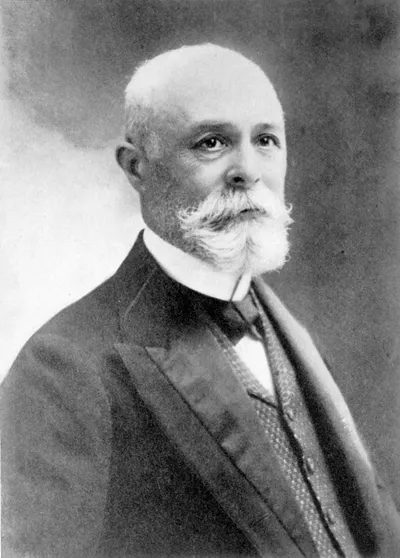
Henri Becquerel changed physics by accident. In 1896, he was investigating phosphorescence in uranium salts. He wrapped photographic plates in black paper. He placed the uranium on top. He kept them in a dark drawer. He expected sunlight to trigger the effect. It rained in Paris for days. No sun.
He developed the plates anyway. The images were stark. The uranium had emitted radiation without external energy. This was not phosphorescence. It was something new. He called it “uranic rays.” We now call it radioactivity.
This discovery rewrote the rules of matter. Atoms were not solid and stable. They could decay. They could release energy. This insight earned him a share of the 1903 Nobel Prize in Physics. He split the honor with Pierre and Marie Curie.
A Dynasty of Scientists
Becquerel was not an outlier. He came from a lineage of physicists. Four generations contributed to science.
His grandfather, Antoine-César Becquerel, studied electrochemistry. He worked on how electricity affects chemical reactions. His father, Alexandre-Edmond Becquerel, expanded this work. He discovered the photovoltaic effect. This is how solar cells convert light into electricity today.
Henri followed this path. He studied at the École Polytechnique and the École des Ponts et Chaussées. He joined his father at the Musée d’Histoire Naturelle in Paris. He became a professor at the Conservatoire National des Arts et Métiers. He also taught at the Sorbonne.
His son, Jean Becquerel, continued the family tradition. Jean studied the absorption of X-rays by gases. He shared the 1908 Nobel Prize in Physics with his father. The Becquerels dominated French physics for over half a century.
The Path to Discovery
How did Becquerel find radioactivity? The process was iterative. He started with Wilhelm Röntgen’s 1895 discovery of X-rays. Röntgen noticed these rays passed through matter. He wondered if other materials did the same.
Becquerel tested uranium salts. He assumed they needed sunlight to glow first. This was a false assumption. The rain forced him to skip the sun exposure step. The plates still fogged. The uranium emitted rays continuously.
This led to a key distinction. X-rays come from outside the atom. Radioactivity comes from inside. The atom itself is unstable. It breaks down over time.
Why does this matter? Radioactivity explains heat in the Earth’s core. It powers stars. It allows us to date ancient artifacts. It treats cancer. It also creates nuclear waste. The discovery was a double-edged sword.
Legacy and Impact
Becquerel died in 1908. He was 55. The field he opened exploded in size. Marie Curie coined the term “radioactivity.” She isolated polonium and radium. Ernest Rutherford mapped the atomic nucleus.
The Becquerel family line ended with Jean. But the science lives on. Every time we use a smoke detector or date a fossil, we use Becquerel’s discovery.
The story of his find is often told as luck. It was preparation meeting accident. He had the
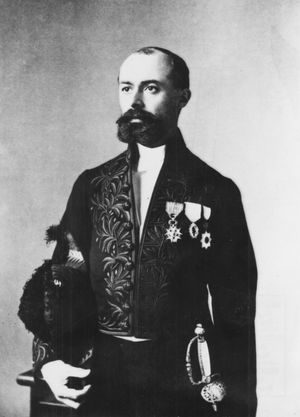

The Engineer Who Accidentally Found Radioactivity
Henri Becquerel wasn’t exactly set up to stumble upon a fundamental force of nature. He was a man of structure. After schooling at Lycée Louis-le-Grand, he went to École Polytechnique (1872–74) and then École des Ponts et Chaussées (1874–77). That’s engineering. He spent decades as an engineer in the Department of Bridges and Highways, eventually becoming chief engineer in 1894.
His academic side came later. In 1876, he started as an assistant teacher at École Polytechnique. By 1895, he held the chair of physics. He also worked as an assistant naturalist to his father at the museum, taking over the physics professorship when his dad died. It was a life of steady, predictable scientific rigor.
Why Phosphorescence Was a Red Herring
The late 19th century was obsessed with electricity, magnetism, and light. Becquerel’s early work fit right in. He studied how magnetic fields rotated plane-polarized light—a topic Michael Faraday had opened up, and one his own father had contributed to. He looked at infrared radiation and how phosphorescent crystals acted under infrared stimulation.
His big move was extending his father’s work on uranium compounds. He wanted to understand the link between absorbing light and emitting phosphorescence. He was good at it. Respectable, even. Member of the Académie des Sciences since 1889. But the real prize wasn’t in his past work. It was in his familiarity with uranium salts and his skill with photographic plates.
The Accidental Discovery
Wilhelm Röntgen discovered X-rays in late 1895. This changed everything. Röntgen had found that X-rays came from a glass vacuum tube where cathode rays hit. Becquerel wondered: Was there a fundamental connection between invisible radiation and visible light? Could all luminescent materials emit X-rays if stimulated correctly?
He tested this. Simple setup. Phosphorescent crystals on a photographic plate. The plate was wrapped in opaque paper. Only penetrating radiation could get through. He exposed the setup to sunlight for hours. This excited the crystals.
When he developed the film, there were silhouettes. The mineral samples showed up. Sometimes he put a coin or a metal cutout between the crystal and the paper. The metal showed up too.
He reported this to the Académie des Sciences on February 24, 1896. He noted uranium salts were particularly active.
Here’s the twist. He thought he had proved that luminescent substances emitted something similar to X-rays. But the next week, things got weird.
He left his uranium salts and photographic plates in a drawer. No sunlight. No ultraviolet stimulation. No phosphorescence.
When he developed the plates later, the images were still there. Stronger than expected. The uranium salts were ejecting penetrating radiation without being excited by sunlight.
Becquerel was confused. He postulated a “long-lived form of invisible phosphorescence.” Later, when he traced the activity to uranium metal, he called it “metallic phosphorescence.” He didn’t see it for what it was. He saw a weird version of something he already understood.
The Quiet Years (1896–1898)
Becquerel published seven papers on this topic in 1896. Two in 1897. None in 1898.
This drop wasn’t because he stopped working. It was because the scientific world lost interest. The 1890s were crowded with radiation studies. Cathode rays. X-rays. Canal rays. Radio waves. Glowworm light.
X-rays were the star. They made sharper photos. They were faster. Becquerel’s “rays” seemed less significant by comparison. He went back to his engineering. He went back to phosphorescence.
It took someone else to wake him up.
In 1898, Gerhard Carl Schmidt and Marie Curie independently discovered that thorium was also radioactive. Then Pierre and Marie Curie, along with Gustave Bémont, discovered polonium and radium. Suddenly, the world realized this wasn’t a quirky side effect of phosphorescence. It was a property of certain elements.
Becquerel was awakened. The significance of his discovery finally hit home.
Defining the Phenomenon
Becquerel returned to the field he had accidentally created. He made three key contributions that defined what radioactivity actually was.
1. The Beta Particle
In 1899 and 1900, he measured the deflection of beta particles in electric and magnetic fields. He calculated the charge-to-mass ratio. It matched Joseph John Thomson’s recently identified electron. Becquerel showed that beta particles were electrons. This linked atomic structure to external radiation.
2. Radioactive Decay and Transmutation
He discovered “uranium X,” an active substance within uranium. It lost its radiating ability over time. The uranium itself, inactive when fresh, eventually regained radioactivity.
Ernest Rutherford and Frederick Soddy saw similar behavior in thorium. They developed the transformation theory of radioactivity. One element spontaneously transmutes into another. Subatomic chemical change. Becquerel’s observations laid the groundwork for this revolutionary idea.
3. Physiological Effects
He noticed the radiation affected living tissue. In 1901, he reported a burn he got from carrying a sample of the Curies’ radium in his vest pocket. It wasn’t just a scientific curiosity. It was a hazard. It was also a potential tool. Physicians began investigating these burns. This led to the medical use of radiation—radiation therapy.
Legacy of the Accident
Becquerel shared the 1903 Nobel Prize for Physics with the Curies. He received other medals. Foreign societies elected him to their ranks. The French Academy of Sciences made him president and permanent secretary.
He didn’t set out to change physics. He set out to test a hypothesis about light and phosphorescence. He was wrong about the mechanism. He thought it was a form of light. It wasn’t. It was nuclear decay.
But his hands-on skill with uranium compounds and photographic plates put him in the right place at the right time. The rest of the scientific world was looking at X-rays. He was looking at his drawer.
The world didn’t understand what he had found until the Curies expanded the scope. Until then, it was just a curiosity. A strange, lingering phosphorescence.
He proved that matter could emit energy without an external source. It was a quiet revolution. One that started with a cloudy day in Paris and a wrapped photographic plate.