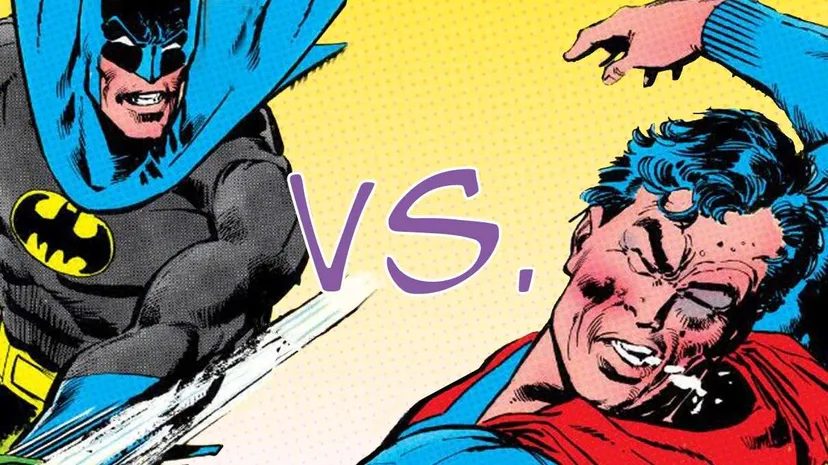
You were seven years old. Your room is a battlefield of plastic. Batman versus Superman. Of course they collide. It is the ultimate power fantasy. You control the narrative. You decide who gets knocked down. You decide who stands victorious. The stakes are imaginary. The fun is real.
Now you are thirty. Or forty. Or fifty. You have a job. You have bills. Time Warner and DC Comics want you to write the screenplay for their next blockbuster. They hand you the keys to the kingdom. Batman versus Superman. The holy grail of box office gold. You open your laptop. The cursor blinks. You type one word. Then you stop.
Who wins is not the question anymore. The question is far harder. Why do they fight?
That is the million-dollar query facing audiences this weekend. “Batman v. Superman: Dawn of Justice” drops. But this isn’t the first rodeo. These two icons have been trading blows in the panels of comics for decades. This film is just the loudest, most expensive entry in a very long lineage of conflict.
We aren’t here to recount every single instance. There are lists for that. Graeme McMillan at “The Hollywood Reporter” has already cataloged nearly every punch thrown. We aren’t interested in the mind-control plots. We don’t care about the temporary alternate universes where the rules don’t apply.
We want the real reasons. The gritty, psychological, and narrative drivers that force these two gods to clash. What do we actually get out of watching them destroy each other? It is not just about spectacle. It is about what their violence reveals.
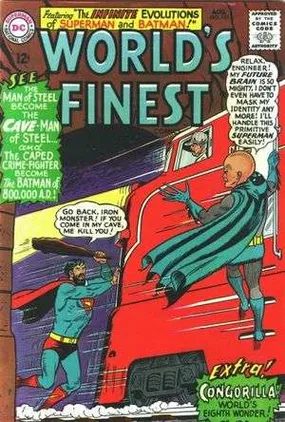
The partnership between Batman and Superman is often painted as the gold standard of heroism. But some of the wildest interactions between the Dynamic Duo and their extended family happened in the pages of World’s Finest Comics.
Here are three bizarre issues that prove the Kryptonian and the Caped Crusader didn’t always see eye-to-eye.
Evolutionary Whiplash in 1965
You know the trope. A ray gun goes off. Things change. But the 1965 issue World’s Finest Comics #151 takes a sharp turn into body horror and ego.
An evolutionary ray from Krypton hits the pair. The results are immediate and humiliating for their egos.
Superman devolves. He becomes a bearded caveman. His grammar hits the floor. He can barely form sentences.
Batman, meanwhile, evolves 800,000 years into the future. His brain swells to massive proportions. He becomes super-intelligent. He becomes high-brow.
They fight. Why? Because Batman cannot stand anyone challenging his new god-like intellect.
The issue pits anti-intellectualism against erudite snobbery. The caveman has raw power. The super-brain has cold logic. Neither side wins comfortably. It is a messy look at what happens when their strengths are inverted.
Kandor’s King and the Hero’s Ego
Fast forward to World’s Finest Comics #240 in 1976.
Superman finds himself installed as the king of Kandor. The city is shrunken. It is a museum piece to him, but to its citizens, it is home.
The power goes to his head.
His rule becomes tyrannical. The citizens of Kandor can’t take it anymore. They reach out to Batman. They need him to free them from Superman’s new obsession with control.
This raises a heavy question. Is this a revolution against royalism? Or is it just sci-fi nonsense?
The dynamic flips. Batman, the vigilante who operates in shadows, becomes the liberator. Superman, the beacon of hope, becomes the oppressor. It is a stark reminder that power corrupts even the Man of Steel.
The Great Alien Hoax of 1984
The final entry comes from World’s Finest Comics #302 in 1984.
An actor with a terminal illness makes a desperate choice. He wants one last big performance. So he tricks the heroes into thinking he is two different aliens.
The cast involved is huge. Robin. Batgirl. Jimmy Olsen. Supergirl. All of them get pulled into the web.
The twist? Batman and Superman saw through the hoax immediately. They played along.
Why? To help the man.
But the real story is in the deception. The actor’s setup highlighted the differences in what motivates the heroes.
Batman thought he was assisting an alien space cop hunting a criminal. He was playing the detective.
Superman believed he was defending an alien politician in exile from assassination. He was playing the shield.
The setup forced them to inhabit different roles. It showed how their instincts diverge when faced with the same lie. Batman looks for the
When Heroes Clash: The Real Roots of BvS
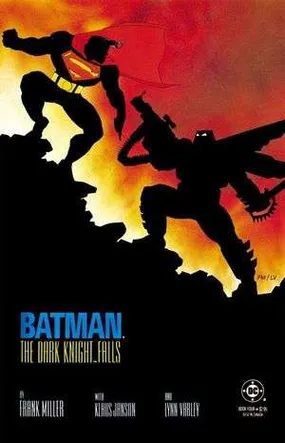
Frank Miller’s The Dark Knight Returns #4 didn’t just influence Batman v Superman: Dawn of Justice. It basically handed Christopher Nolan’s aesthetic to Zack Snyder and called it a day. The 1986 comic is the blueprint. You have an aging Batman returning to the streets. He’s not serving anyone. He’s an independent populist. Superman, on the other hand, works for the government. He’s branded a fascist. A sellout. A joke.
The US President sends Superman to stop the Dark Knight. The result is a 1980s vision of totalitarian oppression against self-reliant arrogance. That tension? It’s the core of the movie.
The First Meeting: Bluffs and Bombs
John Byrne’s Man of Steel #3 (also 1986) reimagines how the Last Son of Krypton meets the Dark Knight. It’s not a handshake. Batman is beating up a criminal informant. Superman sees this and assumes he’s dealing with an outlaw who needs to go to jail.
Batman doesn’t surrender. He bluffs. He claims a remote bomb is set to kill an innocent person. Superman buys it. Later, he learns the intended victim was Batman himself. This is the “ends justify the means” philosophy in action. They part ways amicably, but the conversation lingers on government corruption and the differences in their compassion for the mentally ill.
Grief, Rage, and Diplomatic Immunity
Jump to Batman #428 (1988). Robin is dead. The Joker murdered him in the “A Death in the Family” storyline. Batman chases his rival to the United Nations. He expects a fight. Instead, he finds the Joker has been appointed the new ambassador of Iran.
Superman warns Batman. The Joker has diplomatic immunity. It’s a way to defuse an international incident. This isn’t really a super-fight. It’s a tragedy. Batman punches Superman in an outburst of grief and rage. Superman just rolls with it. He’s a good friend.
The scene highlights the conflicts between justice and the law. It also drags up ghosts from the Iran Hostage Crisis. Three issues. Three different ways the two icons collide. All of them essential to understanding why they hate each other.
When Partnership Turns to Paranoia
Superman: The Animated Series, “World’s Finest” (1997)
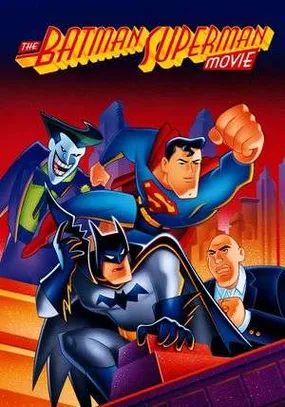
The 1997 animated film “World’s Finest” tries yet another angle on the Batman and Superman first meeting. It hits the beats you expect from a team-up. There is a brief scuffle. They argue over outlaw vigilantism. It is standard fare.
But the real friction here is personal. Bruce Wayne flirts with Lois Lane. It is petty. It is mean. He taunts Clark Kent because he believes Clark already “had his chance” with her. The hero dynamic becomes a love triangle.
There is a darker layer beneath the petty squabbles. The story touches on corporate contributions to the military industrial complex. Lex Luthor uses weaponized robot spiders. These come from a joint venture with Wayne Enterprises. The tech is lethal. The partnership is compromised.
The Cost of Preparation
JLA #44 “Tower of Babel” (2000)
Decades later, the comics explore the fallout of that mistrust. In “Tower of Babel,” Batman’s villain Ra’s al Ghul steals secret plans. The goal? Disabling the Justice League of America. Ra’s al Ghul scrambles their language centers. He confuses their brains.
The specific threat to Superman is chilling. Batman developed experimental Red Kryptonite. It cripples Superman’s cellular structure. The effect is transparent skin. It is a vulnerability made manifest.
The story calls into question the stability of their relationship. Secrets are kept. Misjudgments are made. How much do they really trust each other when the worst possible plans are hidden in a safe? The answer is not comforting. It leaves you wondering if the team ever really stood a chance.
The Meritocracy vs. Destiny Debate
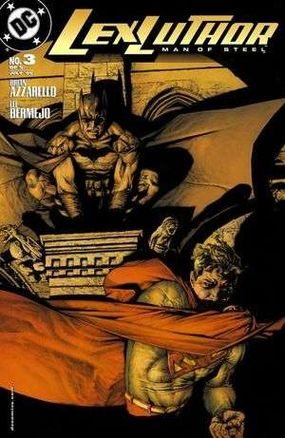
Lex Luthor doesn’t just want to beat Superman. He wants to dismantle the very idea that some people are born better than others. In Lex Luthor: Man of Steel #3 (2005), Luthor plays a long game. He manipulates Batman into doubting Clark’s intentions. It’s not just a fistfight. It’s a philosophical tangle.
Luthor argues that merit should trump destiny. Superman is a natural disaster waiting to happen. Bruce Wayne seems to agree with the premise, if not the villain. The conflict isn’t about punches. It’s about who earns their place. Is greatness something you are given? Or something you build?
Power Meets Preparation
Jump ahead to 2011. Superman/Batman #78 flips the script. Joe Kelly writes “Who Would Win?” The premise is simple. Two kids argue. One backs Superman. The other backs Batman. Their imaginary battle boils down to raw power versus meticulous preparation.
Superman represents regulation. He operates within a system. Batman rejects the idea of rules in war. He believes in adaptability. Inflexibility. The story ends with a twist. The kids realize their friendship matters more than who would win in a ring. It’s a soft landing for a hard subject.
Then there’s the humor. Batman drops a line about crime and “nooky.” It’s hilarious. It’s unexpected. It reminds you that these characters have lives outside the cape.
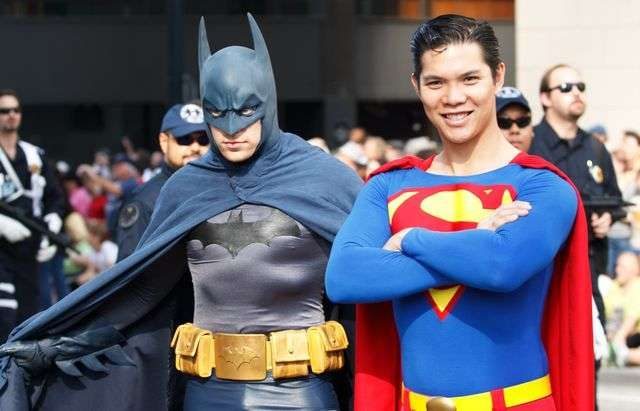
Superman is usually painted as the ultimate diplomat. He’s about hope, truth, and justice. He avoids conflict whenever possible. But don’t let the cape fool you. The Man of Steel is also a man of iron. His sheer physical dominance has put him in absurd hypothetical matchups against figures who shouldn’t stand a chance.
Think about that for a second. How does a Kryptonian compare to fictional wizards or real-world boxers?
Fighting Beyond the Cops and Robbers
We’ve seen him trade blows with Batman. We’ve seen him lift entire cities. But the most interesting comparisons come from outside the comic book universe. He’s gone toe-to-toe with Jedi Masters. He’s matched fists with Muhammad Ali. And yes, he’s even been pitted against Harry Potter in various fan theories and power-scaling debates.
These aren’t just random names. They represent different types of strength.
The Physics of Invincibility
When you look at Superman vs Muhammad Ali, you’re looking at a clash of eras. Ali was the fastest heavyweight of his time. Superman moves at relativistic speeds. The fight lasts a microsecond. Ali doesn’t stand a chance. It’s not even close.
But it’s fun to imagine. Could the greatest boxer in history outmaneuver a guy who can hear a pin drop in Tokyo? Probably not. Superman’s perception alone ends that debate instantly.
“Superman is a man of peace, but he’s a man of steel too.”
Wizards vs. Aliens
Then there’s the Jedi. Luke Skywalker. Obi-Wan Kenobi. Force users. They rely on precognition and telekinesis. Superman has supersenses. He can perceive threats before they happen. He can react faster than a lightsaber swing.
In a direct confrontation, the Force might distract him. But it can’t stop him. You can’t Force Choke a guy who can fly through planets. The Jedi are powerful, but Superman operates on a planetary scale.
The Magical Variable: Harry Potter
This is where it gets tricky. Magic. Harry Potter represents a different rule set. Physics doesn’t apply the same way. A Killing Curse doesn’t care about durability.
Can Superman dodge a spell? Yes. He can dodge bullets. He can dodge light. A red light from a wand is just a slower projectile to him. But magic bypasses physical defenses.
Most theorists argue that Superman’s speed allows him to end the fight before Harry can utter a syllable. It’s a race between a human mind processing incantations and a super-brain calculating trajectories at nanosecond precision.
Why These Matchups Matter
We love these comparisons because they break the fourth wall. They remind us that Superman isn’t just a comic character. He’s a cultural icon. We use him as a benchmark.
When we ask “who would win,” we’re really asking about the limits of power. Is physical strength the ultimate answer? Or do skill, magic, or strategy change the equation?
Superman wins in brute force. Always. But the real story is in the imagination. It’s in the absurdity of pitting an alien god against a British wizard. It’s in the history. The legacy. The sheer weight of who he is.
He