The water is wrong. It is too hot.
Around the Galápagos Islands, the Pacific Ocean is boiling. This is no local anomaly. It is the start of a massive El Niño event, building now and peaking in 2026. Scientists are bracing for record heat. If 2026 doesn’t break global temperature records, 2027 almost certainly will. The islands sit right in the bullseye of this climate storm.
Why El Niño Threatens Galápagos Marine Life
Usually, the Eastern Pacific is cold. It should be. That cold upwelling supports penguins. It supports fur seals. It allows penguins to swim next to coral reefs—a biological contradiction that only exists here.
Then comes the heat.
Trade winds slow. Warm water rushes east. The ocean takes a hot bath. Temperatures spike from a cool 18C to over 30C.
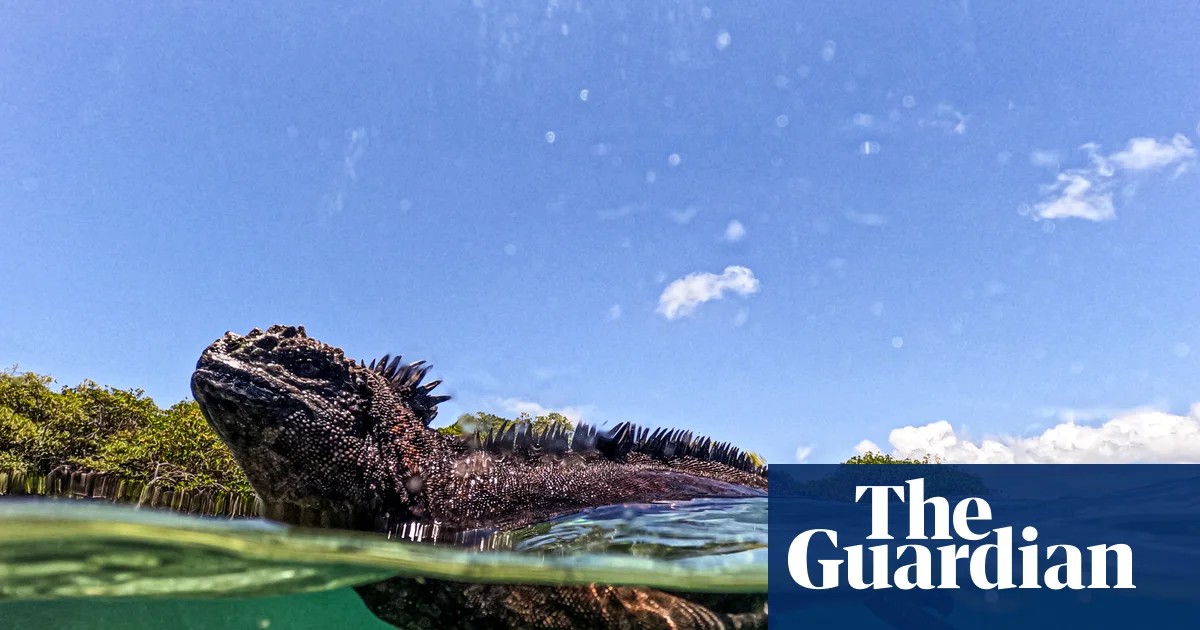
Nutrients vanish. Fish populations crash. Birds starve. Nazca boobies. Blue-footed boobies. Penguins. Their numbers freefall. Marine iguanas die by the thousands, starving on beaches that used to support them.
It is a cycle. An ancient rhythm. La Niña brings cold and life. El Niño brings heat and death. Species here have evolved for this volatility. They are built for the oscillation.
How Galápagos Animals Adapt to Climate Extremes
Evolution is not always about growth. Sometimes it is about shrinking.
Galápagos marine iguanas can actually reduce the size of their skeletons during severe El Niño years. It is a drastic measure. They get smaller to survive the famine. When the cold water returns, they grow back. It is a physiological miracle. A testament to resilience.
But climate change breaks the rhythm.
El Niños are becoming more frequent. They are more extreme. The recovery period—the La Niña phase—is getting shorter or weaker. The ecosystem does not have time to bounce back.
Jon Witman, a Brown University ecology professor who has studied these cycles for decades, sees the danger clearly. He notes that the Galápagos has the highest temperature variability of any ecosystem on Earth. It is a place of total collapse and roaring recovery.
“How much stress can an ecosystem take?”
That is the question hanging over the islands.
The Risk of Ecological Tipping Points
This is not theoretical. We have seen the worst-case scenario before.
During the 1982-83 super El Niño, several endemic Galápagos species went extinct. The Galápagos damselfish is gone. Forever.
More recently, during the 2015-2016 El Niño, researchers documented outbreaks of ulcerative skin disease across multiple fish species. The shock to the food web was severe. It rippled outward, affecting everything from small fish to large predators.
Witman and his team are preparing for the 2026-2027 event. They fear a tipping point. Not just a bad year. A permanent shift. An ecosystem pushed so hard it flips into a new state—one with low productivity and low biodiversity. A dead zone.
Are Galápagos Ecosystems Resilient to Climate Change?
It is easy to assume doom. It is easy to write the eulogy now.
But the islands have survived before. They are stubborn.
Witman remains quietly optimistic. Not because the heat will go away. But because life finds a way to adapt, even when the conditions change radically.
In his work on coral reefs, he has watched the composition change. Sensitive species die off. Hardier species take their place. The reefs are different now. More resilient. Better able to withstand the next hammer blow of heat.
“We are in a new zone,” Witman says. “It’s worrisome, but studying the ecosystem give me hope.”
The Galápagos is a natural laboratory for the future. It shows us what happens when nature is pushed to the edge. It shows us collapse. It also shows us recovery.
Which will it be this time?
The water is hot. The birds are waiting. We just have to see what survives.