Dead cells are usually the end of the story. The RNA rots. Silence falls. Jens Harder found otherwise. He and his team at the Max Planck Institute looked at a methane-making archaeon and spotted a ring of RNA hanging on.
It shouldn’t have been there. Dead things don’t hold onto genetic messages.
But this wasn’t just any RNA. It was from a predator. Specifically, Candidatus Velamenicoccus archaeovoccus, a tiny bacterium that hunts microbes. It had released a circular piece of its genetic material into its victim, Methanothrix soehngeni.
The predator ate the prey. Then it dumped this mobile gene into the dead cell.
Genes don’t always follow the parent-child rule. They jump. This study shows they can jump across species boundaries, from killer to killed, through circular RNA.
The Jumper’s Playbook
Jumping genes. Everyone has them. Bacteria. Plants. You. They are essentially parasites of the genome.
They detach. They float. They find a new slot in the DNA or RNA machinery.
One trickster stands out: the self-splicing intron. It uses a ribozyme—a molecular scissors made of RNA—to cut itself out. This makes it independent. It doesn’t need the host’s help to escape its current spot.
Moving inside one cell? Easy enough. Moving to another organism is the hard part. Evolutionary trees suggest it happens all the time, but nobody knew the route. We assumed these hitched rides on viruses or plasmids. Harder caught a different mode of transport.
The intron didn’t just sit there. It was trying to replicate inside a host that was already dead. The carrier killed the victim. The gene landed in an empty house.
A Community Smelling Like Oranges
The discovery started with smell. Specifically, oranges.
Limonene is that orange scent compound. A community of microbes lives on it, turning limonene into methane and CO2. They do it without oxygen. Slowly.
Dominating this slow party was the predator: Ca. Velamenicoccus archaevoccus. It fed on Methanothrix, one of Earth’s major methane producers.
Harder saw dead Methanothrix cells. Why were they dying? The question was obvious. Had the predator done it? To prove it, the team needed proof of contact at a molecular level.
Hunting the Invisible
Introns are hard to find outside a cell. In fact, finding intron RNA extracellularly is novel. But the potential payoff was too big to ignore.
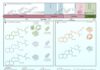
The Max Planck team used hyper-sensitive microscopy. They built specific nucleic acid probes to light up the target.
The results were clear.
Intron RNA appeared inside living predator cells. It also showed up inside the dead prey cells.
This confirmed the transfer. But it came with a catch. The predator killed its host before the gene could do any real work. It’s a missed shot. A genetic letter delivered to an empty office.
The Ring Saves It
Why did the RNA survive at all?
Most RNA degrades quickly. Enzymes eat it from the ends inward. It’s fragile.
Unless it has no ends.
This intron formed a circle. A loop. Enzymes need a starting point, a loose end to bite onto. The ring had none. So it resisted breakdown. It stayed put in the dead archaeal cell, stable and intact.
This stability isn’t unique to bugs. Circular RNA in humans affects metabolism and even tumor development. It’s currently the hot ticket in RNA vaccines. Think COVID. Think cancer.
Harder puts it bluntly:
Our study has shown that in micro organisms jumping genes can be transferred to other organisms via their circular RNA.
So, dead cells aren’t always dead ends. Sometimes they’re just waiting rooms. Or traps.
The gene landed. It waited. For what, exactly, we don’t know. Evolution rarely gives a neat conclusion. It just moves. And keeps moving.
Reference: Kizina, Lonsing, and Harder (2026). Mobile intron RNA from a bacterial killer accumulates in dead archaea. Scientific Reports.