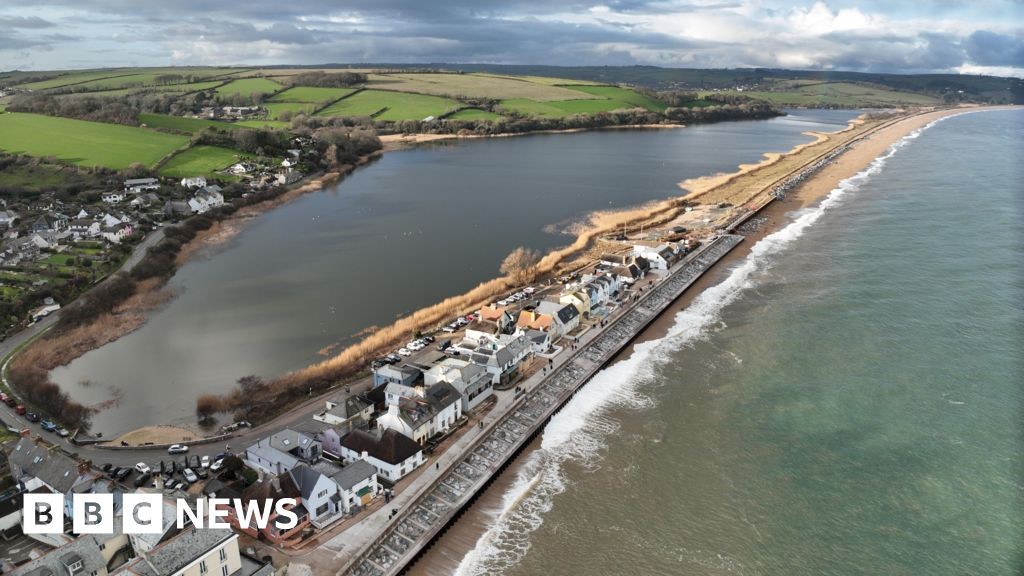
Powerful winter storms are accelerating erosion along the Devon and Cornwall coastlines, stripping away sand and reducing beach heights by up to 2 meters (6.6 feet) in some areas. This rapid reshaping of the landscape is raising concerns among residents about the long-term stability of coastal communities, with some fearing their homes could eventually be lost to the sea.
Dramatic Erosion and Community Impact
Recent storms, such as Storm Ingrid, have inflicted significant damage on seafront properties. Peter Walton, a Torcross resident, found his home badly damaged, with front windows lost despite the presence of protective shutters. The event highlighted the vulnerability of coastal living, even with existing sea defenses.
Gail Stubbs, owner of the Start Bay Inn, expressed deeper anxieties about the future of her village. She described a shrinking beach, once expansive in her youth, now almost disappeared. This time, she added, the damage feels different — more severe and irreversible.
Measuring Coastal Change
Researchers at the University of Plymouth are employing digital GPS technology to track beach elevation shifts after storms. By taking measurements every 200 meters (660 feet), they aim to model future beach conditions, particularly in the context of rising sea levels. Their data confirms that beaches at Torcross and Slapton have lost approximately 2 meters (6.6 feet) in height following Storm Ingrid.
The Long-Term Trend and Climate Change
The 2-meter reduction is the largest change recorded in the last decade, according to Gerd Masselink, a professor of coastal geomorphology at the University of Plymouth. This erosion isn’t an isolated incident; it’s part of a broader pattern of sand and gravel moving from the western to the eastern ends of south coast beaches. This shift is driven by an increase in south-westerly wave events compared to easterly ones.
Over the past 20 years, Torcross beach has already lost about 6 meters (20 feet) in height, suggesting an accelerating rate of erosion. The situation is expected to worsen with climate change and rising sea levels, leading to more frequent flooding and increased erosion even in previously stable areas.
The Future of Coastal Defense
Masselink warns that current defense strategies are unsustainable long-term. Without extensive and costly interventions like concrete fortifications, the only realistic solution may be strategic retreat from the most vulnerable areas.
The Department for Environment, Food & Rural Affairs (Defra) maintains its commitment to coastal protection, citing a £10.5 billion investment to protect nearly 900,000 properties by 2036. However, the scale of the problem suggests that even with significant funding, some communities may ultimately face unavoidable displacement.
The accelerating erosion along the Devon and Cornwall coastlines is not just an environmental issue; it’s a social and economic one, forcing difficult choices about the future of coastal communities in the face of climate change.