Neil The Seal Is Back And Bigger
He is huge.
Neil the seal has returned to Hobart and the chaos resumes.
This isn’t some tiny pup. This is a 5.5-year-old southern elephant seal (Mirounga leonina ). He comes to Tasmanian beaches to shed his coat but ends up destroying infrastructure instead.
Specifically traffic cones.
When he was small a cone was taller than him.
Now?
He crushes them. Regularly.
He’s gained blubber and followers. 1.4 million on TikTok, just for context. People love watching a multi-ton animal treat municipal property like confetti. It is arguably the best science news all week.
Evolution’s Shadow And The Cost Of Living Long
We live longer than any humans ever did.
That should be great. It isn’t entirely.
Older populations bring older problems. Health declines alongside longevity. Is this inevitable? Handan Melike Dönertaş and Linda Partridge dug through modern genetic datasets to find out. They are testing an idea from the 1950s.
It’s called the ‘selection shadow’.
Basically evolution stops paying attention to us once we can reproduce. There’s no evolutionary pressure to fix genes that cause cancer or arthritis at 75 because nature didn’t care about us at 75 anyway. The shadow covers the end of life. It explains why aging hurts. It also hints that fixing it requires ignoring what evolution usually wants.
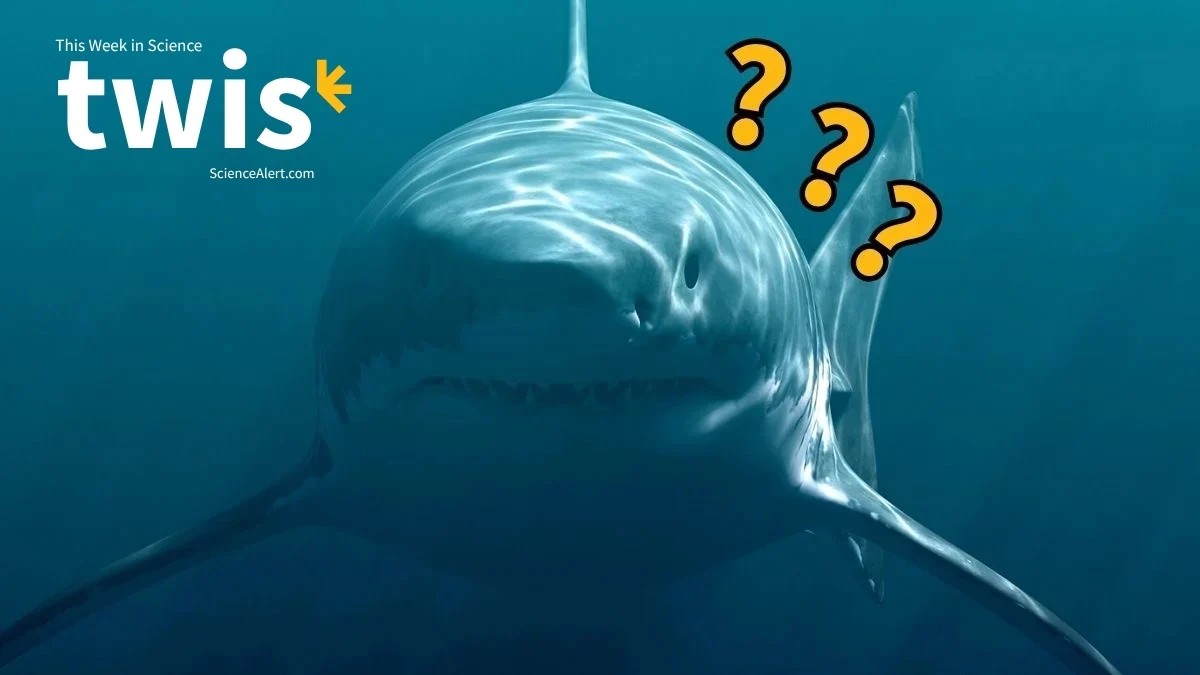
Megalodon Was A Monster And Here’s The Proof
In 1978 scientists found 20 megalodon vertebrae. One was massive. 23 centimeters wide. 9 inches across. Bigger than any known vertebra at the time.
Then disaster struck.
Or rather mishap.
During a move in 1989 the fossils were damaged and lost to storage purgatory. Everyone thought they were gone.
They weren’t.
Paleontologists found them recently. Re-analyzed them. The data holds up. The megalodon (Otodus megalodon ) was exactly as terrifying as the original estimates suggested. Giant teeth. Massive braincases. Neogene oceans had a shark problem and they were right to fear it. The rediscovery confirms the scale without the doubt.
The Colonoscopy Hangover
Getting a colonoscopy removes polyps.
Removing polyps should prevent cancer.
It doesn’t always.
Harvard researchers think they know why. The gut microbiome stays wrecked. For years.
Benign growths (adenomas) get snipped. The risk of colorectal cancer usually stays elevated anyway. Why? Because the surgery disrupts the trillions of microbes living in the gut. The community takes a decade to recover if it ever does. A broken ecosystem creates a broken defense system. Preventative medicine leaves a wound that takes years to close.
It complicates the success rate of standard screening. We need to heal the bugs too not just cut the lumps.
Ovaries Don’t Retire. They Change Jobs.
Menopause isn’t an ending. It’s a pivot.
Francesca Duncan argues the ovaries don’t just stop pumping eggs and call it a day. They take on new work. It looks like a career change rather than retirement.
They keep functioning. Just differently.
We treat post-menopausal biology like a dead zone but the organs are still busy. Reproductive biologists are rewriting the playbook. The ‘end’ of fertility is just the start of something else.
Yellowstone Boiled A New Hole In Two Days
Ground stood solid. Scientists walked on it on June 13.
On June 14 an explosion rocked the area. Small but significant.
By June 16 a new pit appeared. It is gray and silt-covered. The size of a small swimming pool. Inside the water boils. Hissing thumping violent steam.
Biscuit Basin in Yellowstone. Nobody saw it break open. They just arrived home and found the earth missing. The earth here is thin. Always was. One minute solid rock. Next minute hydrothermal void. It happens. Just unexpectedly.