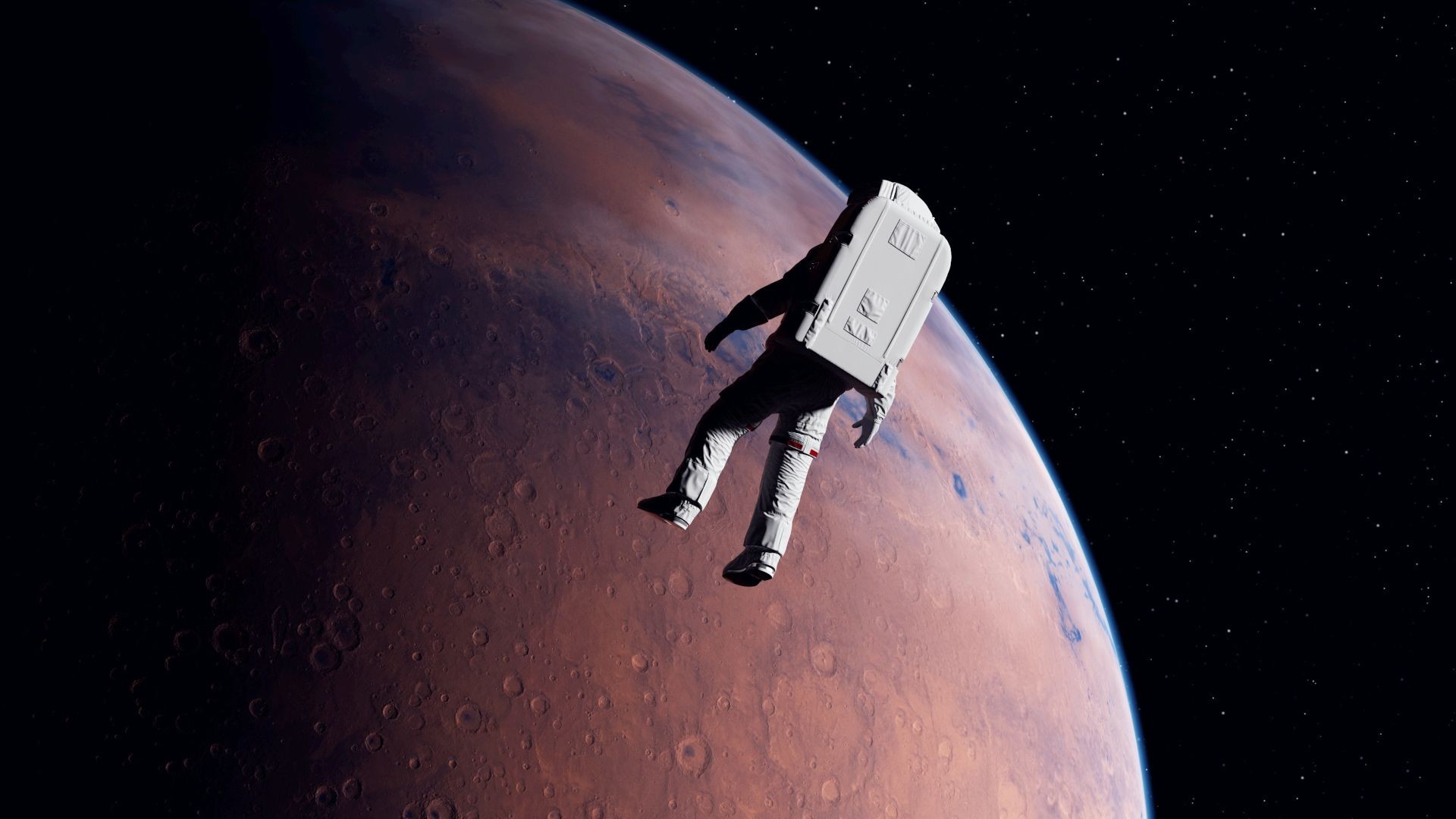
Science fiction has long sold us a dramatic vision of death in the void: an astronaut is ejected into space and instantly freezes into a brittle statue, or their body explodes like a soap bubble upon exposure to the vacuum. These scenes are cinematic staples, designed to shock and entertain.
The reality is far less explosive, but significantly more terrifying.
Space does not kill with the sudden violence of a bomb; it kills with the patience of a ticking clock. The hazards of the extra-terrestrial environment—vacuum, radiation, and debris—are methodical. They do not offer a quick exit but rather a prolonged, agonizing struggle against physics and biology. As astrophysicist Dr. Jeffrey Bennett notes, the critical question isn’t just if space is lethal, but which lethal factor strikes first.
Here is how the true dangers of space travel unfold, stripping away the Hollywood mythos to reveal the grim mechanics of survival.
The Vacuum: Boiling Blood, Not Exploding Bodies
The most persistent myth is that human bodies will explode or flash-freeze in the vacuum of space. Movies like Total Recall and Mission to Mars have cemented this image in the public consciousness. This is scientifically incorrect.
According to NASA research and expert analysis, your skin is elastic enough to contain your internal pressure; you will not burst. Nor will you freeze instantly, as space is a vacuum with no medium to conduct heat away from your body rapidly. Instead, you would face a process called ebullism.
In the absence of atmospheric pressure, the boiling point of bodily fluids drops drastically. Your saliva, tears, and the moisture in your lungs would begin to boil at body temperature. Your tongue would swell, and nitrogen bubbles would form in your bloodstream, blocking vessels and tearing tissue.
The timeline for survival is unforgiving:
* 0–15 seconds: You would likely hold your breath, risking lung rupture if you don’t exhale.
* 15–30 seconds: Loss of consciousness due to cerebral hypoxia (lack of oxygen to the brain).
* 60–90 seconds: If not returned to a pressurized environment, death is inevitable.
The experience would resemble drowning more than exploding—a suffocating, painful end caused by internal swelling and oxygen deprivation. Rescue within the first minute offers a chance of survival; beyond that, the damage is irreversible.
Radiation: The Invisible Assassin
While vacuum exposure grabs headlines, cosmic radiation is the silent, long-term killer that science fiction often ignores or trivializes (sometimes even granting superpowers, as in The Fantastic Four ). In reality, radiation is a primary constraint on human exploration beyond Low Earth Orbit.
Space radiation comes from three main sources:
1. Galactic Cosmic Rays (GCRs): High-energy particles from supernovae and other cosmic events.
2. Solar Particle Events (SPEs): Bursts of particles from solar flares and coronal mass ejections.
3. Van Allen Belts: Zones of charged particles trapped by Earth’s magnetic field.
Acute vs. Chronic Exposure
* Acute Poisoning: During a major solar storm, an unshielded astronaut could receive a lethal dose of radiation in hours or days, leading to acute radiation sickness and death.
* Chronic Damage: For long-term missions, the threat is cumulative. Even with shielding, radiation damages DNA over time, significantly increasing the risk of cancer, cataracts, and degenerative diseases.
This is why radiation shielding is one of the most critical engineering challenges for Mars missions and lunar bases. It is not a background detail; it is a life-or-death variable.
The Cabin: Suffocation and Carbon Dioxide
Perhaps the most immediate threat to astronauts is not outside the ship, but inside it. Asphyxiation remains the leading cause of death in spaceflight scenarios.
The tragedy of Apollo 13 serves as a stark reminder. After an oxygen tank exploded, the crew was forced into the cramped Lunar Module, designed for two people for two days. They had to support three people for nearly four. The crisis wasn’t just a lack of oxygen, but a buildup of carbon dioxide (CO₂).
Without functional CO₂ scrubbers, astronauts would succumb to hypercapnia. The symptoms are insidious:
* Confusion and panic set in first.
* Loss of consciousness follows quickly.
* Brain damage occurs within four to six minutes.
* Organ failure and death ensue.
The Apollo 13 crew survived only through desperate improvisation, crafting a filter from plastic bags, cardboard, and tape. This highlights a vital truth: spacecraft are not just vehicles; they are closed-life-support systems. A failure in air recycling is often more deadly than a hull breach.
Debris: Hypervelocity Impacts
Hollywood depicts asteroid fields as dense forests of giant rocks that ships must dodge. In reality, space is vast, and collisions with large asteroids are rare. However, micrometeoroids and orbital debris pose a constant, high-velocity threat.
Objects in Low Earth Orbit travel at approximately 17,500 miles per hour (28,000 km/h). At these speeds, even a paint chip carries the kinetic energy of a bullet.
The Mechanics of Impact
* Hypervelocity Shock: Upon impact, both the debris and the target material can vaporize instantly.
* Spallation: Fragments can break off from the interior of the hull, raining down on the crew like shrapnel.
* System Failure: A puncture can lead to rapid decompression, damaging cooling, power, or life support systems.
The movie Pitch Black (2000) offers a more accurate depiction than typical space operas. A micrometeoroid strike doesn’t always mean an immediate fiery explosion; it often means a sudden loss of pressure, forcing the crew into a race against time to seal compartments and preserve breathable air.
Conclusion
The death of an astronaut in space is rarely the spectacular, instant event portrayed on screen. It is a gradual, physiological unraveling —whether through the slow boil of bodily fluids in a vacuum, the cellular decay caused by radiation, or the silent suffocation from CO₂ buildup.
Surviving the final frontier requires less heroics and more rigorous engineering. It demands that we respect space not as a battlefield, but as a patient, indifferent killer that demands absolute precision from those who dare to enter it.