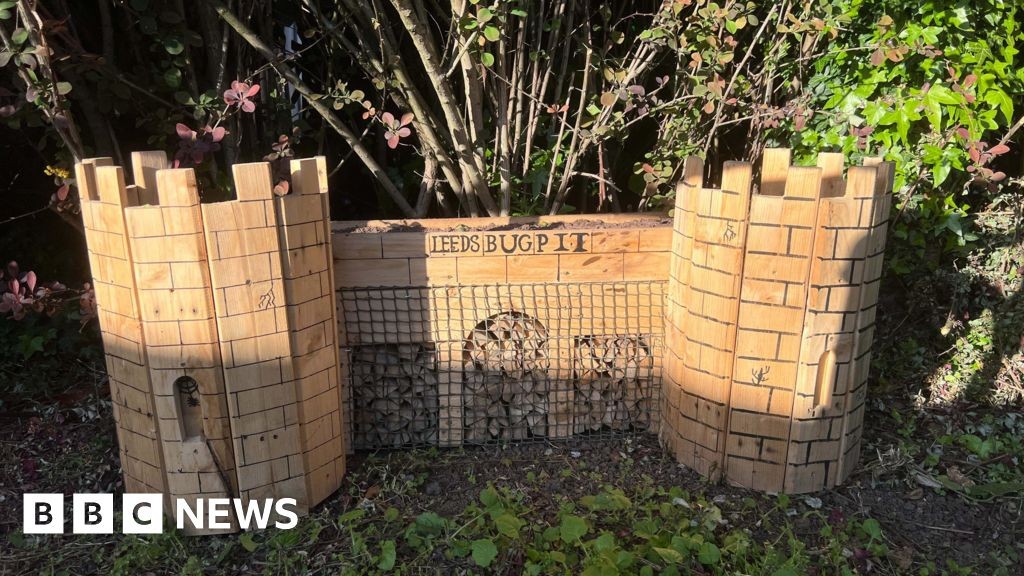
In a creative fusion of urban commuting and urban ecology, local landmarks have been transformed into miniature sanctuaries for wildlife. Four unique “bug hotels” have been installed at Burley Park Station in Leeds, turning a routine transit stop into an educational and aesthetic landmark.
A Collaborative Green Initiative
The project is the result of a partnership between the Cardigan Community Centre and the charity The Conservation Volunteers (TCV). Rather than traditional, utilitarian insect habitats, these models were specifically designed to mimic iconic local structures, making them both functional for biodiversity and visually striking for passengers.
Among the installations is a miniature version of The Picture House, a beloved Leeds cinema. By recreating recognizable city landmarks in this way, the project bridges the gap between urban architecture and the natural world.
Inspiration Over Guilt
The goal of the installation is not merely to provide shelter for pollinators, but to spark a conversation about local ecology.
Col Powell, Community Hub Manager at TCV Hollybush, emphasized that the project aims to inspire rather than lecture.
“Hopefully they are done in a memorable enough way that it sticks in people’s heads and is more of an inspirational thing rather than browbeating people into feeling bad about not saving the planet.”
This approach reflects a growing trend in “tactical urbanism”—the practice of using small-scale, community-led interventions to improve the quality of life and the environmental health of public spaces.
Enhancing the Commuter Experience
The installation at Burley Park is part of a broader movement where local community groups “adopt” transit hubs. By focusing on the aesthetics and ecological value of stations, these groups aim to:
– Improve station appeal: Making transit hubs feel more welcoming and cared for.
– Promote biodiversity: Providing essential habitats for insects within dense urban environments.
– Foster community pride: Using local landmarks to create a sense of place and connection.
As urban areas continue to expand, integrating small pockets of nature into transit infrastructure becomes increasingly vital for maintaining local ecosystems and improving the mental well-being of commuters.
Conclusion
By turning recognizable landmarks into habitats for wildlife, this project transforms a functional transit point into an engaging tool for environmental awareness. It demonstrates how small, community-driven design choices can foster a deeper connection between urban residents and their local environment.