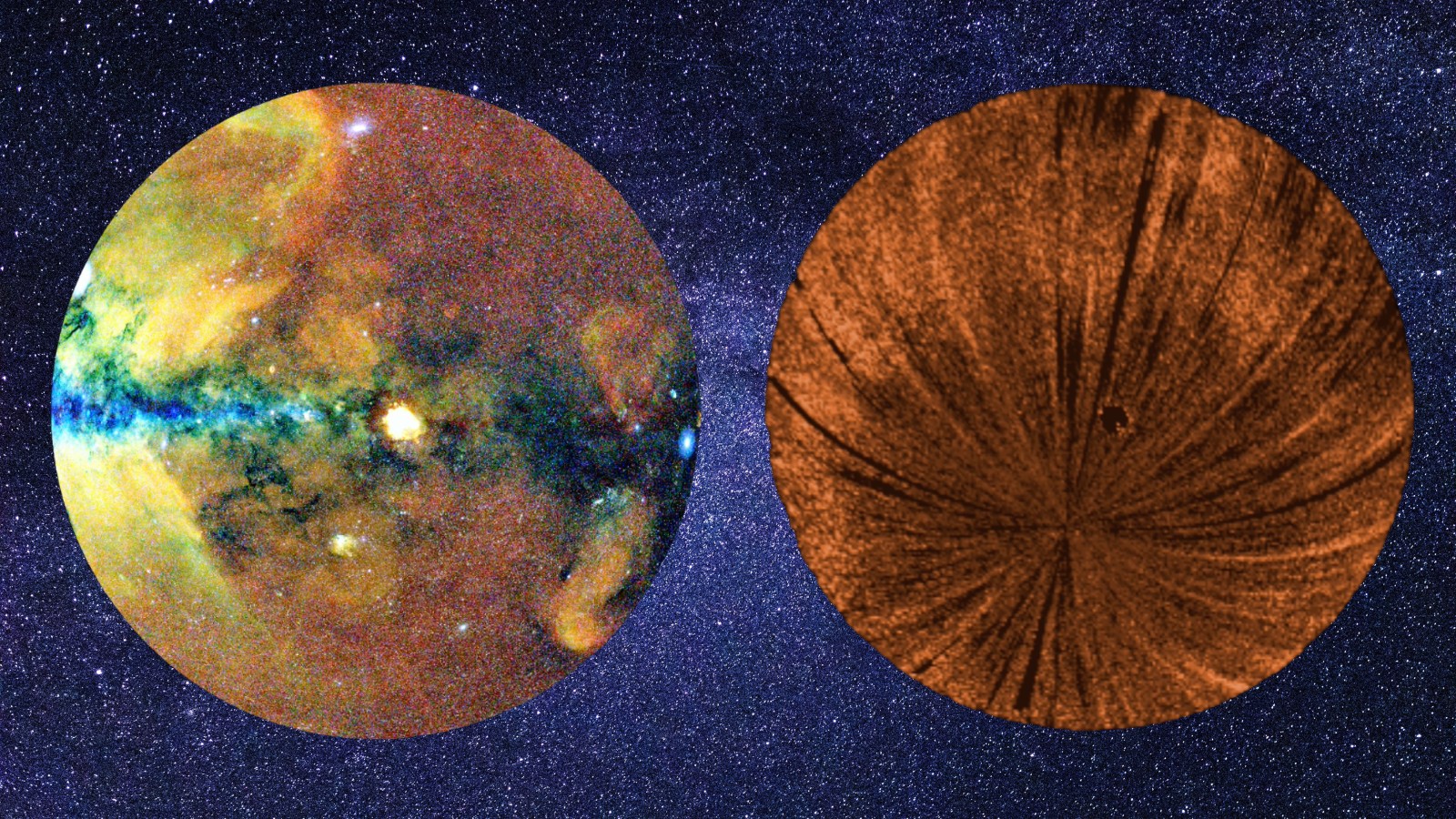
Astronomers have captured a groundbreaking visualization of what they are calling the “breath of the solar system.” Using advanced X-ray technology, researchers have mapped the glow produced when the solar wind—a stream of charged particles from the Sun—collides with Earth’s atmosphere and the heliosphere, the protective bubble surrounding our solar system.
The Science of Solar Wind Charge Exchange
The phenomenon responsible for this glow is known as solar wind charge exchange. This process occurs when heavy ions within the solar wind, such as carbon and oxygen, collide with neutral atoms in our atmosphere or the heliosphere. During these collisions, the ions “steal” electrons from the neutral atoms, releasing energy in the form of soft X-ray emissions.
This discovery is particularly significant because of how astronomers have historically viewed these emissions:
- From Noise to Signal: For years, charge exchange was treated as “background noise”—a nuisance that interfered with measurements of plasma density and temperature in distant galaxies.
- A New Field of Study: By creating the clearest map of these soft X-rays to date, scientists have transitioned this phenomenon from an obstacle into a legitimate and fascinating area of research.
Mapping the Glow with eROSITA
The data was captured by the eROSITA space telescope, which has been orbiting at the second Lagrange point (L2)—a stable position 1.5 million kilometers from Earth—since its launch by Roscosmos in 2019.
Between 2019 and 2021, eROSITA scanned the sky four times, providing the high-resolution data necessary to distinguish between distant cosmic signals and local solar activity.
“We realized that [the variations] couldn’t come from distant galactic structures, which are constant, but must be linked to a phenomenon much closer to us: the charge exchange of the solar wind.”
— Gabriele Ponti, Brera Astronomical Observatory
Understanding Solar Cycles and Galactic Context
By isolating the local radiation caused by the solar wind, researchers were able to achieve two major scientific goals:
1. A Clearer View of Deep Space: They successfully filtered out the “noise,” allowing for an unaltered image of emissions from distant galaxies.
2. Insights into Solar Behavior: They gained a detailed understanding of how the solar wind fluctuates. The research indicates that these X-ray emissions follow the solar cycle, intensifying during periods of high solar activity and weakening during solar minimums.
This connection is vital for heliophysics —the study of the Sun and its effects on the solar system. Understanding how the heliosphere modifies our view of the X-ray sky is essential for accurately interpreting the “warm phase” of the Milky Way and the plasma surrounding our galaxy.
Conclusion
By transforming a former source of observational interference into a diagnostic tool, astronomers can now use the solar system’s “breath” to better understand both the dynamics of our Sun and the vast structures of the Milky Way.