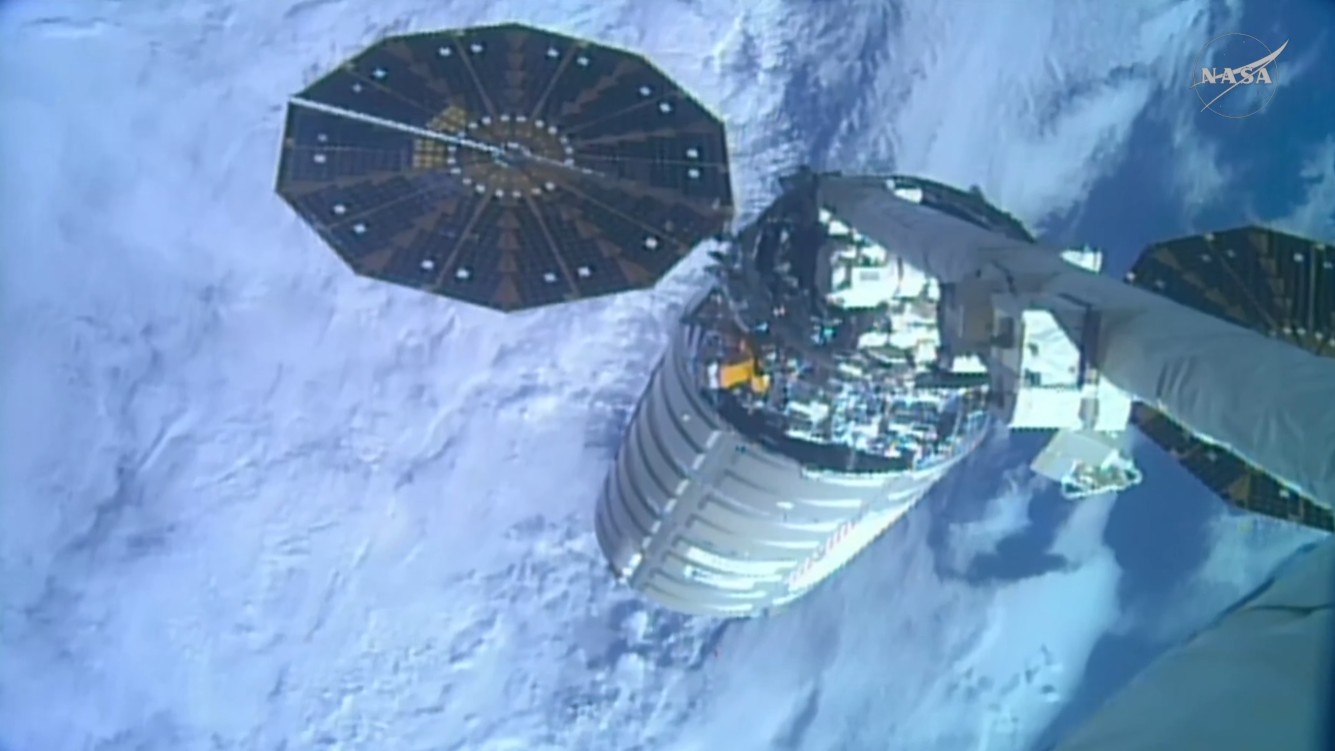
The International Space Station (ISS) recently released a massive cargo spacecraft, the Northrop Grumman Cygnus XL, filled with thousands of pounds of accumulated waste. The spacecraft is now burning up in Earth’s atmosphere after a seven-month stay at the station. This event highlights both the incredible logistical challenges of long-term space habitation and the advanced technologies that make it possible.
What Happened?
On March 12, the Cygnus XL was detached from the ISS over the South Atlantic Ocean. The freighter had delivered roughly 11,000 pounds (4,990 kilograms) of supplies in September 2025 – making it the largest cargo vessel ever to reach the orbital laboratory. After unloading, it was repurposed as a giant trash can, holding waste generated by astronauts over the course of its mission.
This isn’t just about taking out the garbage; it’s a necessary part of keeping the ISS operational. Without regular disposal, waste would quickly accumulate, creating unsanitary conditions and potentially hindering scientific experiments.
Why This Matters
The ISS is a marvel of engineering, orbiting at 17,500 mph (28,000 km/h) – about 4.8 miles per second – some 260 miles (420 km) above Earth. The station itself is enormous, stretching 356 feet (109 meters) long and weighing nearly 925,000 pounds (420 metric tons).
Despite these extreme conditions, spacecraft like Cygnus XL and SpaceX’s Crew Dragon routinely dock with the station, delivering cargo and personnel. The controlled destruction of the Cygnus XL illustrates how even seemingly mundane tasks like waste disposal are integrated into the complex operations of space travel.
This process is a critical, if unglamorous, component of sustaining human presence in orbit. Without it, long-duration missions would quickly become unsustainable.
The ISS operates as a closed-loop system, relying on Earth for supplies, but also managing its own waste in a way that minimizes environmental impact. The Cygnus XL’s fiery demise ensures that the waste burns up completely in the atmosphere, avoiding pollution or debris.