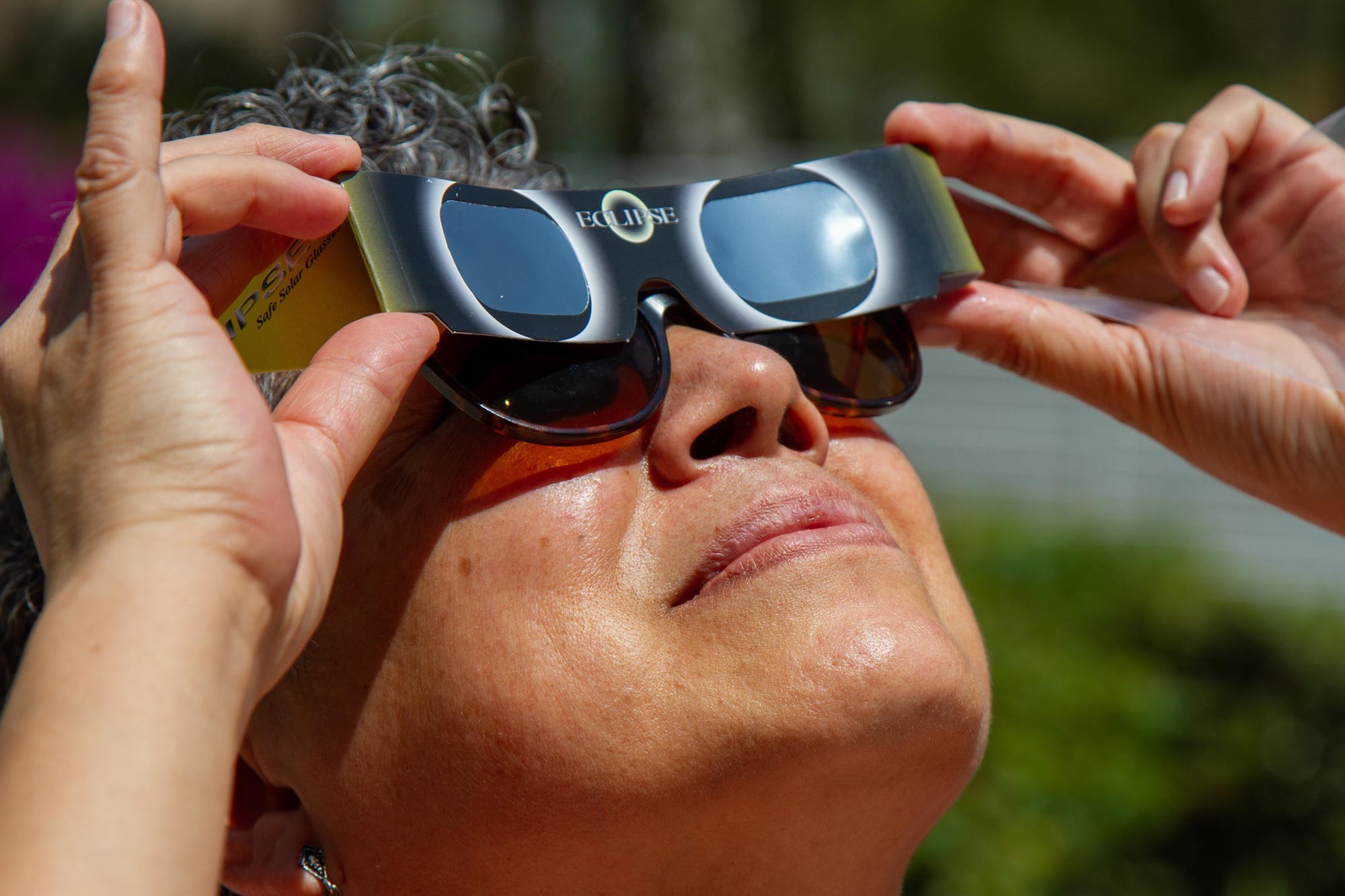
When the Moon passed directly between the Earth and the Sun on April 8, 2024, it did more than just darken the sky; it temporarily silenced the very ground beneath our feet. New research reveals that cities within the “path of totality” experienced a sudden, measurable drop in seismic activity, as if the urban world had collectively held its breath.
The Seismic Signature of Human Life
To understand why an eclipse would affect ground vibrations, one must first understand what “noise” means to a seismologist. The Earth is never truly still, but much of the constant trembling detected by scientific instruments is anthropogenic —meaning it is caused by human activity.
Everyday vibrations are generated by:
– Transportation: The constant hum of cars, trucks, and trains.
– Industry: Construction sites, mining operations, and heavy machinery.
– Social Activity: Large crowds at stadiums, concerts, or even busy city streets.
This “seismic noise” serves as a constant background pulse for urban environments.
A Sudden Drop in Urban Activity
Benjamin Fernando, a seismologist at Johns Hopkins University, noticed a peculiar stillness during the eclipse while observing from an Ohio city. To see if this was a subjective feeling or a scientific reality, he analyzed data from hundreds of seismic stations across North America.
The data revealed a strikingly consistent pattern in cities directly under the path of totality:
1. The Build-up: As the eclipse progressed, seismic noise rose slightly.
2. The Silence: At the moment of totality, when the Sun was completely obscured, vibrations dropped sharply.
3. The Recovery: Once the Moon moved on, activity resumed, with noise levels eventually climbing back to—and occasionally exceeding—monthly averages.
Crucially, this phenomenon was isolated to the path of totality. Cities like New York, which experienced a partial eclipse (97% totality), showed no such seismic dip. This indicates that the “silence” wasn’t caused by the celestial alignment itself, but by the human reaction to it.
The “Lockdown” Effect
The research draws a compelling parallel between the eclipse and the global COVID-19 lockdowns of 2020. During the height of the pandemic, seismic noise plummeted by approximately 50% as the world’s movement slowed.
The eclipse acted as a micro-version of this phenomenon. For a few minutes, the rhythm of modern life paused: traffic slowed, construction stopped, and people stepped away from their daily routines to look at the sky. This brief interruption was significant enough to be recorded by sensitive scientific instruments.
Debunking the Earthquake Myth
The study also provides critical clarity on a persistent piece of misinformation. There is a long-standing urban legend that the gravitational pull of the Sun and Moon during an eclipse can trigger earthquakes.
The data from this event tells a different story. The seismic changes observed were not caused by tectonic shifts or geological pressure, but by the temporary cessation of human movement.
“Folks, for whatever reason, sometimes push the narrative that eclipses cause earthquakes,” Fernando noted. “That’s definitely not the case.”
Conclusion
The total solar eclipse functioned as a brief, natural pause button for civilization. By temporarily halting the mechanical pulse of our cities, the eclipse allowed scientists to see just how much our daily movements shape the seismic landscape of the planet.