Battlestar Galactica hasn’t left the cultural ether. Two decades post-reboot, that grim survival drama still holds court in sci-fi history. Video game adaptations tried before—Deadlock stood out—but nothing felt quite right. Until now.
Battlestar Galactica: Scattered Hopes, from developer Alt Shift and publisher Dotemou, feels inevitable. A perfect match? Maybe not perfect. But undeniably right.
Survival isn’t the point
The setup is familiar to fans. The Twelve Colonies burn. The Cylons win. A ragtag human fleet scrambles for space, hunting for the Galactica before it’s too late.
If you know the show, you know it ends badly.
If you play Scattered Hopes, you learn just how badly.
It is a roguelite. They are everywhere now. Saros does live-die-repeat shooters. Balatro reinvents poker. The loop stays the same. Run short. Die hard. Repeat until you clear it all in one breathless go.
Usually, death buys you power. New guns. Better buffs. Next run easier.
Not here.
The game refuses to gift you anything. You learn by bleeding.
The show is depressing. The game leans into it. No relaxed fun here. If you want comfort, close this page.
Click your way to despair
At its heart? It’s a menu simulator.
Most of your life happens behind a glass screen of clicks. Manage crew. Track resources. Listen to drama.
The journey splits into turns. Crises pop up randomly. Tech breaks. Survivors argue. Missions offer glory… or instant death.
Take your time thinking? Fine. Predict outcomes? Hard. You fail. You restart.
Cylons kill you. Politics kill you faster.
Almost every choice carries a penalty. Juggle carefully. Spend fuel for a jump? Now you lack scrap for repairs. Ignore crew feuds? Your pilots fly like idiots when Cylons arrive.
So many things can break. Space combat feels almost secondary.
Warfare with brakes
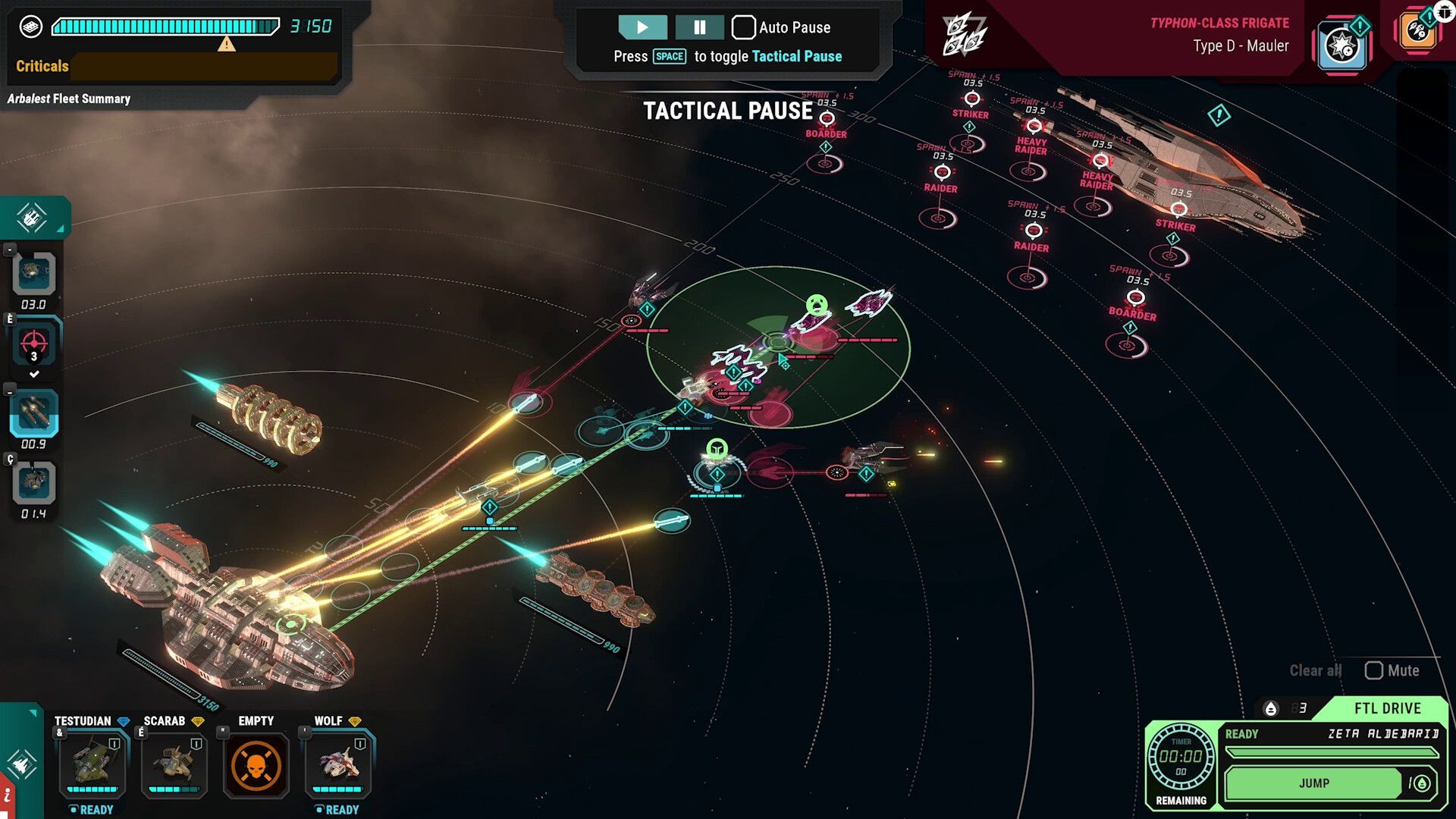
Space battles exist, yes. But they aren’t shootouts.
Your goal isn’t domination. It’s delay. Hold the line while the fleet preps a jump. Real-time chaos pauses for planning. Position fighters. Queue up weapons. Nuke Cylon waves if your timing is precise.
Diehard fans might cringe. The Raptors look like Rapiers but hit like tanks. Railguns replace classic tech. They can’t jump.
They feel like generic sci-fi shells painted with franchise icons.
Loss hurts. Ships die. Lives end. Both are finite. Combat is something you dread until your crew is bulletproof.
Alt Shift did this before, in Crying Suns. They know how to make space feel oppressive. Simple design. Heavy consequences.
Progress without power
Play like FTL: Faster Than Light? Roughly.
Each run yields gear. Upgrades. Better ships for next time. But after hours of play, don’t feel unstoppable.
You have tools, not god mode.
One mistake. One diplomatic blunder.
Snap. The whole run collapses.
Look at it as “FTL with trauma.” That’s the core loop. The fun lies in branching paths toward ruin. The game shines in narrative beats more than gunfights. A mutiny on board? A grudge match between officers? No “correct” solution exists.
The game judges you.
Victory costs everything. Total fleet destruction is the only stop sign.
“It all makes for a thrilling adaptation… capturing the unpredictability and refreshing focus of human drama… at the edge of an apocalypse.”
Is it terrifying? Yes. The void eats you alive. Gut punches land harder in dialogue trees than in laser beams. Entire crews perish over a tough moral question.
Reminding us what?
Video games don’t need cutscenes to tell great stories.
The final jump
Early hours frustrate. Metaprogression moves slow. Lore nerds will complain about ship designs.
Push through? The game delivers. Scattered Hopes proves the FTL-rogue formula still burns. Still has heat left.
Say we will?
Maybe.