It started on a cloudy day. This is where the history of nuclear physics really begins.
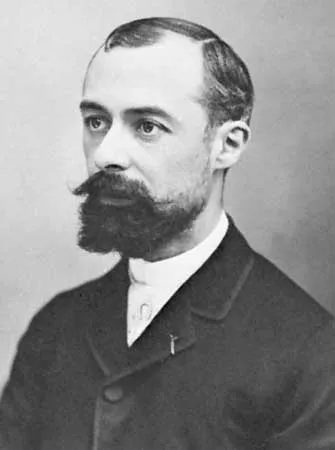
Henri Becquerel didn’t want to change the world. He was a French physicist who was born in Paris in 1852 into a family obsessed with invisible forces. His grandfather helped found electrochemistry. His father studied the behavior of light. Henri followed suit and studied phosphorescent materials and uranium compounds. He used photography to record his information. It was methodical science.
Then an accident happened.
Becquerel was testing uranium salts. He believed that they absorbed sunlight and re-emitted it as invisible radiation. To test this, he wrapped Photographic plates in black paper. He placed uranium on top. He exposed them to the sun. The plates darkened. Conclusion: the uranium absorbed sunlight and emitted rays.
But then the weather changed.
He put his experiments away in a drawer. He was waited for better sun. He developed the plates anyway. He expected faint images. He found strong, clear ones. The uranium had emitted rays without an external energy source. It was spontaneous. It was intrinsic to the material.
This was the discovery of natural radioactivity.
The implications were immediate and strange. The uranium in pitchblende emitting invisible rays on its own. It didn’t need heat. It didn’t need light. It just was.
Becquerel’s work did not remain in the laboratory. In 1901, he carried a small sample of Marie Curie’s radium in his waistcoat pocket. He forgot about it for days. When he retrieved it, he had a nasty burn on his skin. It wasn’t a chemical burn. It was radiation damage.
“The element uranium emitted invisible rays that could darken a photographic plate without an external trigger.”
This injury proved the biological effect of these rays. Physicians took notice. They began studying how these emissions interact with human tissue. This research eventually led to the medical use of radioactive substances. Radiation therapy became a reality because Becquerel got burned by his own experiment.
The scientific community recognized the magnitude of this discovery. In 1903, Becquerel shared the Nobel Prize in Physics together with Marie and Pierre Curie. They had opened the door to the atomic age.
We still measure their legacy in units named after him. The becquerel (Bq) is the SI unit of radioactivity. One becquerel corresponds to one decay event per second. It’s a small number, but it represents a fundamental shift in how we understanding of matter.
Why is this important today? Because every time you hear about nuclear energy, medical imaging, or radiation protection, you’re looking at the aftermath of that cloudy day in Paris. Becquerel didn’t just discover a new property of uranium. He found a new way for the universe to work.
The key was in a drawer in his lab. The weather didn’t. The materials did. And once that door was opened, it never closed again.