He was born in Pezinok, Hungary (now part of Slovakia) on May 28, 1889. He died in Prague, Czechoslovakia (now the Czech Republic) on June 6, 1929. The man in the middle was Richard Réti, a chess master, writer, and theoretician who did more than just play the game. He helped dismantle the rigid, classical rules that had governed the board for decades.
Réti stands alongside Aron Nimzowitsch and Rudolf Spielmann as one of the primary architects of Hypermodern chess. This wasn’t just a new opening idea. It was a philosophical shift. Instead of crowding the center with pawns like the old masters, Réti argued for controlling the center from afar using pieces. He let his opponent occupy the middle, then struck at it later. It was risky. It was bold. It worked.
The Hypermodern Revolution
Before Réti, the “classical” school dominated. Players like Wilhelm Steinitz and Siegbert Tarrasch believed you had to build a wall of pawns in the center early on. Réti disagreed. He saw the center as a place to attack, not just occupy. His approach allowed for flexible pawn structures and sudden, crushing counterattacks.
Why did this matter? It opened up a whole new layer of strategy. Games became less about rigid plans and more about dynamic possibilities. Réti’s ideas forced players to think deeper. You couldn’t just memorize moves anymore. You had to understand the underlying principles.
A Writer and Theoretician
Réti wasn’t just a player. He was also a prolific writer. He used his articles and books to spread the Hypermodern gospel. He explained complex ideas in ways that other players could understand and adopt. His influence extended beyond the tournament hall. He shaped how the game was taught and studied for generations.
His most famous contribution is probably the Réti Opening. It starts with 1. Nf3 d5 2. c4. It’s a flexible, transpositional weapon that allows White to react to Black’s setup. It’s still played at the highest levels today.
Early Life and Education
Réti came from a wealthy family. He studied engineering in Prague and Vienna. But his real passion was chess. He began competing seriously in the early 1900s. By 1910, he was already a top-tier player. He traveled across Europe, challenging the best. He lost some. He won many more. His style was sharp. He loved complications. He thrived in chaos.
The Tragic End
His career was cut short by illness. He suffered from a heart condition that eventually led to his death in 1929. He was only 40. Many consider him one of the greatest players never to win the World Championship. His influence, however, outlasted his life. The Hypermodern school he helped create remains a core part of modern chess theory.
Legacy
If you look at any grandmaster’s repertoire today, you’ll see Réti’s fingerprints. The idea of controlling the center with pieces, not just pawns, is now standard. His games are still studied. His writings are still read
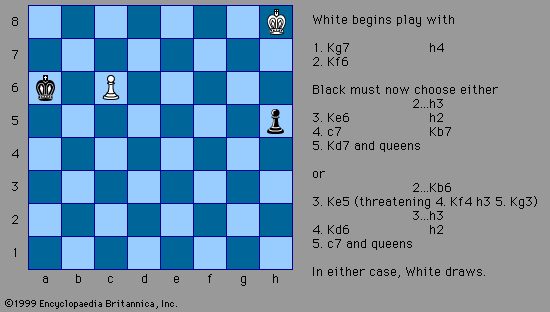
Most grandmasters treat chess as a battlefield. Richard Réti treated it like an art studio. He had a rare, specific obsession: composing chess problems and studies. This wasn’t just a hobby. It was a lens through which he viewed the game.
His entry into the elite circle was anything but smooth. In 1908, he finished last in a Vienna tournament. Humiliating? Maybe. But it didn’t break him. By 1912, the narrative had shifted entirely. He was recognized as a brilliant player. The underdog had become the master.
Then came a pivot. In 1920, he stepped away from competitive play to focus on writing. The decision paid off. His 1923 book, Modern Ideas in Chess , along with his regular columns, established him as a revered voice in the community. He wasn’t just playing the game anymore. He was explaining it.
But he couldn’t stay away forever. He returned to the board. The result? A brilliancy prize at the 1924 New York tournament. It’s awarded for the most spectacular game. He didn’t just win. He dazzled.
His final major work, Die Meister des Schachbretts (published in 1930 as Masters of the Chessboard ), came out after his death. A fitting end for a man who lived in the spaces between moves.