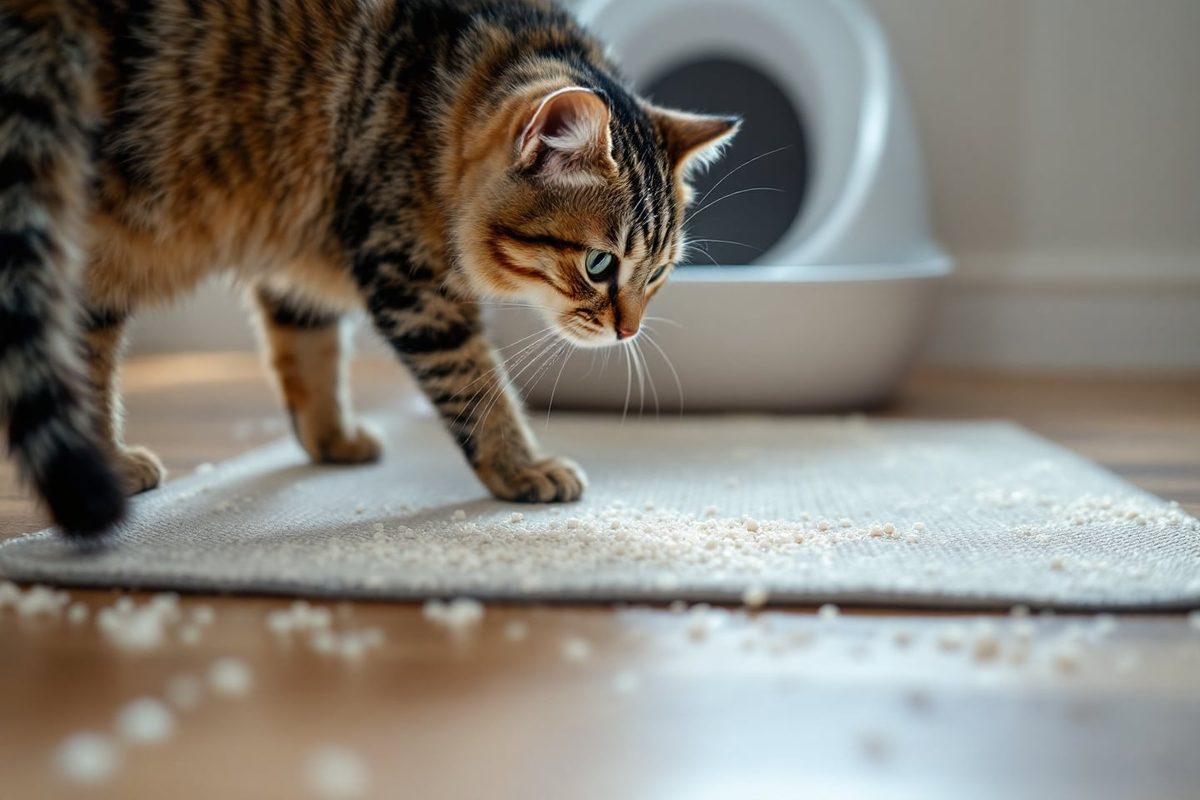
It’s 7 in the morning. You take the first step towards the coffee maker. Your sock sinks into a gritty layer of clay. Again.
This is the bane of the common cat owner. You spend hours cleaning the box only to see your cat expel a small landslide of litter with every exit. Suddenly the hallway looks like a construction site. The bathroom floor is a minefield. And if you’re like most people, you’re staring at your vacuum cleaner in anger.
As winter approaches and our homes become more crowded and our coconuts cleaner, the urge to stop the invasion is high. You want flawless floors without spending the whole weekend on your knees.
Is there a solution that actually works? Yes. It’s not magic. It’s a simple, often overlooked tool: an absorbent litter box mat.
Why do cats litter everywhere
To fix the problem, you need to understand the behavior. Cats are not trying to ruin your carpet. They follow their instincts.
In nature, covering waste is a survival mechanism. It hides their scent from predators and competitors. Domestic cats retain this desire. They dig hard. They kick their back legs with surprising force. This movement will naturally get the loose litter out of the box.
Then there’s anatomy. A cat’s paws are textured. They are designed for support and silence. That grip catches the granules. When the cat moves out of the box, these granules cling to the pads. Step by step, the litter spreads throughout your apartment.
Traditional rugs often fail because they are too flat or too small. They do not trap the debris effectively. They only serve as another track on which the litter can continue to roll.
Secret weapon: Absorbent texture
An absorbent mat is not just a mat. It’s a mechanical trap.
The most effective mats have a specific structure. Think honeycomb structures, raised fibers or double layer designs. These textures create pockets. When the cat steps on the carpet, the granules fall from the pads of the paws and get stuck in the weave.
The carpet acts as a safety net and catching debris before it reaches your wood or tile floor.
These mats not only collect solid waste but also control moisture. Cats often step on the damp spots in the box. Absorbent material absorbs water. This will keep the area around the box drier. It reduces odors. It creates a healthier environment for you and your pet.
Stop walking on a miniature beach every time you leave the bathroom. Start by using a mat that actually works.
Choosing the right carpet for maximum efficiency
Not all carpets are the same. To stop tracking, you need the right information.
Find a non-slip pad. If the mat slides around when the cat jumps out of the box, it will fail. You need stability.
Check size. The mat should be bigger than the box itself. Ideally, it should completely cover the exit area. If your cat takes big steps or jumps far from the box, a small mat is useless. You need a wide buffer zone.
Prioritize easy cleaning. You don’t want to add work to your day. With the best carpets, you can shake them out into the trash. Some are even machine washable or hose washable. Avoid carpets that require extensive disassembly or special cleaners.
For heavy trackers, consider a two-layer design. The top layer catches the litter. The base layer traps it deeper, preventing bounce-back. Carpets with raised edges also help keep dirt inside the perimeter of the carpet.
Cleaning methods that matter
The carpet helps, but the cleaning routine is also important.
Avoid sweeping debris with a dry broom. This throws dust into the air and further disperses fine particles. Vacuuming is better, but slow. Vacuum cleaners with high suction power can sometimes suck up the litter mat itself if it is not attached.
Place the litter box in a low-traffic area. A quiet corner reduces the cat’s stress and limits the spread of litter in busy areas. Do not place the box on smooth surfaces such as polished tiles. There, the litter slides out of the box more easily. Rougher surfaces or carpets near the box can help collect stray particles before they reach the main floor.
Integrate the mat into your everyday life. When vacuuming a room, lift the carpet. Shake into the trash. Turn it over and vacuum the bottom if necessary. Do this weekly. It takes seconds. The result is noticeable.
Maintenance and updates
Keep the carpet clean. A clogged carpet loses its effectiveness. Dirt and fur fill the pockets. When the garbage is filled, it goes completely through the waste.
Shake the carpet outside regularly. For more detailed cleaning, read the manufacturer’s instructions. Some rugs can be put in the washing machine on a cold cycle. Others can be hosed down with a showerhead. Allow them to air dry completely before replacing them. A wet carpet promotes the formation of mold and smells unpleasant.
For even better results, combine the mat with other methods:
- Use a litter scoop with fine holes. This removes clumps without dragging dry litter out.
- Choose a high quality clumping litter. It tends to be less dusty and sticks less to the paws.
- Change the litter more often. Fresh litter is less sticky and easier to track less.
- Add a small ramp or step. This will help dislodge the granules if the cat jumps out before they reach the main floor.
The real difference
After a few days on a really absorbent mat, you will notice things.
The corridor is clear. You do not crunch on granules anymore. With a handheld vacuum cleaner, you spend less time tracking down scattered debris. The air smells fresher because the moisture is trapped. You have more time for important things. Maybe it will sleep off. Maybe it’s playing with your cat.
It’s about reclaiming space.
It’s not just about cleanliness. It’s all about convenience. The goal is to reduce the mental stress caused by pet ownership. You are not fighting your cat’s nature. You work with it.
As the cold months begin, your home becomes your sanctuary. You want it to reflect that. Small adjustments like installing the right litter box make a big difference.
You don’t have to be perfect. You don’t have to clean constantly. You just need the right tools.
Imagine walking barefoot through your living room. No grit. No problem. Just comfort.
That’s the goal. And it’s closer than you think.