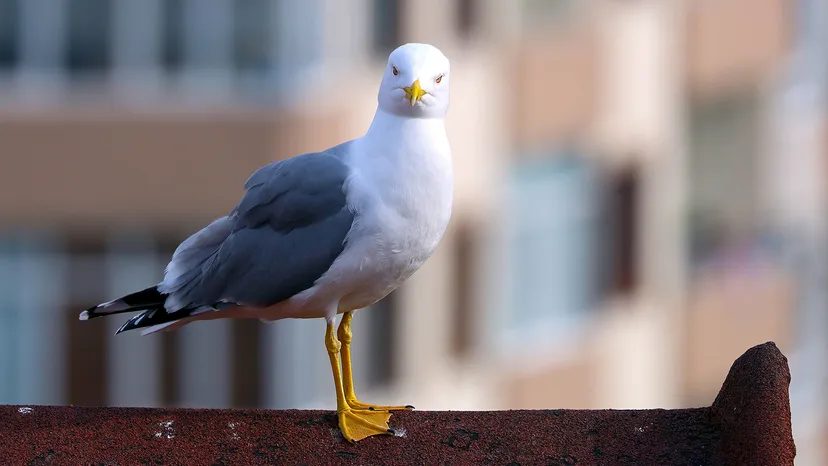
There is an exact answer to this question: what is a Flock of seagulls called.
You might think of it as a “flock”. It works well. It’s safe. This is accurate. But it’s also boring. What you’re missing is why you collected such strange words in the first place.
English prefers to use a noun for a noun. We want to give all collective actions a special stamp. A murder of crows. Parliament of owls. An unkindness of ravens.
Seagulls are no exception.
More precisely, you could call them a colony. This is the term they use when nesting on the ground. This is a noisy place. This is where the conflict is. Chickens argue over bugs. Seagulls end up fighting for territory, leftover food and human dignity.
But there are other options.
Raft.
This is intended for use in water. They sit together on the surface. They bob. It looks like a floating mess. It’s a quiet Flock. It is deceptive.
So which one do you use?
It depends on where they are.
- Colony breed on land.
- A Ferry floats on the sea.
- Flock, in the air or when moving together.
The word “colony” sounds very scientific. It means structure. However, gull colonies are rarely structured. It is chaotic. It’s noisy. This proves that the laws of nature do not apply to birds around trash cans.
Why is this important?
Because language shapes how we see the world. Call them flocks and you’ll see a lot of them. When we call it a colony, we see a society. If you call them a raft, you see a vessel.
None of this is wrong.
All these are incomplete.
The truth is, seagulls are opportunists. They don’t care about your vocabulary. They care about your sandwich.
Colony of seagulls are noisy and chaotic, but even in their chaos they are surprisingly orderly.
Next time you see one, take a closer look. Do they sit on water? Use the raft. Do they build nests in sand dunes? Use colony. Are they patrolling the parking lot? Use “flock” and hope they don’t notice you.
Those are not noises. Their behavior changes with the tide. Their social structure is complicated. They remember faces. They hold grudges.
However, that will come later.
For now, please remember this language.
Raft 。 Colony 。 Flock 。
Pick one.
They will keep coming anyway.
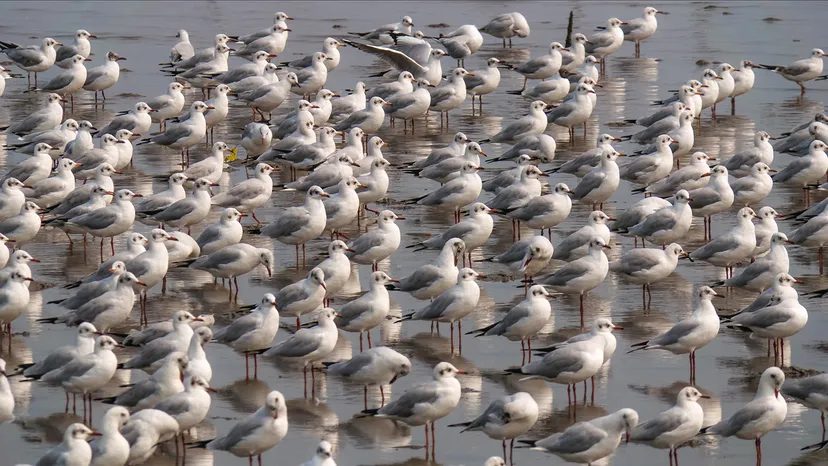
The standard answer is simple. You call them a flock. It’s the same term you use for sparrows, ducks, or any other seagull sitting on a dock. It’s functional. That’s accurate. That’s what most people expect.
But the picture gets more confusing when things get serious with the birds.
As the numbers swell into chaotic, dense groups, the word changes. People start using “colony”. It’s not just about volume. It’s all about context. You will primarily see this term during breeding season. Then seabirds, such as gulls and terns, gather in tight nesting communities on cliffs or remote beaches. They don’t just hang out. They raise their chicks in small spaces. Behavior changes. Language does too.
Why are there so many bird names in English?
English loving group nouns. It is a centuries-old language tradition. We didn’t just need words for groups; we wanted atmospheric. Poetry. A little drama.
Think about it. A “parliament” made of owls. The “murder” of crows. A “group” of geese.
These terms did not appear out of nowhere. They reflected how people saw these animals. Behavior was important. Living space was important. Sometimes it was just a person’s wild imagination.
Take the starlings. When hundreds of them move together in the sky, it’s called “noise”. It’s a nod to the sound they produce, but also to the wonderful, flowing patterns they create. It is poetic because it is visual.
Birds have the most colorful group names in the language. Not all species are unique, but many are. You will receive information:
- A spell made from a golden sparrow
- A raft of ducks (especially when they are in the water)
- Siege of Storks
- A gathering of eagles
- Parrot Pandemonium
Where logs fit
Technically, gulls belong to a larger group of seabirds. This family includes pelicans, cormorants and albatrosses. They are united by habitat rather than specific naming conventions.
Like their relatives, seagulls are often seen in flocks. Especially near food. Especially during migration. It’s practical. Food sources attract them. Migration routes focus on them.
Do they have a clear collective noun? Not really. There is no “quarrel of seagulls” in the dictionary. Not yet. But their behavior puts them on a level with pigeons, terns and terns. They share the sky. They share the coast. They divide the herd.
Relationship between group size and breeding
The transition from a herd to a colony is not random. It is directly related to their breeding habits.
When seagulls are only feeding or traveling, they are a flock. Loose. Dynamic. Moves with the wind and tide.
When they settle down to breed, they form a colony. The density increases. The noise level increases. The social structure is getting worse. That’s when you hear the word “colony” most often. It’s a biological marker. It shows that the group has a specific, shared purpose beyond mere existence
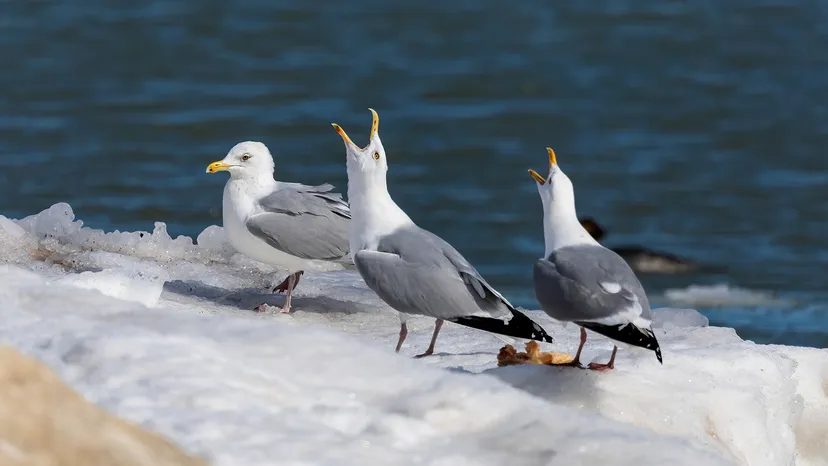
Seagulls do not nest alone. During the breeding season, they swarm into tight colonies, which turns individual vulnerability into collective strength. The main reason for this is simple: safety in numbers. When hundreds or thousands of seagulls join together, they form a formidable barrier against predators.
This behavior mirrors that of other seabirds, such as guillemots, which also nest in dense, crowded groups. The logic applies to different species. A large, noisy colony can mob threats, confuse and drive off would-be attackers before they reach the fragile eggs or chicks. By fighting the dangers together, the group protects the next generation more effectively than a single pair could.
But the social structure does not end with reproduction. Even at the end of the breeding season, seagulls can still gather. Flocks survive for reasons of foraging efficiency or during migration. This explains why they are such a familiar and often annoying sight along the coast and near municipal landfills. They’re not just chaotic scavengers; They are highly organized social animals that use group dynamics to survive.
“These large groups provide plenty of protection from predators and allow seagulls to raise their young together.”
The article was written with the help of artificial intelligence, and the editorial team checked the facts to ensure accuracy.