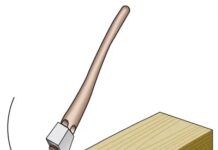
Quenching is a process in which the metal is cooled at a high rate. Take an object heated to molding temperature and immerse it in oil, water or another medium. The goal is simple, but drastic: to get the internal structure of the metal in place before it has time to rearrange itself.
Slow cooling allows the crystals to grow and settle. This often weakens the material or changes its properties in an undesirable way. Rapid cooling prevents this. It freezes the high temperature phase distribution. The result is a material with certain mechanical properties that would otherwise be lost.
Steel has hardness as a result. This is why hardening is so common in metallurgy. You heat the steel and then strike it. The steel becomes tough. It resists deformation. This process is necessary for tools, blades and structural parts that need to stay sharp or withstand heavy loads.
But with copper, the story changes. Copper behaves differently. When copper is hammered at room temperature, it hardens. It becomes brittle and difficult to handle. This is called work hardening. To fix this, heat the copper until it glows and then quench it. Rapid cooling restores malleability. You can reshape it.
Quenching preserves the mechanical properties related to the crystal structure, which would disappear with slow cooling.
It’s not just about cooling. It’s all about phase control. In steel, the carbon atoms are trapped in the lattice. They create tension. This tension makes the metal hard. With copper, heat removes the dislocations caused by the hammer. The quench keeps them from forming again immediately.
This process is different from annealing. Annealing is a slower and gentler heat treatment. It relieves stress without shock. It is also different from hardening. Tempering usually happens after quenching. They slightly heat the hardened steel to reduce brittleness. Quenching is the first, aggressive step.
Why does this matter in real life? Because the behavior of the metal depends on how fast it cools. The blade of the knife must be hard. The copper pot should be soft. The same basic technique achieves both, depending on the material and purpose. It is a basic tool in every workshop or factory.
The media is also important. Oil cools more slowly than water. Water can cause cracks in some steels. The choice of coolant changes the final result. It’s not just a binary on-off switch. It is the precise control of the soul of metal.
Complex machines are not always needed. A bowl of water and a forge are enough. The principle remains the same. Heat it up. Shock it. Change it. Metal remembers temperature. It remembers speed. And that memory will determine how it will serve you tomorrow.