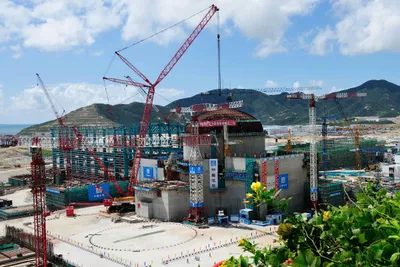
Nuclear technology is more than bombs and reactors. Practical applications of physics allow us to control atoms. This field deals with the release, control and use of nuclear energy. Radiation and the production of radioactive substances are also covered. These tools are important for research, industry, medicine and national security.
This work is based on physics and mathematics. Scientists use equations to explain how atomic nuclei interact. Follow the movement of neutrons and gamma rays. But the work doesn’t end there. Heat transfer must be taken into account in the design. Fluid flow must be addressed. Chemical reactions must be taken into account. Engineers also study how materials behave when exposed to radiation. This makes the subject versatile in nature. It comes from several fields of physics.
Like aviation, nuclear technology relies heavily on modeling and simulation. Why? Physical testing is impossible because the systems involved are too large and expensive. You can’t blow up a prototype reactor and see if it works. I need to run a complex simulation. These models allow engineers to design and analyze systems that would be impossible to build first and then test.
The roots of nuclear power
The history of this industry began during the Second World War. It started with the Manhattan Project. Researchers have to solve many technical problems quickly. Laboratory experiments must be scaled up to an industrial level. This created the blueprint for modern nuclear technology.
After the war, the focus changed. Military applications still exist, but civilian applications are increasing. Power plants started appearing in the 1950s. The goal is simple. Produces electricity by using the heat produced by nuclear fission. This requires solving problems that cannot be solved by pure physics. How do I get the cooling water to flow? How do I protect my employees? How do you manage your waste?
These questions define the development of this field. Transition from pure science to applied technology. This discipline must be practical. Gotta be safe. Must be efficient.
Why today matters
You might think that nuclear technology is a relic of the 20th century. it is not. Apps are everywhere.
In medicine, radioisotopes are used for diagnosis and treatment. Doctors use it to image organs. They use them to kill cancer cells. Without nuclear technology, these treatments would not exist.
In industry, radiation is used for sterilization. Check the metal for defects. Measure the thickness of the production line.
National security also depends on it. Detecting smuggled nuclear material requires sophisticated sensors. These sensors are designed by nuclear engineers.
This field is more than just energy. It’s about controlling powerful forces. That power provides healing. It is also possible to destroy it. It can take over a city or blind a city. Planning determines the end result.
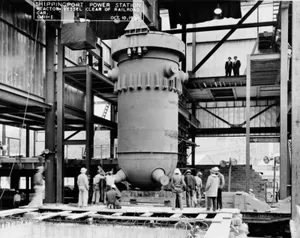
It starts with a shared atom. In 1939, German chemists Otto Hahn and Fritz Strassmann announced that they had discovered nuclear fission. I quickly realized it was more than just chemistry. This is the blueprint for an unimaginably powerful weapon. The game begins. During World War II, the United States launched the Manhattan Project as a desperate attempt to develop such a weapon before others.
The turning point occurred in 1942. Italian physicist Enrico Fermi built the first nuclear reactor at the University of Chicago. They called it Chicago Pile-1 (CP-1). It has been proven that controlled nuclear chain reactions are possible. It’s very messy. This is dangerous. It worked.
Soon, a nuclear reactor began operating at Hanford, Washington. These are not just scientific experiments. They are plutonium plants. These systems are very complex. Traditional mechanical, electrical and civil engineering skills are needed, but they alone are not enough. The team’s physicists and mathematicians understand the nuclear phenomena that take place inside the reactor core. They work together with construction contractors. These hybrid thinkers bridged the gap between abstract theory and physical structure and became the forefathers of today’s nuclear engineers.
From submarines to power plants
The war is over, but discipline is not. The US Navy saw potential elsewhere. They hope the submarine will be powered by a small, high-energy source and will be able to stay underwater for several months. This accelerated the development of naval nuclear power. This was an important factor in the then anonymous field.
Designing nuclear reactors for submarines or land requires special thinking. We need to understand the complex nuclear phenomena inside the core. However, you also need to know how to assemble fuel rods, design cooling circuits, build pressure vessels and install control systems. It is theoretical and practical knowledge.
The field gradually took shape when nuclear physics and radiation transfer were better understood. Complementing traditional design. That will be its own story.
In the late 1940s and early 1950s, the focus had changed. The peaceful uses of nuclear energy are becoming more and more obvious. The Nuclear Engineering program was established. One of them was launched at Oak Ridge National Laboratory in Tennessee. Another project has begun at Argonne National Laboratory near Chicago. These are not universities yet. They are training programs.
they are pioneers. In the 1950s and 1960s, official departments were established at universities throughout the United States. North Carolina State University. Pennsylvania State University. University of Michigan. They built departments.
A successful naval advance paved the way for commercial power. Commercial nuclear power plants developed rapidly in the 1960s and 1970s. The demand for nuclear engineering degrees is growing rapidly. Today, the landscape is vast. There are more than 40 departments and programs in the United States and Canada. There are more than 60 of them in other parts of the world.
However, don’t limit your discipline to generating electricity only. It’s wider. This includes radiometry and image processing. Nuclear fusion and plasma physics. Nuclear Materials Science. Medical and health physics. The names of some departments have also changed accordingly. “Nuclear Science”. “Radiological Physics”. “Radiological Physics”. This includes many different functions, not just one application.
yc4sngbvm0j2wb860rs0
The nuclear industry is not shrinking. In fact, it is expanding, with global growth driven primarily by steady demand for baseload electricity. Currently, more than 400 nuclear reactors around the world are spinning turbines. The United States alone has almost a quarter of these machines. Other major players include France, Japan, Russia, South Korea, India, Canada, Great Britain and China. This is not just a niche market. This is a large, multidisciplinary field of technology that provides lighting to countries where wind and solar power are not always guaranteed.
But how does this complex machine actually work? Why is this important to ordinary people who want reliable, carbon-free electricity?
Simulation of invisible forces
At the heart of nuclear power plants is the fight against chaos. Reactor physics and radiation transfer engineers spend much of their time modeling the invisible chaos inside nuclear reactors. They don’t just focus on fuel. Simulate heat transfer. fluid flow. chemical reaction. material reaction.
These experts work in collaboration with physicists and mechanical engineers. They used complex simulation code to predict how radiation would travel from the reactor core to the surrounding structures. Without this modeling, there is no way to know if the component will crack under pressure or accumulate enough heat to threaten its stability. This is a dance of data and physics that takes place on the mainframe before a single physical test is performed.
Keep calm
Then there is heat. Nuclear fission releases enormous amounts of energy. If you don’t remove it, it will build up.
Nuclear reactor thermohydraulic experts solved the problem. They work with mechanical engineers to monitor the coolant flowing through the reactor core. The goal is simple, but difficult to achieve. It removes heat and uses this heat to produce steam. Steam uses a turbine. Turbines generate electricity.
This is where simulation becomes important. Engineers model a combination of nuclear and thermohydraulic phenomena to ensure optimal coolant flow. Even small flow interruptions can change the entire safety profile of a facility.
The core of the design factory
Who decides where the fuel goes? Core designers.
Given the stringent requirements of the new power plant, these engineers used modeling tools to find the optimal core design. They’re not just looking for efficiency. They are subject to regulatory standards. Planning must be done. This should also be taken into account. It’s a balancing act between physics and bureaucracy.
Safety: a non-negotiable standard
Nuclear safety analysis is divided into two categories: deterministic analysis and probabilistic analysis.
Deterministic analysis asks, “What if something goes wrong?” Evaluate the facility’s response to normal operations, expected deviations and hypothetical accidents. This includes modeling of neutron transport, thermohydraulics, structural integrity and radiation effects of materials. This is a lot of work. Requires advanced simulation tools and strong computing power.
Probabilistic risk assessment (PRA) takes a different approach. Ask, “What is the probability that something will go wrong? What are the consequences?” PRA uses event trees to track accidents from the beginning of the event to the end of the accident. They use fault trees to work backwards from faults to determine probabilities.
The 2011 Fukushima accident changed everything. Since then, the importance of both safety analyses has increased. The industry recognizes the need to rethink assumptions about natural disasters and system failures.
Fuel cycle management
Fuel management, or “core monitoring”, is the logistical backbone of nuclear reactor operation. Engineers define, procure and manage fuel throughout its life cycle.
During refueling, new and old fuel are mixed in the reactor core. This mixture is an optimization problem. We want to maximize energy production by minimizing losses and maintaining a safety margin. This is a continuous optimization process to ensure that the reactor will operate efficiently for several months before it needs to be refueled.
The Navy’s role in civil power
A surprisingly large number of nuclear engineers appeared in the navy. Naval nuclear power systems are similar to commercial pressurized water reactors. with differences in size and durability.
Military nuclear reactors must withstand extreme physical stress from torpedo attacks, depth charge explosions and aircraft carrier operations. They are smaller and stronger.
Many “naval nukes” were transferred to the commercial sector after use. They bring ideas about reliability and durability that are well suited to civilian power plants. The skills are almost the same. At sea, the risks are even greater.
Integration promise
Fission energy works as the power of today’s electricity grid and fusion energy as the electricity grid of the future. Fusion is the opposite of fission. Instead of splitting the heavy atomic nucleus, two lighter atomic nuclei in the plasma state are combined to form a heavier atomic nucleus. The mass of the product is lower than that of the starting substance. The lost mass is converted into energy.
This is how the sun and stars work. It is a clean and inexhaustible source of energy. If water could be used as fuel, society would have almost unlimited electricity.
The challenge? Controlling the reaction. It is very difficult to keep plasma stable at temperatures of several million degrees.
Many countries are trying to build practical fusion power plants with projects like ITER (International Thermonuclear Experimental Reactor). Nuclear engineers and plasma physicists work together to design these reactors and understand plasma physics. It’s not just technology. This is astrophysics applied to energy production.
The secret world of weapons
Nuclear weapons are a completely different animal. Fission weapons (atomic bombs), fusion weapons (hydrogen bombs) and thermonuclear weapons make up the world’s arsenal.
Weapons program engineers work in research, development, design, manufacturing, production, testing, maintenance, and surveillance. This is a complex ecosystem that requires researchers from multiple disciplines.
There is no “nuclear weapons” course in the standard university curriculum. This area is very sensitive. The safety rules are strict. Although the knowledge gained in civil nuclear technology does not necessarily translate directly to weapons design, the underlying physical principles are the same.
The gap between civilian energy and military applications is significant. One generates electricity for hospitals and homes. The other provides security. However, both are based on the same basic understanding of the interaction of matter and energy.
As we look to the future, the lines blur. Fusion research benefits from commercial and defense funding. Safety standards developed for weapons can also apply to civilian environments. Engineers moving from one department to another bring their expertise with them.
This is a tightrope walk. We need energy. We need security. We have to manage the risks. The numbers don’t lie. There are 400 nuclear reactors and the number continues to grow. But the difficulties are just beginning.
Isotope economy and medical image processing
Nuclear reactors produce more than 2000 radioactive isotopes. This is by no means a small amount. It represents a vast industrial ecosystem. Nuclear engineers just don’t produce them. They figure out how to pack, ship and use them safely. You’ve probably come across this material more than you think. They work on pacemakers. Sterilize surgical instruments. They act as markers in industrial processes, help solidify plastics and even help preserve food.
However, the most important application is medical.
Consider Mo-99. It is a fission product. It decays into technetium-99m, a short-lived isotope that emits gamma rays. This particular decay chain is the backbone of diagnostic nuclear medicine. Doctors often use this isotope when they need to take pictures of organs. Without a nuclear reactor producing Mo-99, the entire logistics chain of medical imaging collapses. Supply chains are fragile and prone to disruptions, which makes their reliability a constant design challenge.
The problem of high-level waste
Nuclear waste is not a monolith. This is divided into two different categories: low level and high level.
Low-level waste is waste generated from daily activities. These include contaminated clothing, rags, test tubes, needles and tools from hospitals and research facilities. The business strategy here is relatively simple. Pack in leak-proof containers. It is buried in a ditch at a designated landfill. It’s a problem, but it’s a manageable problem.
High-level radioactive waste is a different matter. It is highly radioactive. It comes from spent nuclear fuel and weapons programs. The theory is simple. Bury it deep underground in a permanent geological repository. Implementation is more difficult.
No country with a civilian or military nuclear program has fully implemented this sustainable solution. The United States is a typical example. Since 1999, high-level weapons program waste has been stored at the Waste Isolation Pilot Plant (WIPP) in New Mexico. This is a temporary solution, not a final solution. Meanwhile, construction of a proposed permanent repository under Nevada’s Yucca Mountain has begun and stalled amid political and scientific difficulties.
Nuclear engineers are tasked with designing these future storage areas. They had to analyze how radiation and residual heat degraded the containment vessel over thousands of years. The geological formations should be investigated to ensure that there are no leaks in the groundwater. This is a long-term risk assessment exercise where the “client” is humanity thousands of years from now.
Materials science
The conditions inside the reactor were very harsh. The temperature has risen. The radiation flux is very strong. Such extreme environments can degrade the performance of the material. Steel becomes brittle. Concrete collapses.
Nuclear engineers study this decay. They study how radiation changes the basic properties of materials. Our goals are twofold. The first is the development of new radiation-resistant materials. Then determine exactly when worn components need to be replaced to prevent failure.
Circled objects are the tanks used to store nuclear fuel, reactor internals and high-level waste. By understanding how materials change at the atomic level when exposed to radiation, engineers can exploit these changes. It is possible to create materials that cannot be produced using traditional manufacturing methods. It’s about pushing materials science to its breaking point and reinventing it.
Detecting the invisible
Radiation measurement is not only a safety issue. It’s a matter of perception.
Engineers in this field develop advanced detection systems. These systems have improved imaging technology. They designed a new detector. they invented them. They analyze the properties of fundamental atomic and nuclear phenomena. This information is important for reactor analysis. A new algorithm has also been created for reading the detector signal.
In addition to nuclear reactors, these technologies also have important civilian applications in nuclear non-proliferation. Nuclear engineers develop radiation detection technology to fight nuclear terrorism. They created a system to scan shipping containers. They are looking for hidden nuclear material. They use neutron activation analysis and penetrating radiation to evaluate components without destroying them.
This is a defensive technique. It is based on the ability to distinguish between benign and dangerous radiation sources. In a globalized world where goods move across borders every day, this identification feature is your first line of defense.
Human factors
The interaction between radiation and humans is complex. Medical physicists and radiation oncologists use radiation for diagnosis and treatment. They point the beam at tumors. They are trying to protect healthy tissue.
Health physicists are concerned about occupational exposure. They deal with the effects of ionizing radiation on workers who are exposed to it on a daily basis.
Nuclear engineers combine these fields. They analyze the transport of radiation through the human body. They model the dosage. They evaluate the biological effects on healthy and diseased tissues. It is a fusion of physics and biology. Engineers do not treat patients, but they provide the information that enables treatment. They calculate the risks. They ensure that the beam hits the target.
With the help of these calculations, a line is drawn between improvement and harm. It is off by 1mm. 1 second is too long. The numbers must be correct.