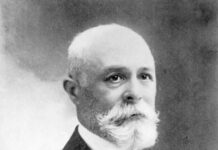
Carl Friedrich Gauss was more than just a mathematician. He is a force of nature in human form. He was born Johann Friedrich Carl Gauss in Braunschweig on April 30, 1777 in a poor and impoverished family. By his early teens, however, he was already producing evidence that baffled seasoned professors.
He doesn’t just crunch numbers. He recognized patterns that others saw as chaotic. By the time of his death in Göttingen on February 23, 1855, he had published more than 150 works. His influence spans mathematics, astronomy and physics.
The hidden architect of modern mathematics
Why are we still talking about him today? Because his tools are built into the infrastructure of modern science.
Consider the least squares method. It’s a statistical method used in everything from tracking the orbits of distant planets to analyzing trends in financial markets. Gauss developed this method for solving complex equations with many variables. Without this, modern data analysis as we know it would not exist.
Then there is the Gaussian distribution (often called a bell curve). Even if you don’t know its name, you may have seen its shape. Describes how most natural phenomena are distributed. Heights. test results. Measurement error. When dealing with probabilities, you can use the Gaussian error curve.
His dissertation introduced the Fundamental Theorem of Algebra. This theorem says that every non-constant polynomial has at least one complex root. It’s a sounds dry. This is basic. This is the basis of modern engineering and signal processing.
Off the page: physics and astronomy
Gauss didn’t stay in the ivory tower. He applied strict logic to the physical world.
He was a pioneer in the application of mathematics in the fields of gravity, electricity and magnetism. Before Gauss, these fields were usually described qualitatively. He quantified them. He contributed to the development of potential theory, which is important for understanding gravitational and electromagnetic fields.
In astronomy, his accuracy is legendary. He calculated the orbit of the dwarf planet Ceres after it disappeared behind the sun. His method allowed astronomers to rediscover it. It’s not just a calculation. This is a prediction.
A legacy carved in stone
He is often considered, along with Archimedes and Newton, to be one of the greatest mathematicians of all time. It’s a heavy crown. However, his contributions to real analysis and matrix equations (especially Gauss-Jordan elimination) are still standard courses in universities around the world.
He just doesn’t solve problems. He created a new language to describe them.
What happens if we stop using his methods? The systems break. The models fail. The universe becomes harder to predict.
Gauss showed that abstraction and reality are not separate. They are woven together. This realization changed everything.
We still depend on his work. Every time a satellite stays in orbit. Every time a doctor interprets a scan. Every time an engineer builds a bridge.
The question is not whether we need him. The question is, now that you’ve finally learned how to listen to numbers, what do you find next?